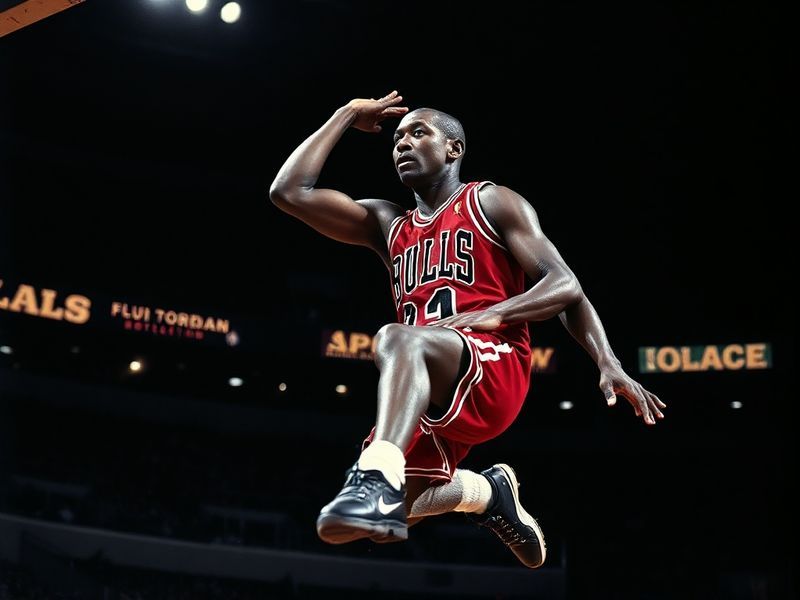
Few names in sports history carry the weight and recognition of Michael Jordan. Born in Brooklyn, New York, in 1963, Jordan’s journey to becoming the greatest basketball player of all time was anything but predetermined. His early years were marked by rejection—he was cut from his high school varsity team as a sophomore—before he transformed himself through relentless work. At the University of North Carolina, he hit the game-winning shot in the 1982 NCAA Championship, announcing his arrival on the national stage. These defining moments set the tone for a career that would redefine excellence in athletics.
Jordan’s impact extended far beyond statistics. He brought a level of competitiveness and showmanship that captivated audiences worldwide. His six NBA championships with the Chicago Bulls, five MVP awards, and ten scoring titles are unparalleled. But his influence wasn’t just about winning—it was about how he changed the way the game was perceived and played. From his iconic dunk contests to his clutch performances in the playoffs, Jordan turned basketball into a global spectacle.
The Rise of a Global Icon
Jordan’s professional career began in 1984 when the Chicago Bulls drafted him third overall. His rookie season showcased his scoring ability, averaging 28.2 points per game and winning Rookie of the Year. However, it was during the 1986 playoffs that he announced himself to the world, dropping 63 points in a playoff game against the Boston Celtics—still the highest single-game playoff scoring performance in NBA history.
By the late 1980s, Jordan had established himself as the league’s premier player. His rivalry with Magic Johnson and Larry Bird defined an era, and his signature line of sneakers with Nike, the Air Jordan, became a cultural movement. The shoes weren’t just footwear; they were a symbol of ambition and style. Off the court, Jordan’s charisma and marketability made him a household name, paving the way for athletes to become global brands.
His first three-peat with the Bulls from 1991 to 1993 cemented his legacy. Jordan’s flu game in the 1997 NBA Finals, where he scored 38 points despite battling illness, remains one of the most iconic performances in sports history. These moments weren’t just about winning— they were about defying expectations and showcasing unmatched determination.
Beyond the Court: Jordan’s Business and Cultural Influence
Jordan’s post-playing career has been equally influential. After retiring in 1999 following the Bulls’ second three-peat, he briefly played minor league baseball before returning to the NBA in 2001 with the Washington Wizards. Though his second stint didn’t match his earlier dominance, it demonstrated his relentless drive. His final retirement in 2003 marked the end of an era, but not his involvement in basketball.
In 2006, Jordan became the majority owner of the Charlotte Hornets, making him the first former player to become a majority owner of an NBA team. His ownership tenure, though contentious at times, highlighted his commitment to growing the game. Beyond basketball, Jordan’s business ventures—including endorsements with companies like Hanes, Gatorade, and Nike—have made him one of the wealthiest athletes in history. His net worth is estimated in the billions, a testament to his savvy beyond the court.
Jordan’s cultural impact is perhaps most evident in his role in the 1996 film Space Jam, where he starred alongside Bugs Bunny. The film blended sports and animation, appealing to both children and adults. While critics were divided, the movie became a nostalgic favorite for a generation. Jordan’s crossover appeal demonstrated his ability to transcend sports and become a pop culture icon.
The Competitive Fire That Defined a Generation
What truly set Jordan apart was his unparalleled competitiveness. His trash-talking, trash-can-throwing antics in the 1990s playoffs became legendary. In the 1992 Eastern Conference Finals against the New York Knicks, Jordan famously hit a game-winning shot over Patrick Ewing, then turned to the Knicks’ bench and shrugged, as if to say, “What now?” These moments weren’t just about winning—they were about dominating mentally as much as physically.
Jordan’s work ethic was as legendary as his talent. Teammates and opponents alike have recounted stories of his relentless preparation. Phil Jackson, his coach with the Bulls, often spoke about Jordan’s obsession with improvement. Whether it was late-night film sessions or extra shooting practice, Jordan’s dedication was unmatched. This discipline translated into his ability to perform under pressure, a skill that defined his playoff performances.
Even in his later years, Jordan remained a fierce competitor. During the 1998 NBA Finals against the Utah Jazz, his game-winning shot over Bryon Russell in Game 6 secured the Bulls’ sixth championship. The moment, captured in freezing cold, became one of the most replayed highlights in sports history. It wasn’t just a shot—it was a statement that Jordan would always find a way to win.
Legacy and Lessons from Michael Jordan
Michael Jordan’s career offers lessons that extend beyond basketball. His story is one of resilience, discipline, and an unwavering pursuit of greatness. He turned setbacks into motivation, rejection into fuel, and doubt into determination. For aspiring athletes and professionals alike, Jordan’s career is a blueprint for success—proving that talent alone isn’t enough without the work ethic to back it up.
His influence on the game is undeniable. Players like Kobe Bryant and LeBron James have cited Jordan as a major inspiration. Even today, the NBA continues to honor his legacy, with players often referencing his “MJ” mentality when describing their own competitive drive. Jordan’s impact is also evident in the way modern athletes approach branding and marketability. He showed that athletes could be more than just players—they could be global icons.
Off the court, Jordan’s philanthropy has made a difference. Through the Michael Jordan Foundation, he has supported education and community initiatives, particularly in underserved areas. His donations to organizations like the Make-A-Wish Foundation and his contributions to COVID-19 relief efforts demonstrate his commitment to giving back. While he’s often portrayed as a ruthless competitor, Jordan’s charitable work reveals a deeper sense of responsibility.
As Jordan once said, “Talent wins games, but teamwork and intelligence win championships.” This philosophy underscores his belief in the power of collaboration and preparation. It’s a reminder that success isn’t just about individual brilliance—it’s about surrounding yourself with the right people and putting in the work to achieve a common goal.
Jordan’s Enduring Influence
Today, Michael Jordan’s legacy continues to grow. His Air Jordan sneakers remain a staple in fashion and sports, with new generations embracing the brand. The NBA’s global expansion can be traced, in part, to Jordan’s role in popularizing the league internationally. From China to Europe, his games were must-watch events, and his influence helped turn basketball into a worldwide phenomenon.
Jordan’s story is also a reminder of the power of reinvention. After his first retirement, he didn’t fade into obscurity—instead, he found new ways to compete and excel. Whether in business, ownership, or even golf, Jordan’s competitive spirit never wavered. This adaptability is a key reason why his legacy endures long after his playing days.
For fans of basketball and sports in general, Michael Jordan isn’t just a player—he’s a symbol of what it means to strive for greatness. His career challenges us to push our limits, embrace competition, and never settle for mediocrity. As long as there are athletes chasing excellence, Jordan’s legacy will remain a guiding light.
In a sport where moments of glory are fleeting, Michael Jordan’s career stands as a testament to the power of consistency, determination, and sheer will. He didn’t just play the game—he changed it forever.
Explore more sports legends and their impact on Dave’s Locker Sports section.