US-Iran Tensions in 2024: Risks, History, and Global Impact
“`html
US-Iran Tensions: What’s Really at Stake in 2024
The relationship between the United States and Iran has long been one of the most volatile geopolitical dynamics in the world. Decades of hostility, punctuated by brief moments of diplomacy, have shaped a narrative of distrust and confrontation. As 2024 unfolds, these tensions have flared again—this time against a backdrop of regional conflicts, shifting alliances, and evolving global power structures.
What makes the current moment different from past crises? The stakes are higher, the players are more interconnected, and the consequences of miscalculation could be catastrophic. This isn’t just about two nations trading barbs or imposing sanctions. It’s about a fragile balance of power that, if disrupted, could redraw the map of the Middle East—and beyond.
Historical Context: How Did We Get Here?
The roots of US-Iran tension stretch back to the 1953 CIA-backed coup that overthrew Iran’s democratically elected Prime Minister Mohammad Mossadegh. The coup reinstalled the Shah, a U.S. ally, but his authoritarian rule eventually led to the 1979 Islamic Revolution. That revolution, led by Ayatollah Ruhollah Khomeini, established the Islamic Republic of Iran and enshrined a deep-seated anti-American ideology.
The immediate aftermath saw the hostage crisis at the U.S. Embassy in Tehran, where 52 Americans were held for 444 days. This event cemented a narrative of mutual enmity that has persisted for over four decades. Subsequent decades brought the Iran-Iraq War, nuclear standoffs, and proxy conflicts across the region. The 2015 nuclear deal, known as the Joint Comprehensive Plan of Action (JCPOA), offered a brief respite, but the U.S. withdrawal in 2018 under President Trump reignited hostilities.
Today, the U.S. and Iran remain locked in a cold war of sorts—one fought through proxies, cyberattacks, and economic pressure rather than direct military confrontation. Yet the potential for escalation looms large, particularly as regional conflicts in Gaza, Yemen, and Lebanon draw in both nations.
Key Turning Points in US-Iran Relations
- 1953: U.S.-backed coup overthrows Prime Minister Mossadegh, installs the Shah as ruler.
- 1979: Islamic Revolution topples the Shah; U.S. Embassy in Tehran seized; 52 Americans held hostage.
- 1980-1988: Iran-Iraq War sees U.S. support for Iraq, despite its brutal tactics.
- 2015: JCPOA nuclear deal signed, easing sanctions in exchange for curbs on Iran’s nuclear program.
- 2018: U.S. withdraws from JCPOA, reimposes sanctions, and designates Iran’s Revolutionary Guard as a terrorist organization.
- 2020: U.S. drone strike kills Iranian General Qasem Soleimani in Baghdad, escalating tensions to brink of war.
- 2023-2024: Escalating attacks by Iran-backed groups in the region, including on U.S. bases and ships.
Current Flashpoints: Why 2024 Matters
The year 2024 has already seen a surge in provocations. Iran-backed militias in Iraq and Syria have intensified attacks on U.S. military installations, while Houthi rebels in Yemen—another Iranian ally—have disrupted global shipping in the Red Sea. These actions are not isolated incidents. They reflect a calculated strategy to pressure the U.S. and its allies without triggering a full-scale war.
Meanwhile, Iran’s nuclear program continues to advance. International inspectors have warned that Iran now possesses enough enriched uranium to build multiple nuclear weapons if it chooses to do so. While Iran insists its program is for peaceful purposes, the timeline for breakout capability grows shorter with each passing month.
The geopolitical chessboard has also shifted. Saudi Arabia, once a U.S. ally in containing Iran, has pursued a rapprochement with Tehran, brokered by China. This realignment signals a potential erosion of U.S. influence in the region. At the same time, Russia and China have deepened ties with Iran, providing economic lifelines and diplomatic cover.
For the U.S., the challenge is clear: How to deter Iran without provoking a wider conflict? The Biden administration has sought a balance—restoring some sanctions relief while maintaining pressure through targeted strikes and support for regional allies. Yet the risk of miscalculation remains high.
Broader Implications: Beyond the Middle East
The US-Iran standoff is not just a regional issue. It has ripple effects across the globe, from energy markets to cybersecurity. A major conflict could disrupt global oil supplies, sending shockwaves through economies already strained by inflation and supply chain disruptions.
Cyber warfare adds another layer of complexity. Both nations have demonstrated sophisticated cyber capabilities. Iran has targeted U.S. critical infrastructure in the past, while the U.S. has reportedly launched cyberattacks against Iranian nuclear facilities. The digital battlefield is as dangerous as any physical one.
Moreover, the US-Iran dynamic influences global non-proliferation efforts. If Iran crosses the nuclear threshold, it could trigger a cascade of proliferation in the Middle East, with Saudi Arabia, Turkey, and others reconsidering their own nuclear ambitions. The collapse of the non-proliferation regime would be a body blow to international security.
On the diplomatic front, the U.S. faces a dilemma. Re-engaging with Iran risks legitimizing a regime with a poor human rights record. Yet ignoring it risks allowing Iran to expand its influence unchecked. The JCPOA may be dead, but the need for a framework to manage this rivalry has never been more urgent.
What’s Next? Scenarios and Possibilities
Predicting the future of US-Iran relations is fraught with uncertainty. Several scenarios could unfold in the coming months:
- Controlled Escalation: Both sides engage in calibrated provocations, avoiding direct conflict but maintaining pressure. This could lead to a new, informal understanding—akin to the Cold War’s rules of engagement.
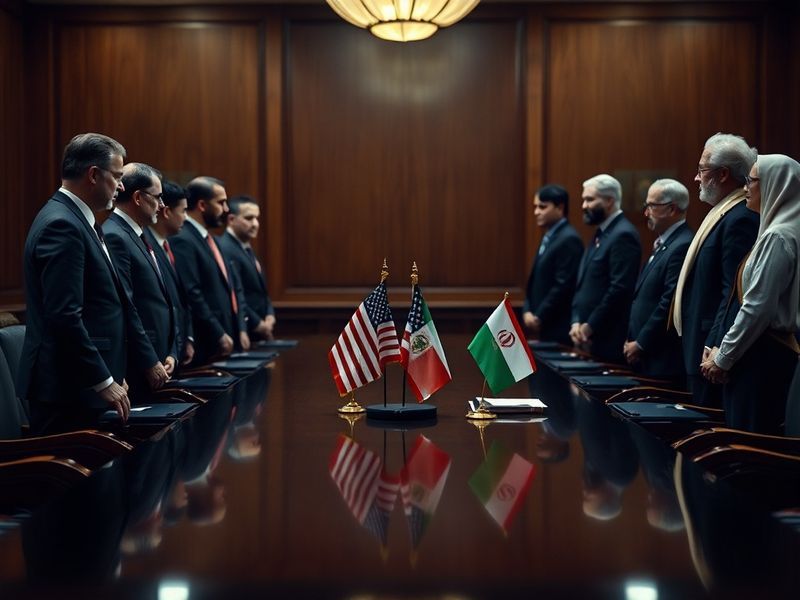
- Diplomatic Off-ramp: Behind-the-scenes negotiations, possibly involving regional players like Saudi Arabia or Oman, could lead to a temporary de-escalation. A new framework might address Iran’s nuclear program and regional activities without a formal treaty.
- Unintended Conflict: A miscalculation—a misidentified drone, a misinterpreted military exercise—could spiral into a larger confrontation. The risk is particularly acute given the presence of U.S. and Iranian forces in close proximity in Syria and Iraq.
- Regime Change or Collapse: Internal pressures within Iran, driven by economic hardship and public discontent, could destabilize the regime. However, history suggests that external pressure often unites rather than fractures authoritarian regimes in Iran.
Regardless of the path forward, one thing is certain: The US-Iran relationship will remain a defining feature of global geopolitics for the foreseeable future. The question is whether both sides can find a way to coexist without catastrophe.
Conclusion: Navigating a High-Stakes Relationship
The US-Iran rivalry is a reminder of how historical grievances can shape modern conflicts. It is also a test of whether diplomacy can prevail over decades of mistrust. For now, the world watches as these two nations navigate a delicate balance—one misstep away from chaos.
The lessons of the past are clear: Direct military confrontation benefits no one. Economic warfare has its limits. The only sustainable path is dialogue, no matter how difficult. Whether that dialogue occurs in 2024—or whether the world must endure another cycle of escalation—remains to be seen.
What is undeniable is that the stakes have never been higher. The Middle East is a tinderbox, and the US-Iran relationship is the fuse. The question is whether anyone can pull it before it’s too late.
For deeper analysis on global conflicts and their implications, visit Dave’s Locker News and explore Dave’s Locker Analysis for expert perspectives on geopolitical trends.