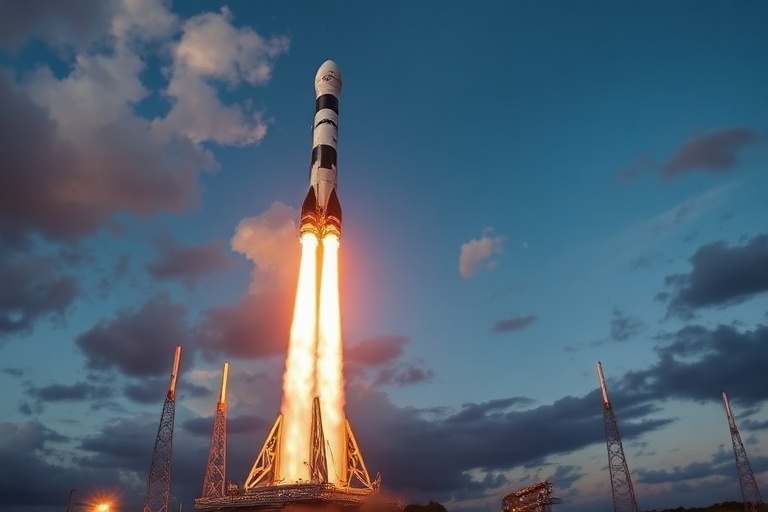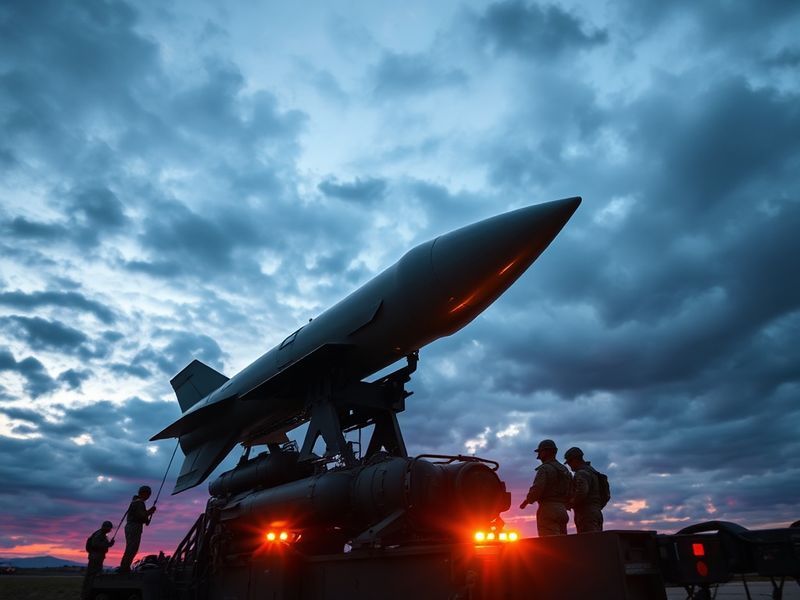
Ballistic missiles represent one of the most formidable weapons in modern arsenals, combining precision engineering with devastating payload capacity. Unlike cruise missiles, which rely on continuous propulsion, ballistic missiles follow a predictable arched trajectory after an initial powered launch phase, making them difficult to intercept once fired. Their development has reshaped military doctrine, geopolitical balances, and international diplomacy since World War II.
Their significance extends beyond warfare. Ballistic missiles serve as both deterrents and tools of coercion, often serving as symbols of national power. Nations invest heavily in these systems not only for their destructive capabilities but also for the strategic leverage they provide in negotiations and crises. Understanding their evolution, mechanics, and implications is essential to grasping 21st-century security challenges.
The Evolution of Ballistic Missiles: From V-2 to Intercontinental Arsenal
The origins of ballistic missiles trace back to Nazi Germany’s Vergeltungswaffe 2 (V-2) rocket, the world’s first long-range guided ballistic missile. Developed under Wernher von Braun in the final years of World War II, the V-2 carried a one-ton warhead over 300 kilometers, striking London and Antwerp in 1944–45. Though its impact was more psychological than decisive, the V-2 demonstrated the feasibility of rocket-powered weapons, setting the stage for post-war missile development.
In the Cold War era, the United States and Soviet Union rapidly advanced ballistic missile technology. The USSR’s R-7 Semyorka, deployed in 1957, became the first intercontinental ballistic missile (ICBM), capable of delivering nuclear warheads across continents. This development triggered a global arms race, culminating in the Cuban Missile Crisis of 1962 and reinforcing the concept of Mutually Assured Destruction (MAD). By the 1970s, both superpowers had deployed multiple independently targetable reentry vehicles (MIRVs), allowing a single missile to strike multiple locations.
Today, over 30 countries possess ballistic missile capabilities, ranging from short-range systems like Iran’s Fateh-110 to long-range ICBMs such as China’s DF-41, which can reach targets in the United States. The proliferation of these weapons has transformed regional conflicts and global security architectures, with nations like North Korea and Pakistan leveraging missile tests as both military tools and diplomatic bargaining chips.
Key Milestones in Ballistic Missile Development
- 1944: Germany deploys the V-2 rocket, the first operational ballistic missile.
- 1957: The Soviet Union launches the R-7 ICBM, marking the beginning of intercontinental reach.
- 1962: Cuban Missile Crisis exposes the strategic risks of ballistic missile deployment.
- 1970s: Introduction of MIRV technology increases warhead delivery precision and payload efficiency.
- 2000s: North Korea tests its first ICBM, Taepodong-2, signaling new actors in missile proliferation.
- 2010s: Hypersonic glide vehicles emerge as next-generation ballistic missile enhancements.
How Ballistic Missiles Work: Physics, Payloads, and Precision
A ballistic missile operates in three distinct phases: boost, midcourse, and terminal. During the boost phase, the missile is propelled by rocket engines, typically burning liquid or solid fuel, until it reaches the edge of Earth’s atmosphere. At this point, the payload—whether a nuclear warhead, conventional explosive, or decoy—is released into a ballistic trajectory, following the laws of projectile motion.
The midcourse phase is the longest and most predictable. The warhead arcs through space at speeds exceeding 20,000 kilometers per hour, making interception difficult. Advanced guidance systems, often using inertial navigation or GPS, ensure the payload reaches its intended target with high accuracy. Terminal phase begins as the warhead re-enters the atmosphere and descends toward its destination, where heat shields and aerodynamic shaping prevent disintegration.
Warhead design varies widely. Nuclear-armed ICBMs, such as the U.S. Minuteman III or Russia’s Topol-M, carry thermonuclear payloads with yields measured in megatons. Conventional ballistic missiles, like Israel’s Jericho or India’s Agni, are typically used for precision strikes on military or strategic infrastructure. Some modern systems also deploy multiple warheads or decoys to overwhelm missile defense systems.
Accuracy is measured in circular error probable (CEP), the radius within which 50% of warheads are expected to land. Modern ICBMs boast CEPs as low as 100 meters, enabling them to destroy hardened targets such as missile silos or command centers. This precision, combined with high speed and range, makes ballistic missiles uniquely suited for strategic strikes.
Global Implications: Deterrence, Diplomacy, and the Risk of Escalation
The presence of ballistic missiles has fundamentally altered the calculus of international relations. In regions like Northeast Asia and the Middle East, their deployment has fueled arms races and deepened mistrust. North Korea’s rapid advancement in missile technology—demonstrated through repeated tests of ICBMs and submarine-launched ballistic missiles (SLBMs)—has prompted Japan and South Korea to enhance their own defense systems, including the deployment of U.S. Terminal High Altitude Area Defense (THAAD) systems.
Ballistic missiles also serve as instruments of coercion. Iran’s development of medium- and intermediate-range ballistic missiles (MRBMs and IRBMs) has been cited as a means to project influence across the Middle East, from Lebanon to Yemen. Similarly, Pakistan’s missile program is closely tied to its rivalry with India, with both nations engaging in tit-for-tat testing to signal resolve.
Yet, the proliferation of these weapons carries significant risks. The breakdown of arms control treaties, such as the U.S. withdrawal from the Intermediate-Range Nuclear Forces (INF) Treaty in 2019, has removed constraints on missile development. This vacuum increases the likelihood of miscalculation in crises, particularly in flashpoints like the Korean Peninsula or the Taiwan Strait.
International efforts to curb ballistic missile proliferation have had mixed success. The Missile Technology Control Regime (MTCR), established in 1987, restricts the export of missile-related technology to non-member states. However, countries like North Korea and Iran have circumvented these restrictions through illicit networks and indigenous development programs.
Strategic Challenges Posed by Ballistic Missiles
- Deterrence Stability: The presence of second-strike capabilities can prevent large-scale wars but may also encourage risk-taking in limited conflicts.
- Missile Defense Limitations: While systems like the U.S. Ground-Based Midcourse Defense (GMD) exist, they cannot reliably intercept large-scale attacks or decoy-laden payloads.
- Regional Arms Races: The acquisition of ballistic missiles by one state often triggers responses from neighbors, leading to escalating arsenals.
- Terrorism Risks: The potential for non-state actors to acquire or develop ballistic missiles remains a low-probability but catastrophic threat.
- Technological Disruption: Hypersonic glide vehicles and maneuverable warheads are rendering existing missile defenses obsolete, necessitating new countermeasures.
Looking Ahead: The Future of Ballistic Missiles
The next decade will likely see ballistic missiles evolve in two key directions: increased precision and reduced detectability. Hypersonic glide vehicles, capable of speeds exceeding Mach 5 and unpredictable flight paths, represent a paradigm shift in missile technology. Unlike traditional ballistic missiles, these systems can maneuver during flight, making them nearly impossible to intercept with current defenses.
Artificial intelligence and quantum computing are also poised to enhance missile guidance and targeting. AI-driven systems could improve real-time trajectory adjustments, while quantum sensors may enable more accurate detection of missile launches. These advancements, however, raise ethical and strategic concerns about autonomous weapons and the erosion of human control in warfare.
On the diplomatic front, the future of arms control remains uncertain. While the New START treaty between the U.S. and Russia was extended in 2021, it does not cover newer missile systems. Multilateral negotiations, including efforts by the United Nations to establish a global fissile material cutoff, face resistance from states prioritizing missile development for national security.
For policymakers and analysts, the challenge lies in balancing deterrence with diplomacy. Ballistic missiles are not merely weapons; they are instruments of power, prestige, and psychological warfare. As technology advances, the international community must grapple with how to manage these capabilities without triggering a new era of unrestrained arms competition.
In an increasingly multipolar world, the absence of robust arms control frameworks risks normalizing missile proliferation. The lessons of the Cold War—where miscalculation nearly led to catastrophe—serve as a reminder that strategic stability cannot be taken for granted. Ballistic missiles remain a cornerstone of modern militaries, but their continued development demands vigilance, innovation, and, above all, dialogue.
For readers interested in exploring related military technology and security issues, visit our Technology and Politics sections for in-depth coverage and expert analysis.