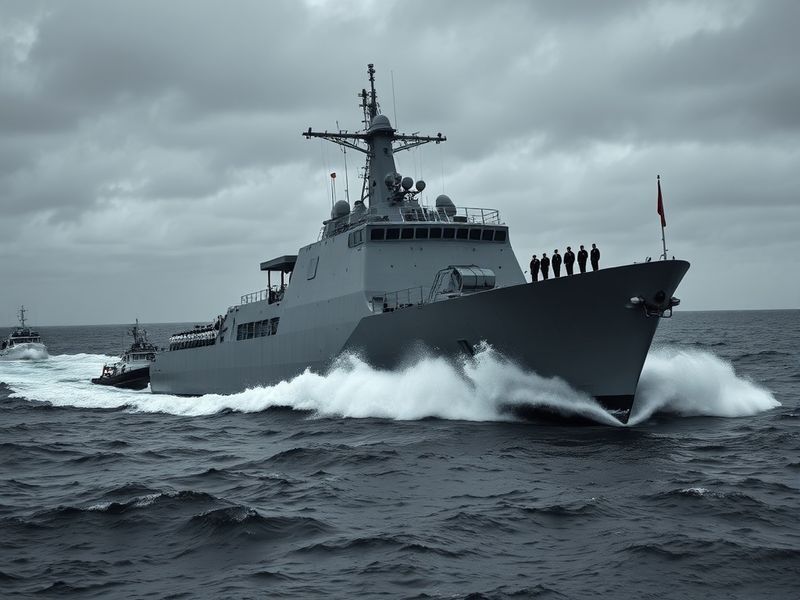
Iranian Ship: History, Military Role and Global Impact
“`html
The Iranian Ship: A Multifaceted Maritime Asset
The Iranian ship has long been a subject of international scrutiny, diplomatic tension, and strategic importance. Whether in the context of military operations, trade, or geopolitical maneuvering, these vessels represent more than just floating structures—they embody the intersection of power, economics, and sovereignty. This article explores the various dimensions of Iranian ships, from their historical significance to their role in contemporary maritime affairs.
Historical Context and Evolution
Iran’s maritime history stretches back millennia, with its ships playing pivotal roles in trade along the Persian Gulf and beyond. The Persian Empire’s naval prowess was legendary, with ships facilitating commerce between the Indian subcontinent, East Africa, and the Mediterranean. Fast-forward to the 20th century, and Iran’s naval capabilities expanded dramatically, particularly under the Pahlavi dynasty, which sought to modernize the country’s fleet.
During the Iran-Iraq War in the 1980s, Iranian ships became central to the nation’s survival strategy. The so-called “Tanker War” saw Iran and Iraq target each other’s oil shipments, forcing Iran to adapt its naval tactics. Minesweepers, frigates, and smaller patrol boats became essential tools in protecting Iranian interests. This period underscored the resilience of Iran’s maritime sector, even as it faced relentless pressure from external forces.
Modern Iranian Naval Fleet: Capabilities and Controversies
Today, Iran’s naval fleet is a blend of domestically produced vessels and imported or reverse-engineered models. The Islamic Republic of Iran Navy (IRIN) and the Islamic Revolutionary Guard Corps Navy (IRGCN) operate distinct fleets, each serving different strategic purposes. The IRIN focuses on blue-water capabilities, including frigates and submarines, while the IRGCN concentrates on asymmetric warfare, utilizing fast attack craft and coastal defense systems.
One of the most notable vessels in Iran’s fleet is the Alvand-class frigate, a British-designed ship that has been modernized over the decades. These frigates, though aging, remain a symbol of Iran’s ability to maintain and upgrade its naval assets. Additionally, Iran has invested in domestically built ships like the Moudge-class frigates, which incorporate advanced radar and missile systems.
Controversy often surrounds Iranian ships due to their involvement in regional conflicts and alleged ties to proxy groups. The IRGCN, in particular, has been accused of smuggling weapons to groups like Hezbollah in Lebanon and the Houthis in Yemen. These allegations have led to multiple confrontations with international naval forces, most notably the U.S. Navy. Incidents such as the capture of the Maersk Tigris in 2015 and the seizure of the Stena Impero in 2019 have drawn global attention to the risks posed by Iranian maritime activities.
Key Ship Classes in Iran’s Fleet
- Alvand-class frigates: British-designed, now domestically upgraded with modern weaponry.
- Moudge-class frigates: Indigenous designs with advanced radar and missile systems.
- Kilo-class submarines: Russian-made, capable of stealth operations in the Persian Gulf.
- Ghadir-class midget submarines: Small but effective in coastal and shallow waters.
- Sina-class fast attack craft: Armed with anti-ship missiles, used for hit-and-run tactics.
Economic and Trade Implications
Beyond their military significance, Iranian ships play a crucial role in the country’s economy. The Persian Gulf and the Strait of Hormuz are vital chokepoints for global oil shipments, and Iran’s ability to control or disrupt these routes has far-reaching consequences. Despite international sanctions, Iran has continued to export oil, often through clandestine means such as ship-to-ship transfers and the use of ghost fleets.
Sanctions have forced Iran to become more resourceful in maintaining its maritime trade. The country has turned to countries like China, Syria, and Venezuela as alternative markets, often relying on older or less sophisticated ships to avoid detection. These efforts highlight the adaptability of Iran’s shipping industry, even as it faces severe economic constraints.
Sanctions and the Shadow Fleet
The U.S. and EU sanctions imposed on Iran have led to the emergence of a “shadow fleet”—a network of older, often poorly maintained vessels that operate under flags of convenience. These ships are difficult to track and frequently change ownership, making it easier for Iran to bypass restrictions. While this strategy has allowed Iran to keep its oil trade alive, it also raises concerns about maritime safety and environmental risks.
In 2020, the U.S. expanded its sanctions to target these shadow fleet vessels, seizing several ships suspected of transporting Iranian oil. The cat-and-mouse game between Iranian operators and international authorities continues to shape the dynamics of maritime trade in the region.
Geopolitical Tensions and Maritime Security
Iran’s ships are often at the heart of geopolitical tensions, particularly in the Persian Gulf. The region has become a flashpoint for conflicts involving Iran, Saudi Arabia, the U.S., and other global powers. Incidents such as the 2019 attacks on oil tankers in the Gulf of Oman and the downing of a U.S. drone by Iran have escalated military posturing in the area.
The presence of foreign naval forces, including the U.S. Fifth Fleet based in Bahrain, adds another layer of complexity. These forces conduct regular patrols to ensure freedom of navigation, but their operations are frequently challenged by Iranian vessels. The IRGCN’s use of “swarm tactics,” where multiple small boats surround larger ships, has become a hallmark of Iran’s asymmetric warfare strategy.
Diplomatic efforts to de-escalate tensions have had mixed results. The 2015 nuclear deal, known as the Joint Comprehensive Plan of Action (JCPOA), temporarily eased some pressures, but the U.S. withdrawal in 2018 reignited hostilities. Despite these challenges, maritime security remains a critical issue for regional stability, with Iranian ships serving as both a tool and a target of these geopolitical struggles.
Recent Incidents Involving Iranian Ships
- 2019 Tanker Attacks: Four oil tankers were damaged in attacks near the Strait of Hormuz, with the U.S. blaming Iran.
- Seizure of the Stena Impero: The British-flagged tanker was captured by the IRGCN in the Strait of Hormuz, sparking a diplomatic crisis.
- 2021 Israeli Ship Attacks: Several vessels linked to Israel were targeted in the Gulf of Oman, with Iran suspected of involvement.
- 2022 U.S. Seizure of Iranian Oil: The U.S. confiscated two million barrels of Iranian oil from a ship bound for Venezuela.
Future Prospects and Strategic Considerations
The future of Iranian ships will likely be shaped by a combination of domestic innovation and international pressure. Iran has demonstrated a commitment to expanding its naval capabilities, with recent advancements in drone technology and missile systems integrated into its ships. The development of the Sahand destroyer, launched in 2018, signals Iran’s intent to modernize its fleet despite economic constraints.
However, the path forward is fraught with challenges. The ongoing nuclear negotiations, regional rivalries, and the shadow of sanctions loom large over Iran’s maritime ambitions. The country’s ability to navigate these obstacles will determine whether its ships continue to play a central role in its strategic calculus or become relics of a bygone era.
For the international community, the question remains: How can maritime security be ensured in a region where Iranian ships are both a source of tension and a necessity for trade? The answer may lie in a delicate balance between deterrence and diplomacy, where the role of Iranian ships is carefully managed to prevent further escalation.
Potential Paths for Iran’s Maritime Future
- Diplomatic Engagement: Renewed negotiations could ease sanctions and allow Iran to reintegrate into the global maritime economy.
- Technological Upgrades: Continued investment in indigenous shipbuilding and drone technology could enhance Iran’s naval capabilities.
- Regional Cooperation: Collaborative efforts with neighboring countries could reduce tensions and promote stability in the Persian Gulf.
- Shadow Fleet Adaptation: Iran may further refine its clandestine shipping networks to bypass sanctions, though this carries significant risks.
In conclusion, the Iranian ship is far more than a floating vessel—it is a symbol of resilience, a tool of power, and a point of contention in one of the world’s most strategically vital regions. As geopolitical dynamics evolve, these ships will continue to navigate turbulent waters, both literally and figuratively. Their story is one of adaptation, defiance, and the enduring struggle for maritime dominance in the Persian Gulf.