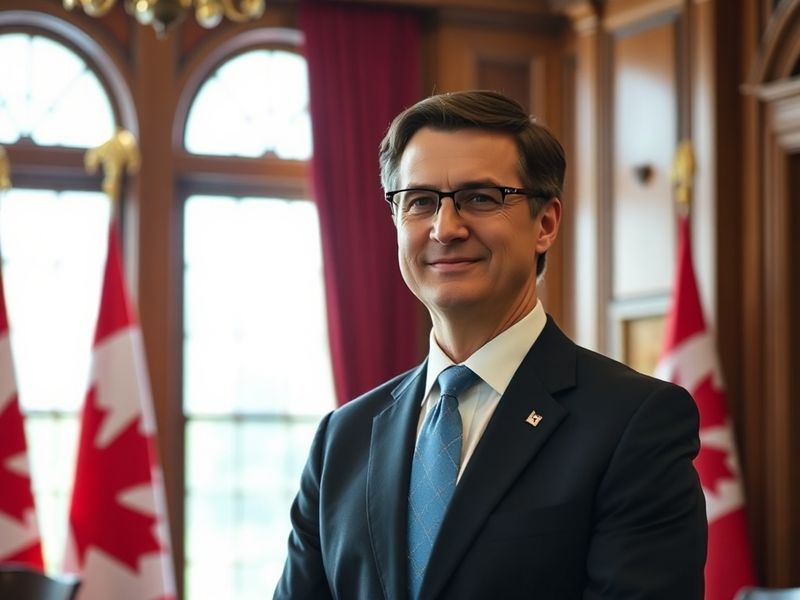
The office of the Prime Minister of Canada is one of the most influential positions in the country, shaping national policy, international relations, and the daily lives of Canadians. As the head of government, the Prime Minister holds significant executive power, working alongside the Governor General to implement legislation and govern the nation. Unlike some parliamentary systems, Canada’s Prime Minister is not directly elected by the public but rather chosen by the elected members of the House of Commons from the political party that holds the majority of seats.
The position is deeply rooted in the Westminster parliamentary tradition, which emphasizes collective responsibility and party discipline. This system ensures that the Prime Minister’s power is balanced by the need to maintain the confidence of Parliament, particularly the House of Commons. The Prime Minister’s role extends beyond domestic policy, influencing Canada’s stance on global issues such as climate change, trade agreements, and international security.
The Evolution of Canada’s Prime Ministerial Role
The office of the Prime Minister has evolved significantly since Canada’s Confederation in 1867. Initially, the role was more ceremonial, with the Prime Minister acting as a figurehead while the Governor General retained substantial authority. This changed with the gradual shift toward responsible government, where the Prime Minister became accountable to Parliament rather than the Crown.
Sir John A. Macdonald, Canada’s first Prime Minister, set many precedents for the office. His leadership during the nation’s early years was marked by the construction of the Canadian Pacific Railway, the expansion of Confederation, and the negotiation of trade agreements. Macdonald’s tenure also highlighted the challenges of balancing regional interests, a challenge that continues to define Canadian politics today.
Over the decades, the role of the Prime Minister has expanded to include greater control over the legislative agenda, the power to appoint judges, ambassadors, and cabinet ministers, and the responsibility to lead the country through crises. The Prime Minister’s influence is further amplified by the party system, which often ensures that the leader’s agenda aligns closely with the priorities of their political party.
Key Milestones in Canadian Prime Ministerial History
- 1867-1891: Sir John A. Macdonald establishes the foundations of Canadian nationhood, including the National Policy, which promoted economic development through tariffs, immigration, and railway expansion.
- 1921-1926 and 1935-1948: William Lyon Mackenzie King becomes Canada’s longest-serving Prime Minister, overseeing the country’s transition from British dominion to an autonomous nation with distinct international identity.
- 1968-1979 and 1980-1984: Pierre Trudeau introduces sweeping social reforms, including official bilingualism and the Charter of Rights and Freedoms, while navigating the complexities of Quebec separatism.
- 1993-2003: Jean Chrétien’s tenure is marked by economic reforms, the Clarity Act to address Quebec sovereignty, and Canada’s refusal to participate in the Iraq War.
- 2006-2015: Stephen Harper’s conservative government focuses on tax cuts, fiscal responsibility, and asserting Canada’s role on the global stage, particularly in trade and military engagements.
The Appointment Process and Powers of the Prime Minister
The Prime Minister of Canada is not elected directly by the public but is instead chosen by the members of the political party that secures the most seats in the House of Commons. This process typically occurs after a federal election or when a sitting Prime Minister resigns or is removed from office. The Governor General, as the Crown’s representative, then formally invites the leader of the majority party to form a government.
The Prime Minister’s powers are extensive but not absolute. They include the authority to appoint cabinet ministers, judges, and key public officials, as well as the responsibility to set the legislative agenda and shape national priorities. The Prime Minister also serves as the chair of the cabinet, ensuring that government policies are coordinated and implemented effectively.
However, the Prime Minister’s power is constrained by several factors. The requirement to maintain the confidence of the House of Commons means that unpopular policies or scandals can lead to a loss of support and potentially a vote of no confidence. Additionally, the federal system of government in Canada means that provinces hold significant authority over areas such as healthcare, education, and natural resources, limiting the Prime Minister’s ability to impose national policies unilaterally.
Checks and Balances on the Prime Minister’s Authority
- Parliamentary Scrutiny: The House of Commons and the Senate review and debate legislation, providing a forum for opposition parties to challenge the government’s agenda. Committees within Parliament also investigate government actions and hold ministers accountable.
- Judicial Review: The Supreme Court of Canada can strike down laws or policies that violate the Constitution or the Charter of Rights and Freedoms, acting as a check on the executive branch.
- Provincial Governments: Provincial premiers and legislatures can challenge federal policies, particularly in areas of shared jurisdiction, through legal action or political pressure.
- Party Discipline: While the Prime Minister leads their party, backbench MPs and senators can influence policy outcomes, particularly on contentious issues where internal dissent may threaten the government’s stability.
The Current Prime Minister: Justin Trudeau and His Agenda
As of 2024, Justin Trudeau serves as Canada’s 23rd Prime Minister, having taken office in November 2015 after leading the Liberal Party to a majority government. Trudeau’s tenure has been marked by progressive policies, including efforts to address climate change, advance social justice initiatives, and strengthen Canada’s role in global affairs. His government has also faced significant challenges, from the COVID-19 pandemic to rising inflation and housing affordability crises.
Trudeau’s leadership style is often characterized by a focus on inclusivity and multiculturalism, reflecting his efforts to represent Canada’s diverse population. His government has introduced policies such as the legalization of recreational cannabis, the expansion of parental leave benefits, and investments in clean energy and infrastructure. However, his tenure has also been marked by controversies, including ethics investigations, criticism over electoral reforms, and debates over the balance between individual freedoms and public health measures during the pandemic.
One of Trudeau’s most significant achievements has been his government’s response to the COVID-19 pandemic, which included substantial financial support for individuals and businesses, as well as accelerated vaccine procurement efforts. Despite criticism over the pace of vaccine rollouts and the management of long-term care facilities, Canada’s vaccination rates eventually surpassed those of many other developed nations.
Trudeau’s Policy Priorities and Challenges
- Climate Change: Trudeau has positioned Canada as a leader in climate action, implementing carbon pricing and investing in renewable energy projects. However, his government has faced criticism from both environmental groups and industry stakeholders over the pace and effectiveness of these measures.
- Housing Affordability: Skyrocketing housing costs in major cities like Toronto and Vancouver have become a defining issue of Trudeau’s tenure. His government has introduced measures such as the First-Time Home Buyer Incentive and tax incentives for homebuilders, but critics argue these efforts have done little to address the underlying supply shortages.
- Indigenous Reconciliation: Trudeau has committed to advancing reconciliation with Indigenous peoples, including addressing the legacy of residential schools and improving access to clean water and healthcare. However, progress has been slow, and many Indigenous leaders continue to call for more meaningful action.
- Economic Recovery: The COVID-19 pandemic’s economic fallout has posed significant challenges for Trudeau’s government, which has focused on job creation, support for small businesses, and infrastructure investments to stimulate growth.
The Future of Canada’s Prime Ministerial Office
The role of the Prime Minister in Canada continues to evolve in response to changing political, social, and economic landscapes. As the country grapples with issues such as climate change, technological disruption, and global instability, the Prime Minister’s ability to navigate these challenges will be critical to Canada’s future prosperity and stability.
One of the most pressing questions facing Canada’s political system is whether the office of the Prime Minister has become too powerful. Critics argue that the concentration of power in the hands of a single individual undermines democratic accountability, particularly when the Prime Minister’s party holds a majority in the House of Commons. Proposals for reform, such as the adoption of proportional representation or the strengthening of parliamentary committees, have gained traction in some circles, though they remain contentious.
Another key consideration is the increasing role of technology in politics. Social media platforms have transformed how Prime Ministers communicate with the public, enabling direct engagement but also amplifying misinformation and polarization. The ability to manage these digital platforms effectively will be crucial for future leaders.
For Canadians, the office of the Prime Minister represents both a source of hope and a focal point for accountability. The Prime Minister’s decisions shape the country’s trajectory, from economic policies to social justice initiatives. As such, the public’s engagement with the political process—whether through voting, advocacy, or public discourse—remains essential to ensuring that the office serves the best interests of the nation.
For those interested in exploring more about Canadian politics, Dave’s Locker News section offers in-depth coverage of current events and political analysis. Additionally, Dave’s Locker Analysis section provides thoughtful commentary on the forces shaping Canada and the world.