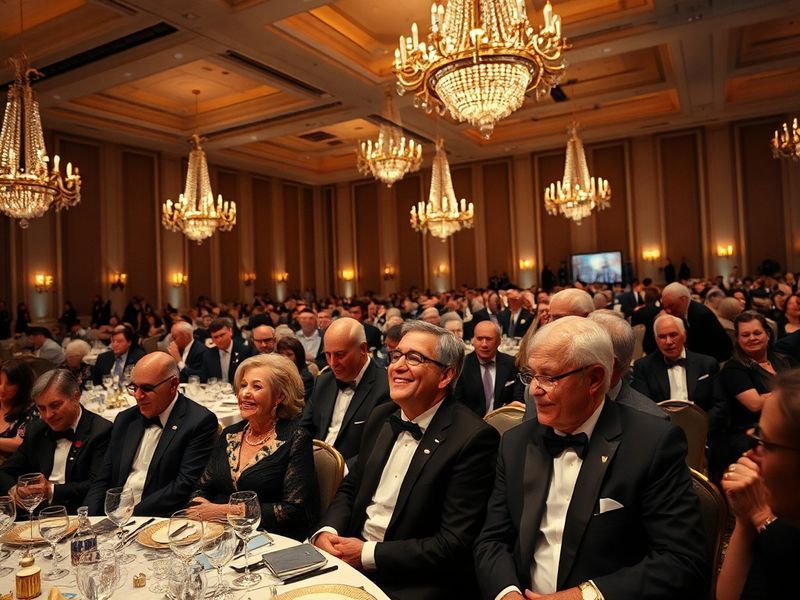
The White House Correspondents’ Dinner (WHCD) is one of Washington, D.C.’s most anticipated events each spring. Since its inception in 1921, the dinner has evolved from a modest gathering of journalists and government officials into a globally watched spectacle blending satire, politics, and celebrity. It offers a rare public moment where the corridors of power and the Fourth Estate intersect—not in conflict, but in a carefully choreographed ritual of mutual performance.
The event’s dual identity—simultaneously a professional obligation and a cultural phenomenon—has only intensified in the age of social media. While rooted in the tradition of the press holding power to account, the dinner now navigates tensions between transparency and spectacle, accessibility and exclusivity, and authenticity versus staged performance. From its origins as a private dinner to its current status as a livestreamed event viewed by millions worldwide, the WHCD reflects broader shifts in how journalism, politics, and public trust are negotiated in the 21st century.
The Origins and Evolution of a Washington Institution
The White House Correspondents’ Dinner began as a response to a simple need: White House reporters needed a space to connect with officials outside formal press briefings. In 1921, President Warren G. Harding invited journalists to dine with him at the Willard Hotel. That informal gathering laid the groundwork for what would become a yearly tradition. By 1989, the dinner had moved to the Washington Hilton and was first televised, transforming it from a bureaucratic ritual into a public spectacle.
Over the decades, the dinner grew in scale and significance. It became a platform where presidents could humanize themselves, journalists could showcase their wit, and aspiring comedians could launch national careers. The presence of Hollywood stars, tech CEOs, and international diplomats turned the event into a global media event—one that transcended Washington’s political bubble.
Yet, this expansion has not come without criticism. Some argue the dinner has strayed from its original purpose. The presence of A-list celebrities and the high price of tickets ($50,000+ for some tables in recent years) have fueled perceptions of elitism. Critics claim the event now resembles a Hollywood awards gala more than a journalistic forum. Others defend it as a necessary space for dialogue in a fractured media landscape.
Key Moments in WHCD History
- 1981: President Ronald Reagan’s humorous toast to the press after surviving an assassination attempt.
- 1993: Comedian Dana Carvey’s impersonation of President George H.W. Bush became iconic.
- 2011: President Barack Obama’s joke about Osama bin Laden’s death (“We got him”) drew global attention.
- 2017: Absence of a presidential presence—President Trump declined to attend—highlighted political polarization.
- 2023: Comedian Adam Conover’s sharp critique of media complicity in political spectacle sparked online debate.
From Jokes to Journalism: The Role of Satire in Public Discourse
The most anticipated part of the WHCD is the president’s speech and the comedian’s monologue. These moments offer a rare public space where satire, power, and accountability collide. Unlike typical press conferences, the WHCD allows for indirect criticism—through humor, irony, and self-deprecation. Presidents often use the platform to soften their image, while comedians wield sharp wit to challenge both the administration and the press.
This dynamic reflects a deeper truth about American democracy: satire has long been a tool for holding power accountable. From Mark Twain’s essays to Jon Stewart’s The Daily Show, humor has given citizens a way to process complex issues without disengaging from politics. The WHCD’s comedy segment serves a similar function—it invites laughter as a form of civic engagement.
However, the balance is delicate. When satire becomes too biting or the president’s presence feels performative, the event risks undermining its own credibility. In 2017, when President Trump skipped the dinner, comedians filled the void with even sharper commentary. The absence of the president paradoxically amplified the event’s role as a space for dissent and reflection.
The Global Gaze: How the World Sees the WHCD
While the WHCD is undeniably an American tradition, its influence extends far beyond U.S. borders. International media outlets cover the event, often framing it as a symbol of American press freedom—or, conversely, as evidence of media elitism. In countries with restricted press freedom, the WHCD is sometimes cited as a rare example of journalists and politicians sharing a stage on equal footing.
Yet, this global attention is not without irony. The WHCD’s emphasis on humor and camaraderie can obscure the realities of a press corps under increasing pressure. According to Reporters Without Borders, the U.S. ranks 42nd in press freedom in 2024—a drop from previous years. The WHCD’s glamour contrasts sharply with the daily threats faced by journalists worldwide, from harassment to imprisonment.
For international observers, the event raises questions about the state of democracy itself. If the press and the presidency can share a meal and jokes, does that signal a healthy democracy? Or does it mask deeper dysfunctions—polarized media ecosystems, declining trust in institutions, and the commercialization of news? The WHCD does not answer these questions, but it forces them into the public consciousness.
The Future of the Dinner: Tradition in the Age of Distrust
As the media landscape continues to fragment, the WHCD faces existential questions. Can a 100-year-old tradition remain relevant when trust in institutions is at historic lows? Some advocate for reform—lowering ticket prices, increasing transparency, or reorienting the event toward substantive journalism. Others argue the dinner’s value lies precisely in its anachronism: a space where old norms of civility and decorum are preserved, if only for one night.
One thing is clear: the WHCD will continue to evolve. Whether through viral moments on social media, boycotts by press freedom groups, or the rise of alternative forums for press-president dialogue, the dinner’s future will be shaped by forces beyond its control. Yet, its core paradox remains unchanged: it is at once a celebration of the free press and a reminder of its fragility.
The WHCD challenges us to ask: In an era of instant news and algorithmic feeds, what is the value of a slow, ritualized moment of connection between power and the press? Perhaps the answer lies not in the laughter or the glamour, but in the quiet persistence of the question itself.
For more on the intersection of media and politics, visit our Politics section. To explore how satire shapes public discourse, check out our Culture coverage.