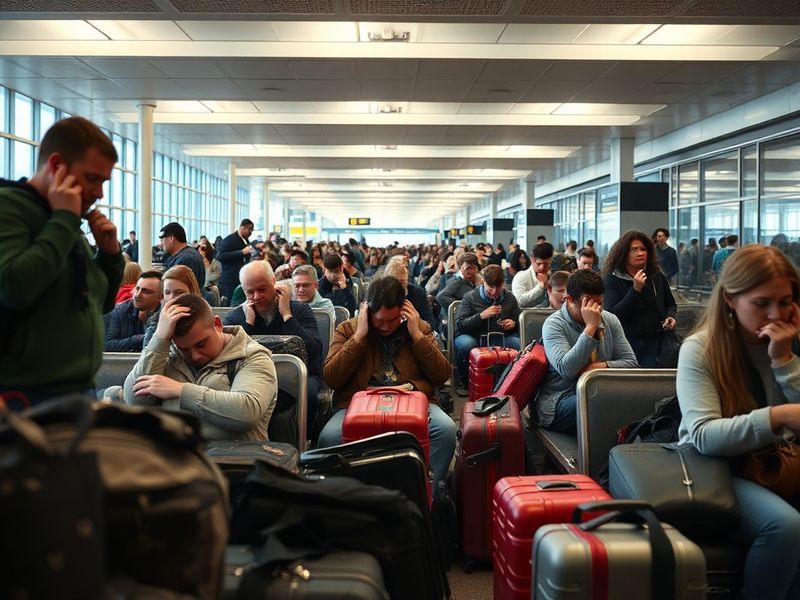
Why Flight Delays and Cancellations Are Rising Worldwide
“`html
The Global Toll of Flight Delays and Cancellations
Flight delays and cancellations have become a defining feature of modern air travel, disrupting millions of journeys each year. The causes are varied, from weather disruptions to mechanical failures and operational bottlenecks. Yet the consequences ripple far beyond inconvenience, affecting economies, personal plans, and even cultural exchanges. As airports grow more congested and climate change intensifies weather-related disruptions, the problem shows no sign of abating.
The Scale of the Problem Worldwide
In 2023, global airlines experienced over 3.5 million flight delays and nearly 300,000 cancellations, according to data from OAG, a leading aviation analytics firm. This represents roughly one in five flights arriving late. The situation is particularly acute in regions with aging infrastructure or high seasonal traffic, such as Europe and parts of Asia. In the United States, the Federal Aviation Administration reported that 20% of flights were delayed in 2023, with weather accounting for 60% of those delays.
Delays aren’t just a modern affliction. Historical records show that delays have plagued air travel since its inception. The first commercial jetliners in the 1950s suffered from frequent cancellations due to poor weather forecasting and limited maintenance capabilities. Today, despite technological advances, delays persist—often due to the sheer volume of flights. In 2023, global air traffic reached 90% of pre-pandemic levels, straining already stretched systems.
Regional Hotspots for Disruption
Certain airports and regions consistently rank as global hotspots for delays. The top offenders include:
- London Heathrow (LHR): Europe’s busiest hub, often paralyzed by fog or strikes. In 2023, it recorded over 40,000 delays, with runway closures and staff shortages playing major roles.
- Chicago O’Hare (ORD): A key U.S. gateway, frequently disrupted by thunderstorms and air traffic control constraints. In summer 2023, nearly 30% of flights were delayed.
- Tokyo Haneda (HND): A critical link between Asia and the world, often delayed by typhoons or overcrowded airspace. In 2022, typhoon season led to a 25% cancellation rate for several weeks.
- Dubai International (DXB): A global transit hub under constant pressure from extreme heat, which reduces aircraft performance, and surging passenger numbers.
Root Causes: Why Flights Are Grounded
Understanding the causes of delays and cancellations is essential to addressing the issue. While weather is the most visible culprit, operational and systemic factors also play a significant role.
Weather: The Unpredictable Factor
Severe weather remains the leading cause of flight disruptions. Thunderstorms, high winds, and low visibility force airports to halt takeoffs and landings. In tropical regions, monsoons and typhoons can ground flights for days. Even in temperate zones, unpredictable weather patterns—amplified by climate change—are causing more frequent and intense disruptions.
For example, in 2023, a single winter storm in the northeastern U.S. caused over 5,000 cancellations in a single weekend. Similarly, heatwaves in the Middle East have led airlines to reduce payloads or delay departures to avoid engine performance issues.
Operational and Logistical Bottlenecks
Beyond weather, airlines face a web of operational challenges. Staffing shortages, especially among air traffic controllers and ground crews, have led to widespread delays. In Europe, strikes by pilots, cabin crew, and airport staff have become routine, often triggered by disputes over pay, working conditions, or retirement benefits. In 2022, strikes in France alone caused over 7,000 cancellations.
Airport capacity is another constraint. Many major hubs, such as London Heathrow and New York JFK, operate at or near full capacity. When one flight is delayed, it creates a domino effect, delaying subsequent departures and arrivals. This ripple effect can persist for days, especially during peak travel periods.
Technical and Mechanical Failures
Mechanical issues, though less frequent than in the past, still contribute to cancellations. Older fleets or planes pressed into extended service due to supply chain shortages are more prone to breakdowns. A single faulty component, such as a malfunctioning auxiliary power unit, can ground an aircraft for hours. Airlines are increasingly turning to predictive maintenance, but delays due to unforeseen repairs remain a reality.
Economic and Cultural Consequences
The impact of flight disruptions extends far beyond the airport terminal. Economically, the cost is staggering. Airlines lose billions annually in compensation, rebooking fees, and lost revenue. In 2023, U.S. carriers alone paid over $2.5 billion in delay-related compensation to passengers. For businesses, especially those reliant on just-in-time logistics or international trade, delays can mean missed deadlines, lost contracts, and damaged reputations.
Culturally, the ripple effects are equally profound. Delayed flights disrupt family reunions, weddings, and cultural exchanges. They can prevent musicians, artists, and athletes from reaching events on time, as seen when a European tour by a K-pop group was delayed due to airport strikes, forcing multiple reschedules. Similarly, athletes traveling to international competitions often face last-minute changes that affect performance and preparation.
In some cultures, punctuality is a point of pride. In Japan, for instance, airlines and airports prioritize timeliness, and even a minor delay is considered a serious failure. Conversely, in parts of Latin America and Africa, delays are often accepted as part of the travel experience, reflecting broader societal attitudes toward time and planning.
What Can Be Done? Solutions in Sight
While the problem is complex, solutions are emerging. Airlines and airports are investing in technology to improve scheduling and reduce delays. Artificial intelligence is being used to predict weather patterns more accurately and optimize flight paths. Air traffic management systems are being modernized to handle increased traffic more efficiently.
Infrastructure upgrades are also underway. In the U.S., the FAA’s NextGen program aims to modernize air traffic control with satellite-based navigation, reducing congestion at major hubs. In Europe, the Single European Sky initiative seeks to streamline airspace management, cutting delays by up to 10%.
Passengers, too, can mitigate the impact of delays. Booking early morning flights reduces the risk of cascading delays later in the day. Choosing less congested airports or airlines with strong on-time performance records can also help. Many airlines now offer real-time updates via apps, allowing travelers to adjust plans proactively.
Governments and regulators are also stepping up. In the EU, Regulation 261/2004 mandates compensation for passengers affected by cancellations or long delays, providing a financial safety net. In the U.S., the Department of Transportation is pushing for stricter airline accountability, including clearer communication during disruptions.
Looking Ahead: A More Resilient Future?
The future of air travel hinges on balancing growth with resilience. As climate change intensifies, weather-related disruptions are likely to increase, requiring more adaptive strategies. Airlines are exploring sustainable aviation fuels and electric aircraft, which may reduce delays by lowering ground time for refueling. Meanwhile, airports are investing in expanded terminals and additional runways to accommodate rising demand.
Yet, challenges remain. Geopolitical tensions, labor disputes, and economic uncertainties continue to threaten stability in the industry. For passengers, the message is clear: delays and cancellations are part of the modern travel experience, but understanding their causes and planning accordingly can make the difference between a minor inconvenience and a major disruption.
As air travel becomes more accessible to people across the globe, the pressure to improve reliability will only grow. Whether through technological innovation, policy reform, or cultural shifts in expectations, the goal remains the same: to ensure that the skies remain open, and the journeys continue—on time.