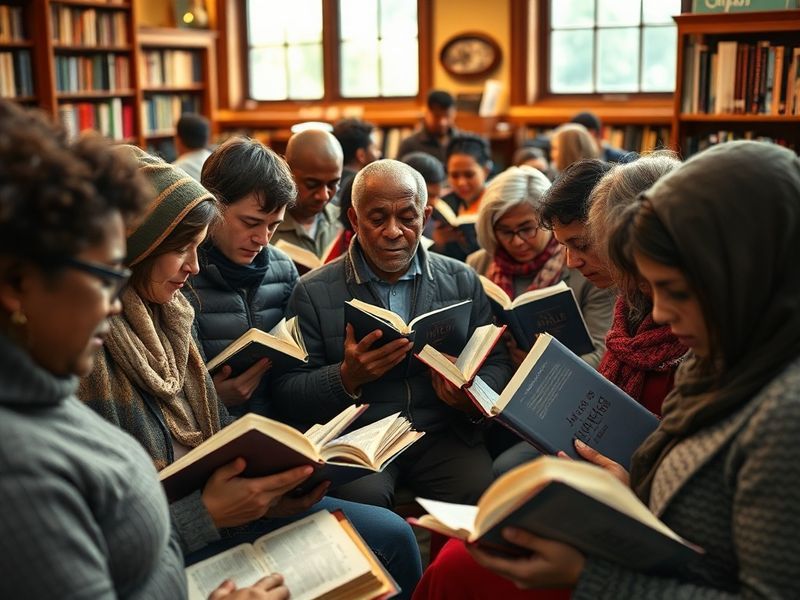
The Bible has been a cornerstone of American life since the earliest colonial settlements. For centuries, it has influenced laws, literature, and daily routines across the country. Yet the way Americans engage with the Bible today is far from uniform. Some read it as literal truth, others as historical narrative, and many as a source of moral guidance. This complex relationship reflects deeper cultural divides about faith, history, and identity in modern America.
The Historical Roots of Biblical Influence
The Pilgrims who arrived on the Mayflower in 1620 carried Bibles with them, seeking religious freedom in the New World. These early settlers viewed Scripture as the foundation of their communities. Laws in colonial America often referenced biblical principles, and sermons were central to public life. By the time of the American Revolution, figures like Thomas Jefferson and John Adams debated the role of the Bible in governance, though they approached it with differing interpretations.
During the 19th century, the Bible became a unifying text in a rapidly expanding nation. The Second Great Awakening saw millions of Americans converting to evangelical Christianity, and the distribution of Bibles grew through organizations like the American Bible Society. Meanwhile, abolitionists like Frederick Douglass drew on biblical passages to challenge slavery, while slaveholders used other verses to justify their practices. This duality highlights how Scripture has been wielded to both uphold and challenge societal norms.
Key Moments in American Biblical History
- 1640: The first Bible printed in America, the Bay Psalm Book, was published in Cambridge, Massachusetts.
- 1800: The American Bible Society was founded, distributing millions of Bibles across the frontier.
- 1950s-1960s: The Gideons International placed Bibles in hotel rooms, embedding Scripture in public spaces.
- 2010s: The rise of digital Bibles and Bible apps made Scripture more accessible than ever before.
The Modern Relationship: Reading Habits and Trends
Today, Americans read the Bible in diverse ways. A 2021 study by the American Bible Society found that 53% of Americans read the Bible at least occasionally, with 20% reading it weekly. However, the methods and motivations vary widely. Digital platforms like YouVersion have made reading the Bible more convenient, with over 500 million downloads of its app. Meanwhile, traditional print Bibles remain popular, especially among older generations.
Generational differences are striking. According to the Pew Research Center, younger Americans are less likely to read the Bible regularly compared to older adults. Many millennials and Gen Z turn to alternative spiritual texts or interpret religion in more personalized ways. Yet, interest in the Bible persists in unexpected places, such as through podcasts, social media commentary, and even TikTok videos breaking down biblical passages.
Who Reads the Bible in America Today?
- Evangelical Christians: The most frequent readers, often using study Bibles and devotionals.
- African American Communities: The Bible plays a central role in worship and civil rights movements.
- Lifelong Learners: Secular readers exploring the Bible for its literary and historical value.
- Digital Natives: Younger generations engaging with Scripture through apps and online communities.
Controversies and Cultural Debates
The Bible’s role in America is not without controversy. Debates rage over its use in public schools, the display of Ten Commandments monuments, and whether businesses can refuse services based on religious beliefs. The Supreme Court has weighed in on these issues multiple times, often splitting along ideological lines. For example, in 2005, the Court ruled that displaying the Ten Commandments in courthouses could be unconstitutional if done for religious purposes.
Another flashpoint is the teaching of creationism alongside evolution in science classrooms. Some states have passed laws allowing religious explanations of human origins, sparking legal challenges. These debates reveal how the Bible remains a battleground for broader cultural conflicts about the separation of church and state.
Public Perception of the Bible
The Bible’s image in American culture is often polarized. For some, it is a sacred text that provides comfort and guidance. For others, it is a relic of a theocratic past that should have no place in modern governance. A 2022 Gallup poll found that 29% of Americans believe the Bible should have a larger role in society, while 38% think it should have a smaller role. The remaining respondents felt its influence was about right.
The Bible’s Legacy in American Literature and Art
Beyond religious practice, the Bible has left an indelible mark on American literature, music, and art. Writers like Herman Melville, Nathaniel Hawthorne, and Flannery O’Connor wove biblical themes into their work. The King James Version’s poetic language has influenced countless authors, from John Milton to Toni Morrison. Even secular works like Moby Dick and The Grapes of Wrath draw on biblical archetypes of struggle and redemption.
In music, gospel hymns and spirituals emerged from African American churches, blending biblical narratives with rhythmic traditions. Later, artists like Johnny Cash and Bob Dylan referenced Scripture in their lyrics, bridging religious and secular audiences. Contemporary Christian music continues to dominate radio airwaves, while mainstream artists like Kanye West and Chance the Rapper incorporate biblical imagery into their work.
Visual art has also been shaped by biblical stories. The stained glass windows of grand cathedrals tell biblical tales, while modern artists like Andy Warhol reinterpreted religious iconography in pop art. Even in advertising and film, biblical references are used to evoke themes of hope, sacrifice, and morality.
Notable Biblical References in American Culture
- Literature: Nathaniel Hawthorne’s The Scarlet Letter explores themes of sin and redemption.
- Music: “I’ll Fly Away” by Albert E. Brumley is a gospel classic based on biblical imagery.
- Film: The Ten Commandments (1956) remains a cultural touchstone.
- Art: Grant Wood’s American Gothic subtly references biblical themes of hard work and faith.
Looking Ahead: The Future of the Bible in America
As America becomes more secular and diverse, the Bible’s role is likely to evolve. Younger generations may engage with Scripture differently, but its cultural footprint remains significant. The rise of digital media offers new ways to access and interpret the Bible, while also raising questions about authenticity and authority. Meanwhile, debates over its place in public life show no signs of fading.
One trend to watch is the growing interest in comparative religion and interfaith dialogue. As Americans encounter more diverse belief systems, the Bible may be studied less as a doctrinal text and more as a historical and literary artifact. This shift could lead to new interpretations and a broader appreciation of its cultural contributions.
What’s Next for American Readers?
Several factors will shape the future of Bible reading in America:
- Technology: Apps, podcasts, and virtual study groups are making Scripture more interactive.
- Education: Schools and universities are exploring new ways to teach biblical literacy without promoting a specific faith.
- Social Justice: Activists continue to use biblical principles to advocate for change, from climate action to racial equity.
- Global Influences: Immigration is bringing new religious traditions to America, creating opportunities for dialogue and shared learning.
For those interested in exploring biblical themes in contemporary culture, Dave’s Locker’s Entertainment section offers insights into how Scripture influences modern storytelling. Meanwhile, the Culture category provides further analysis of religion’s role in American society.
Conclusion
The Bible’s presence in America is as complex as the nation itself. It has been a source of inspiration, conflict, and identity for generations. Whether read as sacred text, historical document, or literary masterpiece, its influence is undeniable. As America continues to change, so too will the ways its people engage with the Bible. Yet one thing remains clear: Scripture will endure as a mirror reflecting the nation’s highest ideals and deepest struggles.