Lyrid Meteor Shower 2024: When and How to Watch
“`html
Lyrid Meteor Shower: When and How to Watch the Celestial Show
The Lyrid meteor shower, one of the oldest known annual meteor showers, offers stargazers a reliable chance to witness shooting stars each April. With recorded observations dating back to 687 BCE, this celestial event has captivated human imagination for millennia. Unlike more sporadic meteor displays, the Lyrids provide a predictable spectacle that astronomy enthusiasts can plan for year after year.
The shower typically peaks around April 21-22, though some meteors may be visible for several nights before and after. This year’s conditions appear particularly favorable, with the moon setting before midnight, leaving dark skies for optimal viewing. The Lyrids originate from debris left behind by Comet Thatcher, which last visited the inner solar system in 1861 and won’t return until 2276.
Understanding the Lyrid Meteor Shower
The Lyrids derive their name from the constellation Lyra, the radiant point from which the meteors appear to originate. This radiant sits near the bright star Vega, one of the most prominent stars in the northern sky. While meteors can appear anywhere in the sky, tracing their paths backward will lead to this constellation.
At its peak, the Lyrid meteor shower produces between 10-20 meteors per hour under ideal conditions. However, occasional outbursts have been recorded with rates approaching 100 meteors per hour, as happened in 1982 and 1922. These unpredictable surges make the Lyrids particularly exciting for dedicated observers.
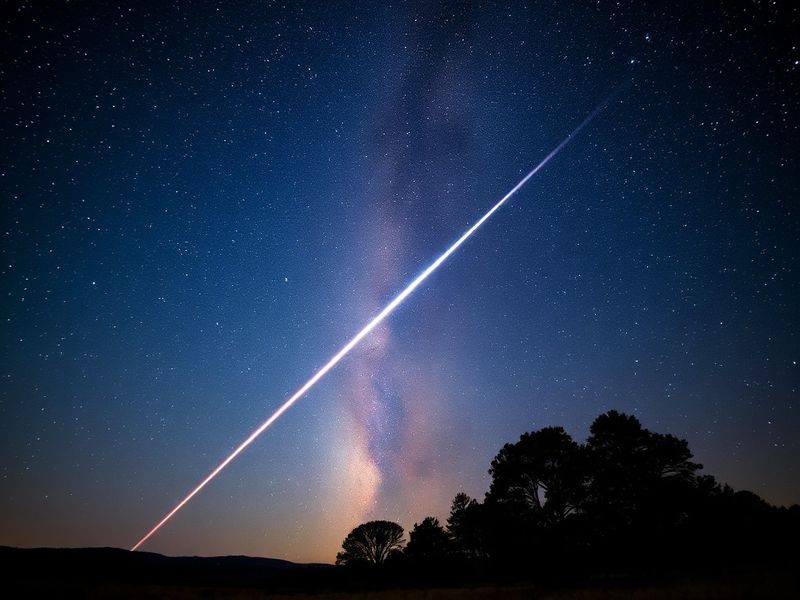
The meteors themselves are typically medium-speed, entering Earth’s atmosphere at about 30 miles per second. They often leave behind persistent trains that can glow for several seconds after the meteor’s passage. Some Lyrid meteors may also produce brilliant fireballs, creating especially memorable sights for those watching.
Historical Significance of the Lyrids
The Lyrid meteor shower holds a special place in astronomical history. Chinese records from 687 BCE describe “stars falling like rain,” marking one of the earliest documented observations of this celestial event. Ancient Greek astronomers also noted the shower, linking it to the myth of Orpheus and his lyre.
In more recent history, the Lyrids have played a role in advancing our understanding of meteor showers. The shower’s association with Comet Thatcher was established in 1867 by astronomer Gottfried Galle, confirming the connection between comets and meteor streams that had been theorized decades earlier.
Best Practices for Viewing the Lyrid Meteor Shower
To maximize your chances of seeing Lyrid meteors, follow these viewing recommendations. First, find a location far from city lights, as light pollution significantly reduces meteor visibility. Rural areas, state parks, or designated dark-sky preserves offer the best conditions.
Timing is crucial. The best viewing typically occurs between midnight and dawn, when your location is facing Earth’s direction of travel through space. This orientation increases the number of meteors you’ll encounter. For the Lyrids, the radiant rises above the northeastern horizon around 9 PM local time, but meteors become more frequent after midnight.
No special equipment is needed to observe the Lyrid meteor shower. In fact, using binoculars or telescopes can limit your field of view and reduce the number of meteors you’ll see. Simply find a comfortable spot, allow your eyes to adjust to the darkness for about 20-30 minutes, and enjoy the show.
- Essential viewing tips:
- Check weather forecasts and moon phases before planning your observation
- Bring a reclining chair or blanket for comfortable viewing
- Dress warmly, as nighttime temperatures can drop significantly
- Allow at least an hour for observation to see the full range of activity
- Turn off all unnecessary lights to preserve night vision
Photographing the Lyrid Meteor Shower
Capturing images of the Lyrid meteor shower presents unique challenges and rewards. The key to successful meteor photography lies in preparation and patience. Start by selecting a camera with manual settings and a wide-angle lens, which can capture a larger portion of the sky.
Set your camera to the highest possible ISO while keeping noise levels acceptable, typically between 1600-6400. Use the widest aperture your lens allows (often f/2.8 or lower) and set the focus manually to infinity. A shutter speed of 15-30 seconds works well for most situations, though you may need to adjust based on your specific equipment and conditions.
Use a sturdy tripod and a remote shutter release to minimize camera shake. Consider taking a series of timed exposures throughout the night to maximize your chances of capturing a meteor. Some photographers use intervalometers to automate this process, allowing them to capture hundreds of frames while they observe visually.
For those new to astrophotography, the Lyrids offer an excellent opportunity to practice. The predictable nature of the shower allows for better planning than waiting for a random meteor. Many successful meteor photos are actually composites of multiple images, with the meteor added to a base image of the night sky.
Connecting the Lyrids to Other Celestial Events
The Lyrid meteor shower represents just one thread in the rich tapestry of annual meteor showers. Understanding its place in this cycle can deepen appreciation for these celestial events. The Lyrids follow the Quadrantids in January and precede the more famous Perseids in August, creating a steady rhythm of meteor activity throughout the year.
Occasionally, the Lyrids overlap with other astronomical phenomena, creating memorable viewing opportunities. In 2015, observers in some locations reported seeing Lyrid meteors alongside the International Space Station passing overhead. Such coincidences, while rare, remind us of the dynamic nature of our night sky.
For those interested in exploring further, Dave’s Locker Science section offers additional resources about meteor showers and other astronomical events. The site’s Entertainment section also features articles about space-themed media that might complement your meteor-watching experience.
Conclusion
The Lyrid meteor shower serves as an annual reminder of the dynamic nature of our solar system. As Earth plows through the debris trail of Comet Thatcher, we witness a fleeting connection to a comet that won’t return for centuries. This shower offers more than just pretty lights in the sky—it connects us to ancient observers who watched the same display millennia ago.
Whether you’re a seasoned astronomer or a casual observer, the Lyrids provide an accessible entry point into the world of meteor watching. With minimal equipment required and a predictable schedule, this shower invites everyone to look up and wonder. As light pollution continues to encroach on our night skies, events like the Lyrids become increasingly important for maintaining our connection to the wider universe.
Set your alarm, find your spot, and prepare to be amazed by nature’s fireworks. The Lyrid meteor shower awaits, offering a brief but brilliant moment of cosmic connection.