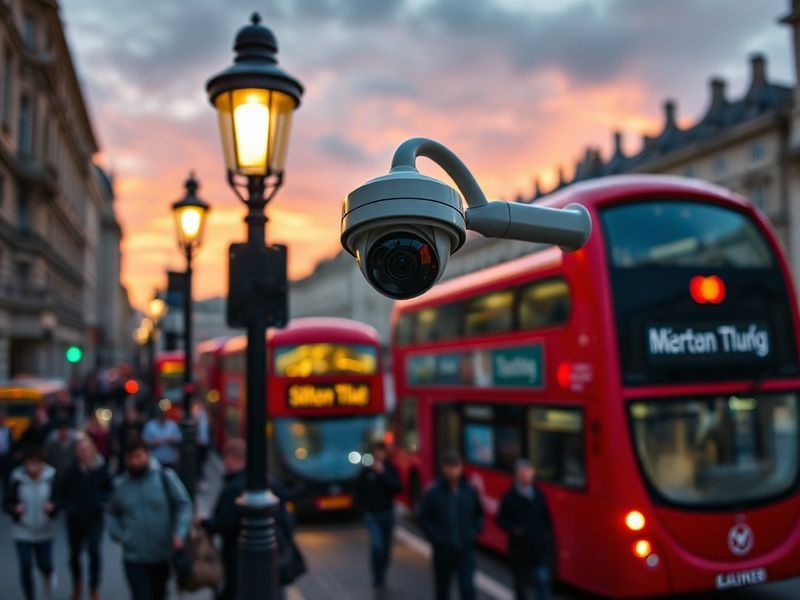
Facial Recognition Cameras in the UK: Security vs Privacy Debate
“`html
Facial Recognition Cameras in the UK: The Technology Reshaping Public Spaces
Across the United Kingdom, facial recognition technology has moved from experimental trials to active deployment in public spaces. Police forces, local councils, and private venues now use facial recognition systems to identify individuals in real time, raising significant questions about security effectiveness, privacy rights, and public trust. This technology, once confined to science fiction, is now a reality—and its rapid adoption demands closer scrutiny.
The Current Landscape of Facial Recognition in the UK
Facial recognition cameras have been trialed and implemented in several UK cities, most notably by South Wales Police and the Metropolitan Police in London. These systems operate by scanning crowds, capturing biometric data, and comparing faces against watchlists compiled from criminal databases or other sources. The technology is often deployed at major events, transport hubs, and shopping centers.
In 2023, the UK’s Biometrics and Surveillance Camera Commissioner published a report highlighting that over 20 police forces had tested or used live facial recognition (LFR) technology. While some trials were temporary, others have become semi-permanent fixtures in public surveillance strategies. The Home Office has also signaled support for the use of facial recognition in counterterrorism efforts, particularly in crowded urban areas.
Where Facial Recognition Is Being Used
- Public Events: Concerts, sports matches, and protests have seen facial recognition deployments to screen for known offenders or persons of interest.
- Transport Hubs: Airports, train stations, and ports use the technology to enhance security and streamline identity verification.
- Retail and Commercial Areas: Shopping centers, including the Met Police’s deployment in the West End of London, have used facial recognition to deter shoplifting and antisocial behavior.
- Police Investigations: Some forces use facial recognition as part of post-incident analysis, such as reviewing CCTV footage to identify suspects.
Despite its growing presence, the legal and ethical framework governing facial recognition remains fragmented. The UK lacks a comprehensive biometric data protection law, relying instead on guidance from the Information Commissioner’s Office (ICO) and case law. This regulatory gap has fueled public skepticism and legal challenges.
How Facial Recognition Works in Practice
Facial recognition systems rely on a combination of hardware and software. High-definition cameras capture images of faces, which are then processed to extract key biometric markers—such as the distance between the eyes, nose width, and jawline shape. These markers are converted into a mathematical template, which is compared against a database of known faces.
There are two primary types of facial recognition in use:
- Live Facial Recognition (LFR): Cameras scan crowds in real time, matching faces against watchlists as people pass by. This is the most controversial form due to its indiscriminate nature.
- Post-Event Facial Recognition: Footage is recorded and analyzed after an incident, such as a crime or public disorder, to identify suspects. This approach is generally less contentious but still raises privacy concerns.
Critics argue that LFR is inherently discriminatory, as it disproportionately affects minority groups. Studies, including research by the University of Essex, have shown that facial recognition systems can have higher error rates for women and people of color, leading to false identifications and potential miscarriages of justice.
Accuracy and Error Rates
The technology’s reliability remains a contentious issue. While proponents highlight success stories—such as the identification of wanted criminals—the overall error rates in real-world conditions are difficult to quantify. The Metropolitan Police reported a 70% accuracy rate in some trials, but this figure does not account for false positives, which can lead to wrongful accusations.
In 2019, a landmark legal case brought by civil liberties group Liberty challenged South Wales Police’s use of LFR. The Court of Appeal ruled that the force’s deployment was unlawful due to insufficient data protection impact assessments and a lack of clear public consultation. The case underscored the need for greater transparency and accountability in how facial recognition is used.
Public Opinion and Ethical Concerns
Public attitudes toward facial recognition are deeply divided. A 2023 YouGov poll found that 48% of UK adults support its use in public spaces for crime prevention, while 34% oppose it. Younger demographics tend to be more skeptical, with concerns about surveillance capitalism and government overreach driving opposition.
The ethical implications extend beyond accuracy. Civil liberties organizations, including Big Brother Watch and Liberty, argue that facial recognition normalizes a surveillance state, eroding anonymity in public spaces. There are fears that the technology could be misused—for example, to target marginalized communities or suppress dissent.
In 2021, the European Commission proposed a ban on facial recognition in public spaces for up to five years, citing risks to fundamental rights. While the UK is no longer bound by EU regulations post-Brexit, the debate has influenced domestic discussions. The UK government has not followed suit but has signaled a cautious approach, emphasizing the need for proportionality and oversight.
Key Ethical and Legal Challenges
- Consent: Unlike fingerprinting or DNA, facial recognition captures biometric data from individuals who may not even be aware they are being scanned.
- Proportionality: Deploying facial recognition in low-crime areas or for minor offenses may be seen as excessive and counterproductive.
- Data Security: Biometric databases are prime targets for hackers, raising concerns about identity theft and misuse.
- Function Creep: Once implemented for one purpose, facial recognition systems often expand to other uses, such as marketing or employee monitoring.
Looking Ahead: The Future of Facial Recognition in the UK
The trajectory of facial recognition in the UK will depend on several factors: technological advancements, legal rulings, and public pressure. Advocates argue that the technology could revolutionize policing, from identifying missing persons to tracking suspects in real time. However, opponents warn that without strict regulation, it could lead to a surveillance society where privacy is a relic of the past.
One potential path forward is the adoption of “privacy by design” principles, where systems are built with built-in safeguards, such as automatic data deletion or strict access controls. The UK’s upcoming Online Safety Bill and Data Reform Bill may also address some of these concerns, though critics argue they do not go far enough.
Internationally, the UK is not alone in grappling with these issues. The United States has seen cities like San Francisco ban facial recognition, while China has embraced it as part of its social credit system. The UK’s approach—neither fully embracing nor rejecting the technology—places it in a precarious middle ground.
What’s Next for UK Surveillance?
Several trends are likely to shape the future of facial recognition in the UK:
- Expansion of Watchlists: As databases grow, the risk of false positives and over-policing increases.
- Integration with AI: Machine learning could improve accuracy but also exacerbate biases in the data.
- Public Advocacy: Campaigns by civil liberties groups may lead to stricter legal limits on deployment.
- Technological Alternatives: Some experts advocate for less intrusive methods, such as gait analysis or behavioral profiling, though these also raise ethical questions.
Ultimately, the debate over facial recognition in the UK is about more than just technology—it’s about the kind of society we want to live in. Do we prioritize security over privacy, or can we find a balance that protects both? As the technology becomes more pervasive, these questions will only grow more urgent.
For now, the UK remains at a crossroads. Without clear, enforceable regulations, the use of facial recognition cameras risks becoming a patchwork of inconsistent practices, where the rights of citizens are secondary to the perceived benefits of surveillance. The challenge for policymakers, law enforcement, and the public will be to ensure that innovation does not come at the cost of fundamental freedoms.
To learn more about technology’s role in modern policing, visit our Technology and Politics categories for in-depth analysis and expert commentary.