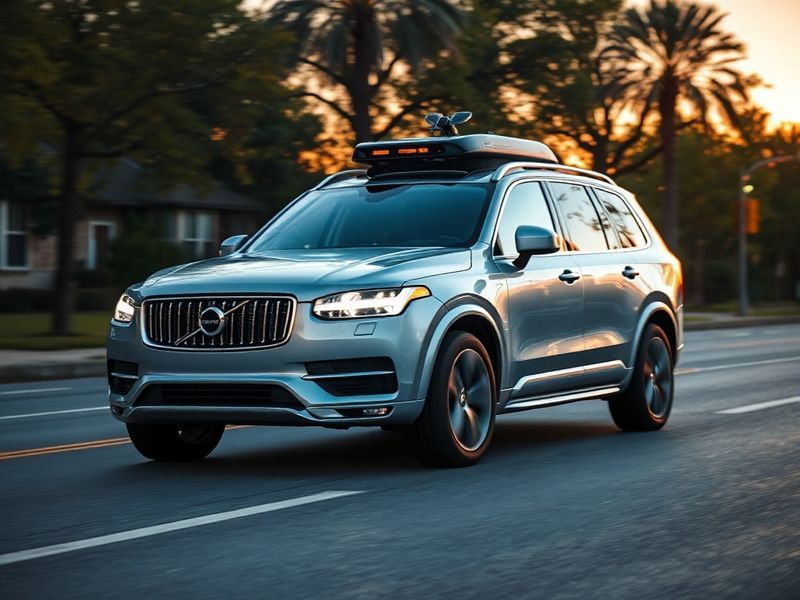
Uber’s push into self-driving technology represents one of the boldest experiments in modern transportation. The ride-hailing giant has invested heavily in autonomous vehicle (AV) development, aiming to redefine urban mobility by removing human drivers from the equation. But the journey—pun intended—has been far from smooth. From high-profile accidents to shifting corporate priorities, the evolution of self-driving Uber vehicles offers a fascinating case study in ambition, risk, and the future of work.
The Rise and Fall of Uber’s Autonomous Ambitions
Uber’s self-driving program began in earnest in 2015, when the company established its Advanced Technologies Group (ATG) in Pittsburgh. The goal was clear: leverage autonomous vehicles to reduce operational costs and improve efficiency. Early tests in Pittsburgh and San Francisco showcased the potential—fleet vehicles navigating city streets with minimal human intervention.
The technology, though promising, faced immediate skepticism. Critics questioned whether AVs could handle the unpredictability of urban traffic, pedestrian behavior, and extreme weather. Uber’s approach was aggressive, prioritizing rapid deployment over perfecting the system. This strategy backfired spectacularly in 2018, when an Uber self-driving car struck and killed a pedestrian in Tempe, Arizona. The accident exposed critical flaws in the vehicle’s perception systems and the company’s safety protocols.
In the aftermath, Uber paused its autonomous vehicle program, and the ATG unit was eventually sold to Aurora Innovation in 2020. The sale marked a turning point, shifting Uber’s focus away from hardware and toward software integration. Today, the company no longer operates its own AV fleet but continues to explore partnerships and pilot programs to incorporate autonomous technology into its broader mobility ecosystem.
Lessons from the Autonomous Experiment
The rise and fall of Uber’s self-driving efforts highlight several key challenges in autonomous vehicle development:
- Safety vs. Speed: Balancing rapid innovation with rigorous safety testing remains a persistent hurdle. The Tempe accident underscored the human cost of cutting corners.
- Regulatory Uncertainty: Autonomous vehicle regulations vary widely by state and country, creating a fragmented landscape for deployment.
- Economic Pressures: The high cost of AV technology makes it difficult for ride-hailing companies to justify large-scale adoption without significant cost savings.
- Public Trust: High-profile failures erode consumer confidence, making it harder to win acceptance for autonomous services.
Broader Implications for the Ride-Hailing Industry
Uber’s self-driving detour reflects broader trends in the transportation sector. Traditional automakers and tech companies alike are racing to deploy AVs, driven by the promise of reduced labor costs and increased efficiency. However, the path to widespread adoption is fraught with obstacles, from technical limitations to ethical dilemmas.
For ride-hailing companies, autonomous vehicles could revolutionize operations. Without the need to pay human drivers, companies like Uber and Lyft could significantly boost profit margins. But this shift also threatens millions of jobs, raising questions about the social and economic impact of automation. Policymakers and labor advocates are already grappling with how to support displaced workers and ensure a just transition.
The environmental implications are equally complex. Proponents argue that AVs could reduce traffic congestion and emissions by optimizing routes and enabling car-sharing. Critics, however, warn that increased vehicle miles traveled (VMT) could have the opposite effect, particularly if autonomous cars encourage more people to abandon public transit.
The Future of Autonomous Ride-Hailing
Despite Uber’s retreat from direct AV operations, the company remains committed to autonomous technology. Its partnership with Motional, a joint venture with Hyundai, aims to launch a robotaxi service in select U.S. cities by 2024. This collaboration combines Uber’s ride-hailing platform with Motional’s AV technology, offering a glimpse into the next phase of autonomous mobility.
Meanwhile, competitors like Waymo and Cruise are forging ahead with their own AV services. Waymo, a subsidiary of Alphabet, has been operating a commercial robotaxi service in Phoenix since 2020, while Cruise, backed by General Motors, is expanding its operations in San Francisco. These companies are betting that consumers will embrace autonomous ride-hailing once safety and reliability are proven.
The success of these ventures will depend on several factors:
- Technological Maturity: AVs must demonstrate near-flawless performance in complex urban environments to gain public trust.
- Regulatory Support: Governments need to create clear, consistent frameworks for AV deployment, including liability and insurance standards.
- Consumer Acceptance: Surveys consistently show that many people remain skeptical of autonomous vehicles. Education and transparency will be crucial in overcoming this skepticism.
- Economic Viability: For AV services to be sustainable, they must offer competitive pricing and convenience compared to traditional ride-hailing and public transit.
Conclusion: A Cautious but Optimistic Outlook
Uber’s self-driving journey is far from over, even if the company has scaled back its ambitions. The lessons learned from its ATG experiment—both successes and failures—will shape the future of autonomous mobility. While the technology holds immense promise, the road ahead is long and uncertain.
For now, the dream of fully autonomous ride-hailing remains just that—a dream. But with continued innovation and collaboration, it may one day become a reality. In the meantime, the conversation around self-driving cars will continue to evolve, driven by technological breakthroughs, regulatory shifts, and societal debates about the role of automation in our lives.
One thing is certain: the race to autonomous mobility is far from over, and Uber’s story is just one chapter in a much larger narrative.
For more on the evolving world of transportation technology, check out our Automotive and Technology categories.