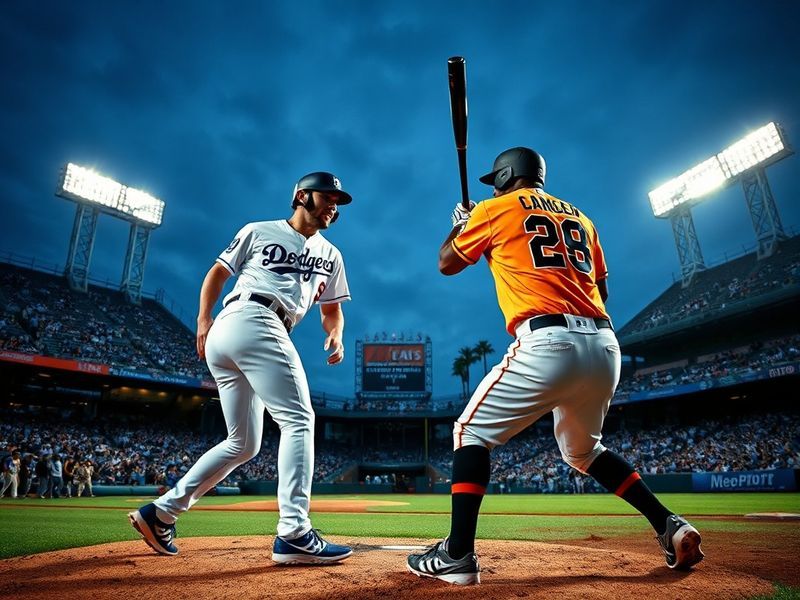
The Los Angeles Dodgers and San Francisco Giants represent more than just two teams in Major League Baseball. Their rivalry transcends the diamond, weaving through decades of West Coast sports culture, urban identity, and even global influence. From Brooklyn to California, this clash has defined what it means to compete not just in sports, but in the soul of a region.
The origins of this rivalry stretch back to 1883, when both franchises were born in New York City. The Giants, established in 1883, and the Dodgers, founded in 1883 as the Brooklyn Atlantics before evolving into the Dodgers in 1890, began their storied competition in the National League. Their first meeting on October 2, 1889, marked the beginning of a feud that would captivate fans and shape baseball’s identity for generations.
The Brooklyn Era: Bitter Beginnings and Brooklyn Pride
In the early 20th century, the Giants dominated New York baseball, while the Dodgers struggled to keep up. Despite their underdog status, the Dodgers cultivated a loyal fanbase known for their resilience. The rivalry intensified in 1932 when the Giants signed star pitcher Carl Hubbell, a move that further fueled tensions. By the 1940s, the Dodgers had begun to rise, culminating in Jackie Robinson breaking the color barrier in 1947—an event that reshaped not just baseball, but American culture.
The Dodgers’ move west in 1958, following the Giants’ relocation in 1957, marked a turning point. Brooklyn fans mourned the loss of their team, while San Francisco embraced its new franchise with open arms. The geographical shift didn’t end the rivalry; it redefined it. Suddenly, the Dodgers and Giants weren’t just New York teams clashing—they were symbols of two distinct West Coast cities vying for cultural dominance.
West Coast Showdown: A Rivalry Reborn in California
When the Dodgers and Giants arrived in Los Angeles and San Francisco, respectively, they carried their rivalry into a new era. The 1960s and 1970s saw the teams dominate the National League, with iconic players such as Willie Mays, Sandy Koufax, and Maury Wills becoming household names. Their battles on the field mirrored the cultural clashes of the time—between tradition and innovation, between blue-collar grit and West Coast cool.
The rivalry peaked during the 1980s, when both teams were perennial contenders. The Dodgers, led by manager Tommy Lasorda and stars like Kirk Gibson and Fernando Valenzuela, became synonymous with fiery competitiveness. Meanwhile, the Giants, anchored by Will Clark and Kevin Mitchell, embodied the grit of San Francisco baseball. Their playoff clashes in 1989—a year that saw the Giants reach the World Series—cemented their status as one of baseball’s most intense rivalries.
Key Moments in the Modern Era
The rivalry has continued to evolve, with each decade bringing new chapters. In 2002, the Giants and Dodgers faced off in a memorable National League Division Series, a series that ended in a dramatic Giants comeback. More recently, the teams have clashed in high-stakes regular-season battles, with each victory carrying symbolic weight. In 2021, the Dodgers and Giants met in a pivotal series that determined playoff positioning, a reminder that this rivalry remains as fierce as ever.
- 1951: The Shot Heard ‘Round the World – Though not a Dodgers-Giants game, this iconic moment in Giants history (Bobby Thomson’s walk-off homer) foreshadowed their move west and the beginning of a new chapter in their rivalry.
- 1982: The Black Monday Collapse – The Giants’ infamous late-season collapse, which allowed the Dodgers to clinch the division, remains a painful memory for Giants fans.
- 2004: Bonds Breaks the Single-Season HR Record – Barry Bonds’ historic 73-home-run season was a high point for the Giants, celebrated in contrast to the Dodgers’ struggles that year.
- 2016: Kershaw vs. Bumgarner – A pitching duel for the ages saw Clayton Kershaw and Madison Bumgarner face off in a game that felt like a playoff preview.
The Cultural Impact: Beyond the Field
The Dodgers-Giants rivalry isn’t just about baseball—it’s about identity. Los Angeles and San Francisco represent two of the most influential cities in the world, each with distinct cultures, economies, and global reputations. The Dodgers, often seen as the glamorous team of Hollywood and corporate sponsors, contrast with the Giants, who embody the scrappy, blue-collar spirit of the Bay Area.
This rivalry has also become a global spectacle. With MLB expanding its international reach, Dodgers and Giants games are broadcast in over 200 countries. Their matchups draw millions of viewers worldwide, making them ambassadors for both the sport and the West Coast. In Japan, for example, the Dodgers have a massive following due to their historic ties with Japanese players like Hideo Nomo and Shohei Ohtani. Meanwhile, the Giants’ connection to Latin American talent, including Pablo Sandoval and Madison Bumgarner’s World Series heroics, has strengthened their appeal across Latin America.
The rivalry has also influenced fashion and pop culture. The Dodgers’ classic blue-and-white uniforms are iconic, often seen in streetwear and high fashion. The Giants, with their orange and black colors, have a more gothic, traditional aesthetic that resonates with fans who appreciate baseball’s history. This cultural crossover has turned Dodgers-Giants matchups into events that extend beyond the ballpark, influencing music, art, and even technology.
Why This Rivalry Still Matters
In an era where sports rivalries often feel manufactured, the Dodgers-Giants feud remains authentic. It’s not just about wins and losses—it’s about pride, history, and the communities that support these teams. For Dodgers fans, beating the Giants is a matter of Los Angeles pride. For Giants fans, it’s a chance to prove that the Bay Area’s scrappy underdog spirit still matters.
The rivalry also reflects broader societal trends. The West Coast’s rise as a global cultural and economic hub is mirrored in the success of these two teams. As cities like Los Angeles and San Francisco continue to shape the future of technology, entertainment, and innovation, the Dodgers and Giants serve as symbols of that progress.
Moreover, the rivalry has adapted to modern baseball. With the rise of analytics and the globalization of the sport, both teams have had to evolve. The Dodgers, known for their deep pockets and analytical approach, have become a model franchise. The Giants, meanwhile, have relied on strong scouting and player development to remain competitive. Their contrasting methods make their matchups even more intriguing.
The Future of the Rivalry
As baseball looks toward the future, the Dodgers-Giants rivalry shows no signs of fading. With young stars like Julio Urías and Logan Webb leading their respective teams, the next generation of players is ready to carry the torch. The rivalry’s ability to reinvent itself ensures its longevity, whether through social media buzz, international games, or high-stakes playoff drama.
For fans, the rivalry is more than just a game—it’s a tradition. Whether it’s a summer night at Dodger Stadium, with the San Gabriel Mountains looming in the background, or a crisp October afternoon at Oracle Park, with the Bay Bridge gleaming in the distance, these matchups are etched in the memories of generations. The Dodgers and Giants aren’t just teams; they’re institutions that represent the heart and soul of West Coast baseball.
As long as there’s baseball, there will be Dodgers vs. Giants. And as long as there’s a rivalry like this, the sport will continue to thrive, not just as a game, but as a reflection of who we are.