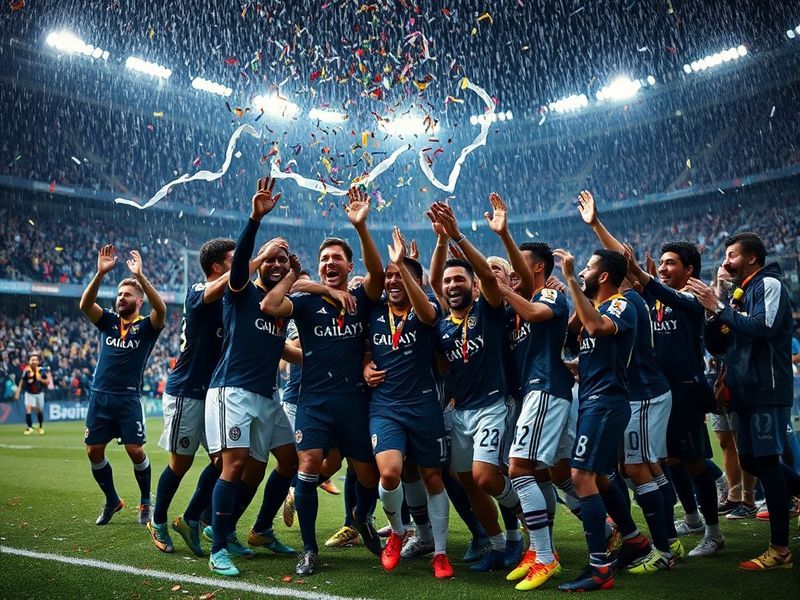
The clash between Major League Soccer titans LA Galaxy and Columbus Crew transcends a mere game. It represents a collision of cultures, ambitions, and soccer philosophies that reflect the broader evolution of American soccer over the past three decades. From the glamour of Los Angeles to the blue-collar grit of Ohio, this rivalry offers a lens through which to examine how soccer has taken root in different corners of the United States.
Founded in 1995, the LA Galaxy quickly became the face of American soccer’s professional era, leveraging Hollywood connections, global superstars, and a city obsessed with entertainment. Meanwhile, the Columbus Crew, established the same year, carved out a different identity—rooted in community, resilience, and a blue-collar work ethic that resonates deeply in the American heartland. Their matchups are more than games; they are cultural statements.
The Rise of Two Franchises in Diverse Landscapes
The LA Galaxy’s origin story reads like a Hollywood script. Owned by Anschutz Entertainment Group and backed by Hollywood moguls, the franchise positioned itself as a glamorous destination for international stars. The signing of David Beckham in 2007 wasn’t just a transfer—it was a statement that MLS could attract world-famous athletes and global attention. The Galaxy’s six MLS Cups and consistent playoff appearances reinforced its image as a team of destiny, aligned with the city’s ethos of ambition and spectacle.
In contrast, the Columbus Crew emerged from the Midwest as a team built by and for its community. Playing in the modest Mapfre Stadium (now Historic Crew Stadium), the team cultivated a loyal fanbase known for their passion and creativity. The Crew’s identity was forged not in the spotlight, but in the stands—where supporters sang, chanted, and built traditions that endure to this day. Their two MLS Cup victories (2008 and 2020) came through grit and teamwork, reflecting the values of Columbus itself: hardworking, unpretentious, and resilient.
This contrast in origins highlights a broader truth about American soccer: success isn’t one-size-fits-all. While Los Angeles thrives on star power and entertainment value, Columbus thrives on authenticity and fan culture. Their matchups often feel like a dialogue between two Americas—one coastal and cosmopolitan, the other Midwestern and grounded.
Key Moments in a Growing Rivalry
The LA Galaxy and Columbus Crew have met multiple times in the playoffs, including the 2008 MLS Cup final—a game that still stings for Galaxy fans. In a tightly contested match at BMO Field in Toronto, the Crew defeated Los Angeles 3–1, claiming their first championship on a rainy night in Canada. For Columbus, it was validation. For Los Angeles, it was a rare misstep in an otherwise dominant era.
Other memorable encounters include the 2014 and 2015 playoff meetings, both won by the Galaxy, showcasing the competitive edge that has defined their postseason battles. These games were marked by high intensity, tactical depth, and moments of individual brilliance—from Landon Donovan’s leadership in LA to Federico Higuaín’s playmaking in Columbus.
Here are some of the most significant matches in their playoff history:
- 2008 MLS Cup Final: Columbus Crew 3–1 LA Galaxy – Historic Crew Stadium, Columbus. The Crew claimed their first title in front of their home fans.
- 2014 MLS Cup Playoffs, Conference Semifinals: LA Galaxy 2–0 Columbus Crew – StubHub Center, Carson. LA advanced on goals by Robbie Keane and Gyasi Zardes.
- 2015 MLS Cup Playoffs, Conference Semifinals: LA Galaxy 1–0 Columbus Crew (Agg: 3–1) – Mapfre Stadium, Columbus. A late goal by Mike Magee sealed LA’s victory.
These games reveal a rivalry that is both respectful and intense. Neither team dominates the other, and the outcomes often hinge on small moments—set pieces, defensive lapses, or clutch performances—rather than sheer star power.
Cultural Impact Beyond the Pitch
The LA Galaxy and Columbus Crew represent more than just teams—they embody the cultural footprint of soccer in their respective regions. In Los Angeles, soccer is another form of entertainment, competing with Hollywood, the Dodgers, and the Lakers for attention. The Galaxy’s branding, stadium experience, and global appeal reflect this reality. Their home, Dignity Health Sports Park, is part of a larger sports and entertainment complex, hosting concerts and international friendlies alongside MLS games.
In Columbus, soccer is woven into the fabric of the city’s identity. The Crew’s supporters’ groups, like the Crew Supporters Union, have shaped matchday culture with chants, tifos, and a communal spirit that feels almost European in its intensity. The club’s move to Lower.com Field in 2021—a state-of-the-art downtown stadium—signaled a new chapter, but the soul of the club remained rooted in its working-class origins.
This cultural divide extends globally. While the Galaxy draws international attention due to LA’s global status, the Crew represents the growing influence of soccer in America’s heartland. Their rivalry is a microcosm of soccer’s journey in the United States—from a niche sport to a mainstream passion, with each city contributing its own flavor to the story.
The Future of the Rivalry
As MLS continues to expand and professionalize, the LA Galaxy vs. Columbus Crew rivalry may evolve—but it won’t fade. The league’s shift toward parity means that no team can rest on past glory, and both franchises are rebuilding with younger talent and fresh strategies. The Galaxy, now led by a new generation of stars, still aims for dominance. The Crew, under pragmatic leadership, focuses on consistency and fan engagement.
What remains constant is the contrast between the two cities. Los Angeles brings star power, innovation, and a cosmopolitan vibe. Columbus brings authenticity, passion, and a blue-collar mentality. Together, they show that American soccer is not monolithic—it’s a mosaic of identities, each contributing to the growth of the sport.
With the growing popularity of soccer in the United States, and MLS’s expansion into new markets, this rivalry may soon face new challenges—like inter-conference play or even a potential cross-country final. But whenever the two teams meet, they remind us that soccer in America is more than a game. It’s a story of ambition, community, and cultural evolution.
As the sun sets over Historic Crew Stadium or the lights glow over Dignity Health Sports Park, one thing is clear: this rivalry is here to stay. And with each match, it writes a new chapter in the ever-growing narrative of American soccer.