West Virginia’s Chemical Spill: A Case Study in Industrial Risk and Public Trust
The Elk River chemical spill of January 2014 remains one of the most consequential industrial accidents in modern American history. More than a decade later, its echoes reverberate through regulatory debates, corporate accountability discussions, and public perceptions of industrial safety. The disaster exposed vulnerabilities in chemical storage regulations, raised urgent questions about water infrastructure, and became a global reference point for industrial risk management.
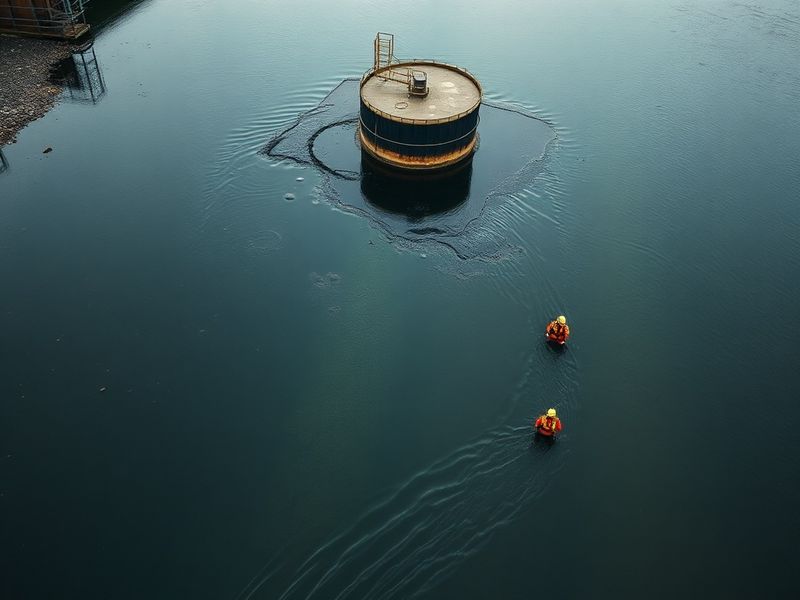
Centered in Charleston, West Virginia—the state’s capital and most populous city—the spill occurred when a storage tank owned by Freedom Industries leaked approximately 10,000 gallons of 4-methylcyclohexanemethanol (MCHM) and other chemicals into the Elk River. The contamination flowed directly into the water supply serving 300,000 residents, forcing a five-day “do not use” advisory that disrupted daily life, shuttered schools, and crippled local businesses. The crisis unfolded with eerie precision: no alarms sounded, no immediate warnings were issued, and the public learned of the danger only after residents reported a licorice-like odor in their tap water.
The Chain of Failure: Corporate Oversight and Regulatory Gaps
The Elk River spill was not an act of nature, but a failure of oversight at multiple levels. An investigation by the U.S. Chemical Safety Board later revealed that Freedom Industries had operated with minimal regulatory scrutiny. The company’s storage tank, located just 1.5 miles upstream from the water intake for the region’s primary treatment plant, had not been inspected by the West Virginia Department of Environmental Protection in over two decades. Its secondary containment system—a critical safeguard—was either inadequate or improperly maintained.
This breakdown highlighted a systemic issue: the nation’s chemical industry operated under a patchwork of regulations, many of which were decades old. The Clean Water Act and the Safe Drinking Water Act had limited reach over storage facilities like those at Freedom Industries. The 2014 spill occurred just months before the Environmental Protection Agency’s (EPA) Risk Management Plan (RMP) rule was updated, a delay that many critics argue contributed to the disaster.
The spill prompted immediate federal scrutiny. Within weeks, EPA Administrator Gina McCarthy announced new measures to strengthen chemical facility safety, including enhanced inspections and public disclosure requirements. Yet even these reforms faced resistance from industry groups and some state officials, who argued they imposed undue burdens on businesses already struggling with compliance costs.
Global Echoes: Chemical Spills and the Cost of Industrialization
West Virginia’s crisis did not exist in isolation. It mirrored similar disasters worldwide—each a grim reminder of the human and environmental costs of rapid industrialization. In Bhopal, India, in 1984, a Union Carbide pesticide plant released toxic methyl isocyanate gas, killing thousands and injuring hundreds of thousands more. In Tianjin, China, in 2015, explosions at a hazardous materials warehouse killed 173 people and exposed systemic failures in urban planning and emergency response.
These incidents reveal a pattern: industrial accidents often occur where profit motives outpace safety culture, where regulatory frameworks lag behind technological innovation, and where public trust erodes in the face of repeated crises. In West Virginia, the spill became a symbol of a region’s dependence on the chemical industry—a dependence that brought jobs but also chronic health concerns, from elevated cancer rates to endocrine disruption linked to MCHM exposure.
Culturally, the spill reshaped public perception of water safety in the United States. It forced Americans to confront a paradox: in a country with abundant freshwater resources, access to clean drinking water could not be taken for granted. Communities across the country began to question the safety of their own water supplies, from Flint, Michigan, to Jackson, Mississippi. The spill became a catalyst for water justice movements, pushing local and national leaders to prioritize infrastructure upgrades and transparency.
From Crisis to Reform: The Long Shadow of the Spill
In the years following the disaster, West Virginia took steps to prevent a recurrence. The state legislature passed the Storage Tank Act in 2014, establishing a registry of aboveground storage tanks, regular inspections, and mandatory financial assurance for cleanup costs. The law, though imperfect, represented one of the most comprehensive state-level responses to industrial chemical risk in the nation.
Freedom Industries filed for bankruptcy within months of the spill, and its owners faced civil lawsuits and criminal charges. In 2016, the company’s former president and two officials were indicted on Clean Water Act violations and fraud. The case underscored a growing legal trend: holding corporate leaders personally accountable for environmental harm.
Yet challenges remain. Many of the affected communities continue to report lingering health effects, including skin rashes, nausea, and respiratory issues—symptoms that some residents attribute to residual contamination. A 2020 study by researchers at West Virginia University found elevated levels of MCHM metabolites in the urine of residents who consumed contaminated water, though long-term health impacts are still being studied. The spill also exposed disparities in recovery: low-income neighborhoods and rural areas received less support than urban centers, reinforcing existing inequities in environmental health.
The disaster also spurred a cultural shift in how communities engage with industrial risks. Grassroots organizations like the West Virginia Rivers Coalition and the Ohio Valley Environmental Coalition gained prominence, advocating for stronger protections and greater public participation in environmental decision-making. Their work reflected a growing global trend: communities increasingly demanding a seat at the table when industries operate in their backyards.
Lessons for a Globalized Industrial Future
The Elk River spill offers several enduring lessons. First, prevention is always cheaper than remediation. Second, transparency is not optional—it is a cornerstone of public trust. Third, industrial safety must be viewed not as a cost center, but as an investment in community resilience and long-term economic stability.
Internationally, the spill reinforced the need for stronger international standards. The United Nations Environment Programme’s 2020 Global Chemicals Outlook highlighted that chemical production is projected to double by 2030, with much of the growth occurring in developing nations lacking robust regulatory frameworks. West Virginia’s experience became a case study in the Global Chemicals Outlook, cited as a warning of what happens when safety is deprioritized in the name of economic growth.
The disaster also reshaped corporate behavior. In the years since, companies operating chemical storage facilities have increased investments in leak detection systems, secondary containment, and employee training. Insurers began to scrutinize chemical risks more closely, and lenders incorporated environmental, social, and governance (ESG) criteria into their lending decisions—a shift accelerated by investor pressure following high-profile spills.
Looking Ahead: Water Security in the 21st Century
As climate change intensifies droughts and floods, the pressure on water infrastructure will only grow. The Elk River spill was a wake-up call: water is not an infinite resource, nor is it invulnerable to human error. Protecting it requires more than engineering—it demands governance, equity, and foresight.
West Virginia’s crisis remains a cautionary tale, but it is also a story of resilience. From the first responders who distributed bottled water to the scientists who traced the contamination’s path, the response demonstrated the power of collective action in the face of adversity. Today, the Elk River flows clear again, but the lessons linger—lessons that extend far beyond the banks of a single river in Appalachia.
As industries evolve and populations grow, the challenge of balancing progress with protection has never been more urgent. The Elk River spill reminds us that safety is not a luxury—it is a legacy we leave for future generations.