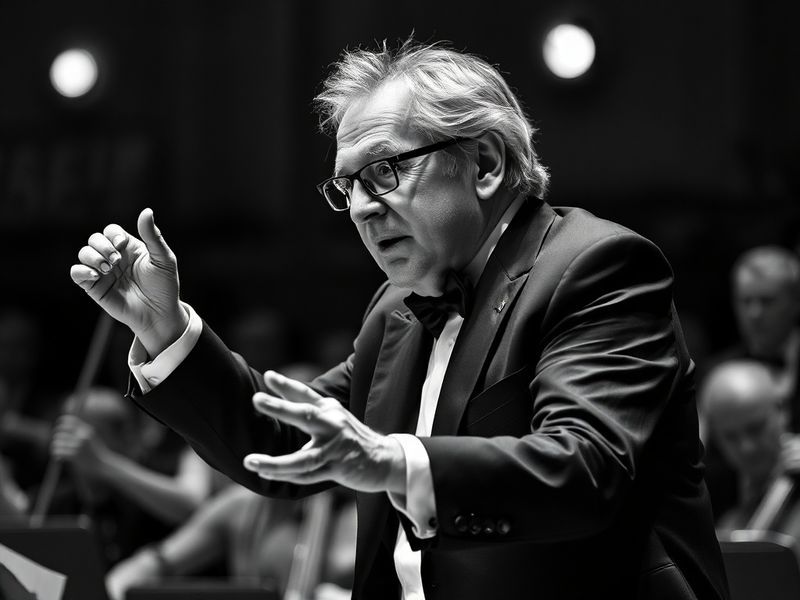
Michael Tilson Thomas: A Lifetime of Musical Innovation and Influence
“`html
Michael Tilson Thomas: A Lifetime of Musical Innovation
Michael Tilson Thomas, often referred to as MTT, stands as one of the most influential conductors and composers of his generation. With a career spanning over five decades, he has shaped the sound of orchestras across the globe while championing new music and fostering the next generation of musicians. His work with the San Francisco Symphony, in particular, has left an indelible mark on the classical music landscape.
Born in Los Angeles in 1944, Tilson Thomas grew up in a family deeply connected to the arts. His grandfather, Boris Thomashefsky, was a legendary figure in Yiddish theater, and his parents nurtured his early musical inclinations. By the age of ten, he was already composing music, and his formal training began at the University of Southern California before he transferred to the prestigious Curtis Institute of Music in Philadelphia. There, he studied under the guidance of conductors such as Fritz Reiner, whose rigorous approach to music would later define his own leadership style.
A Conducting Career That Redefined Orchestral Performance
Tilson Thomas’s conducting career took off in the 1960s, and he quickly became known for his dynamic and expressive interpretations. His debut with the Boston Symphony Orchestra in 1969 at the age of 25 marked the beginning of a long and illustrious relationship with major orchestras worldwide. In 1971, he became the first American-born conductor to lead the London Symphony Orchestra, a milestone that highlighted his growing reputation.
His tenure as the music director of the San Francisco Symphony from 1995 to 2020 was transformative. Under his leadership, the orchestra gained international acclaim for its bold programming and technical brilliance. Tilson Thomas expanded the ensemble’s repertoire to include works by contemporary composers, while also delving into lesser-known pieces from the Romantic and Modern eras. The orchestra’s recordings during this period earned numerous Grammy Awards, cementing its status as one of the finest in the world.
One of his most notable achievements was the creation of the SFS Media label, which allowed the orchestra to release its performances independently. This initiative not only broadened the symphony’s reach but also provided a platform for Tilson Thomas to explore his own compositions and collaborations with living composers. His 2005 composition From a New World, inspired by Dvořák’s New World Symphony, became a staple in the orchestra’s performances and showcased his ability to blend tradition with innovation.
Innovation and Advocacy in Contemporary Music
Tilson Thomas has long been a vocal advocate for contemporary music. His commitment to new works has introduced audiences to compositions by John Adams, John Luther Adams, and Mason Bates, among others. His advocacy extends beyond performance; he has been instrumental in commissioning and premiering works by emerging composers, ensuring that the classical music tradition remains vibrant and evolving.
In addition to his work with orchestras, Tilson Thomas has been a passionate educator. He co-founded the New World Symphony in Miami in 1987, an innovative training orchestra for young musicians. The program provides fellows with hands-on experience in orchestral performance, chamber music, and audience engagement, preparing them for careers in the ever-changing music industry. Many of his former fellows have gone on to prominent positions in major orchestras around the world.
The New World Symphony’s campus, designed by architect Frank Gehry, is a testament to Tilson Thomas’s forward-thinking approach. The facility includes state-of-the-art rehearsal spaces, recording studios, and interactive learning environments. This blend of technology and tradition reflects his belief in the importance of adapting to the needs of modern musicians and audiences alike.
Legacy and Future Endeavors
As Tilson Thomas enters the next phase of his career, his influence shows no signs of waning. In 2020, he stepped down as the San Francisco Symphony’s music director but remains closely associated with the orchestra as its conductor laureate. He has also taken on new roles, including as a guest conductor with leading ensembles and as a composer-in-residence with various institutions.
His contributions to music have been recognized with numerous honors, including multiple Grammy Awards, the National Medal of Arts, and the Kennedy Center Honors. In 2019, he was awarded the prestigious Glenn Gould Prize, which celebrates artists who have made a unique contribution to music and its communication to the public.
Looking ahead, Tilson Thomas shows no signs of slowing down. He continues to conduct, compose, and inspire, while also mentoring the next generation of musicians. His legacy is not just in the performances he has led or the compositions he has written, but in the way he has redefined what it means to be a musician in the 21st century.
Key Takeaways from Michael Tilson Thomas’s Career
To understand the magnitude of Michael Tilson Thomas’s impact, consider the following milestones:
- Early Beginnings: Born into a family of artists, Tilson Thomas’s early exposure to music set the stage for his lifelong passion.
- Conducting Breakthroughs: His rapid ascent in the classical music world, including leading major orchestras by his mid-20s, demonstrated his exceptional talent.
- San Francisco Symphony Era: His 25-year tenure as music director transformed the orchestra into a globally recognized ensemble.
- Innovation in Education: The New World Symphony stands as a model for training the next generation of musicians in a rapidly evolving field.
- Commitment to New Music: His advocacy for contemporary composers has kept classical music relevant and dynamic.
Michael Tilson Thomas’s career is a testament to the power of music to connect, inspire, and innovate. Whether through his groundbreaking performances, his educational initiatives, or his compositions, he has consistently pushed the boundaries of what classical music can be. As he continues to shape the future of the art form, his legacy serves as a reminder of the enduring impact one individual can have on an entire industry.
A Final Reflection
In an era where classical music often struggles to maintain its relevance, Michael Tilson Thomas has shown that innovation and tradition are not mutually exclusive. His ability to bridge the gap between the old and the new has earned him a place among the great conductors of our time. As audiences and musicians alike look to the future, Tilson Thomas’s work offers a blueprint for how to honor the past while embracing the possibilities of tomorrow.