What Are the Lyrids Meteor Shower? History, Viewing Tips & Global Traditions
“`html
The Lyrids Meteor Shower: A Celestial Event Across Cultures and Centuries
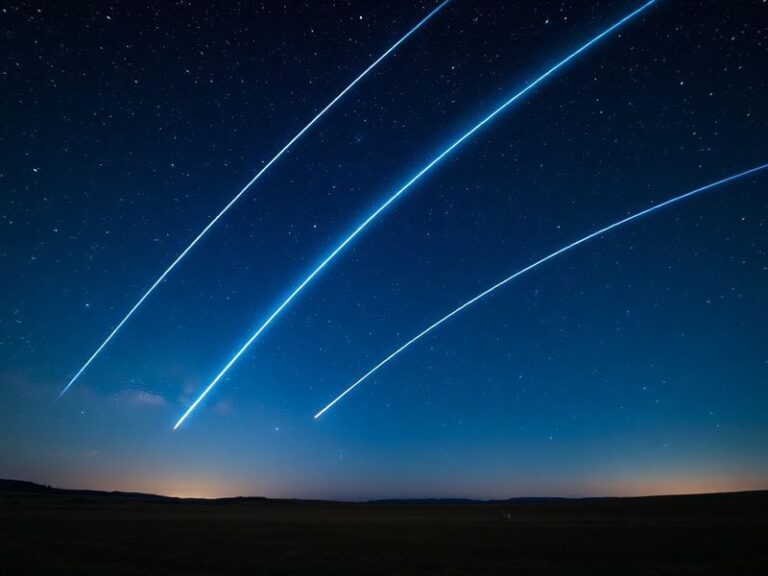
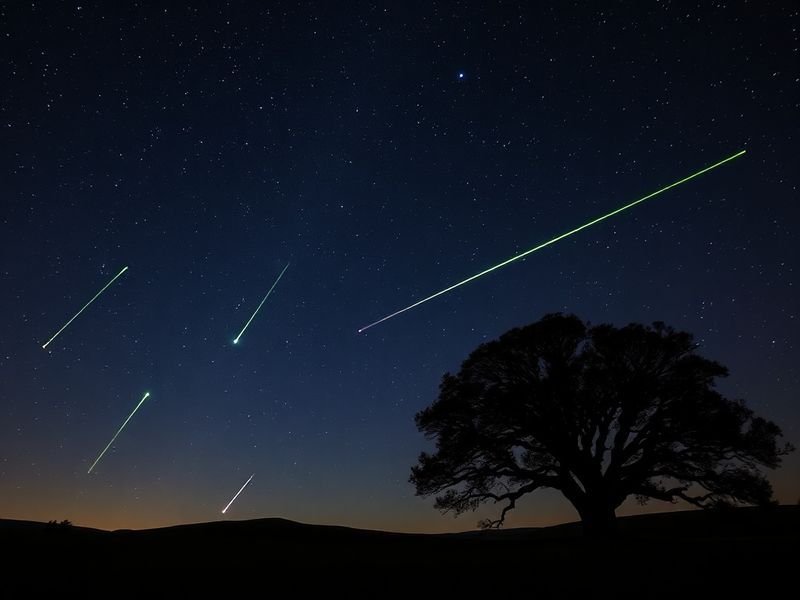
The Lyrids meteor shower arrives each April like a cosmic encore, offering stargazers one of the oldest documented displays in the night sky. Unlike more dramatic meteor storms, the Lyrids deliver a steady stream of shooting stars—typically 10 to 20 per hour—with occasional brighter bursts known as fireballs. This year, the shower peaks around April 21–22, providing a predictable yet always surprising spectacle visible from both hemispheres.
What makes the Lyrids particularly compelling is not just their beauty, but their deep historical roots. Ancient Chinese astronomers recorded the Lyrids as far back as 687 BCE, noting them as “stars that fell like rain.” This longevity speaks to humanity’s enduring fascination with transient celestial events—moments when the universe seems to briefly connect with Earth.
The Science Behind the Lyrids: Why They Happen
The Lyrids originate from the comet C/1861 G1 Thatcher, discovered in 1861 by amateur astronomer A.E. Thatcher. As Earth passes through the debris trail left by this long-period comet, tiny particles—often no larger than grains of sand—enter our atmosphere at speeds up to 49 kilometers per second. The resulting ionization creates the brilliant streaks we recognize as meteors.
The radiant point, from which the meteors appear to originate, lies near the constellation Lyra, home to the bright star Vega. This placement gives the shower its name. Though Vega is not physically connected to the event, its prominence in the summer sky of the Northern Hemisphere makes the Lyrids a seasonal marker for many cultures.
Unlike the more intense Perseids or Geminids, the Lyrids are known for their unpredictability. While they usually produce modest activity, historical records show occasional outbursts. In 1803, American newspapers reported up to 700 meteors per hour over a nine-hour period. Such surges remind us that even well-studied phenomena can still surprise scientists.
How to Observe the Lyrids Safely and Effectively
Viewing the Lyrids requires minimal equipment—just a dark sky, patience, and clear weather. The best time to watch is after midnight and before dawn, when Lyra is high in the sky. Avoiding urban light pollution is crucial; even distant city glow can obscure fainter meteors. National parks and designated dark-sky reserves offer ideal conditions.
For optimal viewing:
- Find a location away from artificial lights, ideally with a wide, unobstructed view of the sky.
- Allow at least 30 minutes for your eyes to adjust to the darkness.
- Dress warmly, even in spring, as nighttime temperatures can drop significantly.
- Use a reclining chair or blanket to avoid neck strain while looking upward.
- Put away telescopes and binoculars—they restrict your field of view and are unnecessary for meteor watching.
Photographers can capture the Lyrids with a DSLR camera mounted on a tripod, using a wide-angle lens and a long exposure (10–30 seconds). High ISO settings (1600–3200) help record faint meteors, but be mindful of noise. A remote shutter release prevents camera shake during long exposures.
The Lyrids in Global Traditions: Myths and Meaners
Across the world, the Lyrids have been woven into folklore, serving as omens, calendrical markers, or divine messages. In ancient Greece, the appearance of the Lyrids coincided with the festival of the Thargelia, a springtime celebration honoring Apollo and Artemis. Some scholars believe the meteors were seen as the tears of Phaethon, the son of Helios, whose failed attempt to drive the sun chariot led to his death—a myth likely inspired by the fiery trails of meteors.
In Chinese astronomy, the Lyrids were recorded in the Zuozhuan, one of the earliest Chinese historical texts, during the Zhou dynasty. They were interpreted as celestial phenomena signaling changes in the mandate of heaven. Emperors and scholars alike monitored such events for political and agricultural guidance.
Among the Navajo people of the American Southwest, meteor showers like the Lyrids are sometimes connected to the story of Tó Neinili, the Water Sprinkler constellation. Though not directly tied to the Lyrids, the Navajo tradition reflects a broader Indigenous understanding of meteors as spiritual messengers or transformations of celestial beings.
In medieval Europe, some Christian chronicles interpreted meteor showers as divine portents—either warnings of famine, plague, or the approach of war. Such beliefs persisted until the Scientific Revolution, when astronomers like Edmond Halley began linking comets and meteors to natural, repeatable phenomena.
Connecting the Sky to Culture: Why We Still Look Up
Today, the Lyrids serve as a bridge between ancient wonder and modern science. Amateur astronomy clubs worldwide organize public viewing events, often blending stargazing with storytelling. These gatherings reinforce a sense of global community united by a shared sky.
Space agencies like NASA monitor meteor showers not just for science, but for spacecraft safety. High-speed debris poses risks to satellites and the International Space Station, requiring precise tracking of streams like the Lyrids. This dual role—as cultural event and technical concern—highlights the layered significance of celestial phenomena.
The Lyrids also play a role in modern education. Schools and planetariums use the annual shower to teach astronomy, optics, and even creative writing. Students often keep “meteor journals,” recording observations and reflections—a practice echoing those of ancient sky-watchers.
Beyond the Lyrids: What Comes Next in the Meteor Calendar
The Lyrids are just the beginning of the annual meteor season. Following them are the Eta Aquariids in early May, which originate from Halley’s Comet and are best seen from the Southern Hemisphere. Then come the Perseids in August, often called the “fireball champion” due to their high number of bright meteors.
For dedicated meteor enthusiasts, tracking these showers becomes a year-round hobby. Organizations such as the International Meteor Organization collect data from observers globally, refining predictions and deepening our understanding of cometary debris trails.
For most people, however, the Lyrids offer a simpler gift: a quiet moment under the stars. In an era of digital distraction, a meteor shower invites reflection—a chance to remember that we are part of a much larger universe, one that has been unfolding for billions of years.
As the poet Walt Whitman wrote, “I believe a leaf of grass is no less than the journey-work of the stars.” The Lyrids remind us that the journey isn’t just out there—it’s happening above us, every April, just as it has for millennia.