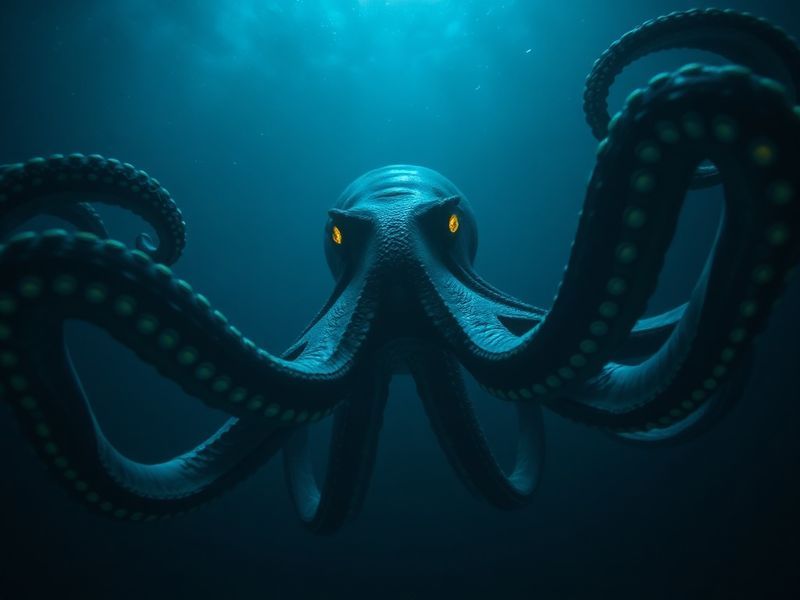
Giant Octopus: Myths, Science, and Global Encounters
“`html
Giant Octopus: Legends, Science, and Global Encounters
The giant octopus has long captivated human imagination, weaving its way through folklore, scientific inquiry, and even modern pop culture. These elusive cephalopods, with their intelligence and size, blur the line between myth and reality. From ancient sailors’ tales to today’s deep-sea expeditions, the giant octopus remains one of the ocean’s most enigmatic creatures.
The Myth and Reality of Giant Octopus Legends
Stories of colossal octopuses date back centuries, often emerging from isolated coastal communities where sailors and fishermen shared exaggerated accounts. One of the earliest written records comes from the Norwegian Örvar-Oddr Saga, which describes a massive sea monster called the hafgufa, possibly an octopus or squid. Similarly, ancient Japanese folklore tells of the Tako, a giant octopus that could capsize boats with its tentacles.
These legends weren’t entirely baseless. In an era before underwater exploration, sailors relied on secondhand stories to explain the unknown. The giant octopus became a convenient explanation for missing ships, broken nets, and strange disturbances in the water. Even today, some coastal cultures maintain beliefs in supernatural octopus-like creatures, blending ancient myths with modern cryptozoology.
Science, however, offers a more measured perspective. The largest confirmed octopus species, the Enteroctopus dofleini (giant Pacific octopus), typically reaches arm spans of 14 feet and weights up to 40 pounds. While impressive, these figures fall short of the 50-foot, ship-sinking monsters of legend. Yet, the gap between myth and reality keeps the giant octopus shrouded in mystery.
Scientific Discoveries and Deep-Sea Encounters
Modern marine biology has shed light on the giant octopus’s true nature, though many questions remain unanswered. In 2007, a team of researchers in the Pacific Northwest encountered a giant Pacific octopus while conducting a routine survey. The creature, estimated to weigh over 100 pounds, displayed remarkable intelligence, solving simple puzzles to access food rewards. Such observations align with the octopus’s reputation as one of the ocean’s most intelligent invertebrates.
Deep-sea expeditions have also revealed unexpected encounters. In 2021, a remotely operated vehicle (ROV) captured footage of a previously unknown species of giant octopus at depths of over 2,000 meters near the Davidson Seamount off California. Unlike their shallow-water relatives, these deep-sea octopuses exhibited bioluminescent patterns, suggesting adaptations to extreme environments. Scientists speculate that undiscovered species may still lurk in the ocean’s unexplored trenches.
Researchers have identified several key traits that define giant octopuses:
- Intelligence: Octopuses possess highly developed brains relative to other invertebrates, capable of problem-solving, tool use, and even escaping enclosures.
- Camouflage: Their ability to change color and texture in milliseconds helps them evade predators and ambush prey.
- Lifespan: Most giant octopuses live only 3-5 years, though some deep-sea species may live longer due to slower metabolisms.
- Reproduction: Females guard their eggs without eating until they hatch, a process that can take years in cold waters.
Cultural Depictions and Pop Culture Influence
The giant octopus has transcended folklore to become a staple of global pop culture. In Japan, the kaiju genre features colossal octopus-like creatures, such as Gezora in the 1966 film Gamera. Western audiences are more familiar with Cthulhu, H.P. Lovecraft’s cosmic entity that blends octopus and dragon traits, influencing everything from entertainment to metal album covers.
Video games have also embraced the giant octopus trope. Titles like Octopath Traveler and Sea of Thieves feature massive cephalopods as formidable foes, while Subnautica incorporates them into its alien ecosystems. These depictions often exaggerate the octopus’s size and aggression, but they underscore humanity’s enduring fascination with these creatures.
Literature, too, has explored the giant octopus’s symbolic potential. Jules Verne’s Twenty Thousand Leagues Under the Sea features a giant squid (though often conflated with octopuses), embodying the unknown terrors of the deep. More recently, authors like China Miéville have used cephalopod-like creatures to critique colonialism and environmental exploitation, drawing parallels between the octopus’s alien intelligence and humanity’s own destructive tendencies.
Conservation and the Future of Giant Octopuses
Despite their cultural prominence, giant octopuses face growing threats from human activities. Climate change, overfishing, and deep-sea mining pose risks to their habitats, particularly in the Pacific Northwest and the North Atlantic. The giant Pacific octopus, for instance, relies on cold, oxygen-rich waters, making it vulnerable to rising temperatures and ocean acidification.
Conservation efforts are slowly gaining traction. In 2020, marine biologists successfully tagged and tracked several giant Pacific octopuses in British Columbia, providing data that could inform protective measures. Meanwhile, organizations like the Ocean Conservancy advocate for sustainable fishing practices to preserve octopus populations and their ecosystems.
Public awareness is also growing, thanks in part to documentaries like My Octopus Teacher, which won an Academy Award in 2021. The film’s intimate portrayal of an octopus’s life cycle highlighted the creature’s intelligence and emotional depth, fostering empathy among viewers. Such narratives could be pivotal in shifting perceptions from fear to fascination.
The giant octopus remains a symbol of the ocean’s mysteries—both alluring and intimidating. As science advances, we may uncover more about these creatures, but their elusive nature ensures they will never lose their mythic allure. For now, the giant octopus endures as a bridge between the known and the unknown, a reminder of how much of our planet still defies explanation.