Mojtaba Khamenei: The Power Behind Iran’s Political Future
“`html
Mojtaba Khamenei: The Influential Figure Behind Iran’s Political Landscape
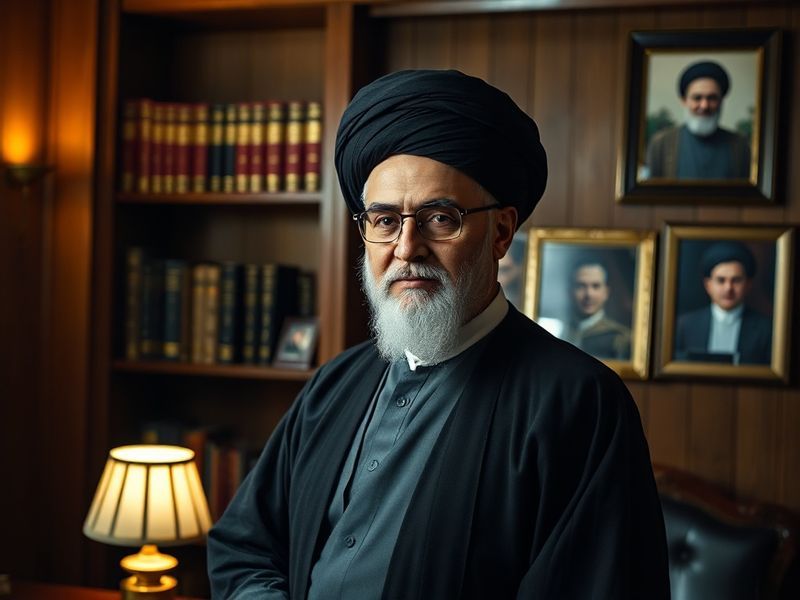
Mojtaba Khamenei, the second son of Iran’s Supreme Leader Ayatollah Ali Khamenei, remains one of the most enigmatic and powerful figures in the Islamic Republic’s political structure. While often operating behind the scenes, his influence extends across Iran’s conservative establishment, shaping policies and alliances that define the nation’s trajectory. Despite his low public profile, Mojtaba Khamenei’s role has drawn significant attention from analysts and international observers alike.
The Rise of a Political Insider
Born in 1969, Mojtaba Khamenei grew up in the shadow of his father’s growing political influence. After the 1979 Islamic Revolution, Ayatollah Khamenei became a key figure in Iran’s new political order, eventually ascending to the position of Supreme Leader in 1989. Mojtaba, however, took a different path, focusing on religious studies and political strategy rather than direct governance.
His rise within Iran’s conservative circles began in the early 2000s, when he became a prominent advisor to his father. By the mid-2010s, Mojtaba Khamenei had established himself as a critical liaison between Iran’s political and military elites. His influence grew particularly during the presidency of Mahmoud Ahmadinejad, a hardline figure who shared close ties with the Khamenei family.
Unlike his father, who maintains a ceremonial yet dominant role in Iran’s political system, Mojtaba operates more like a behind-the-scenes power broker. Analysts suggest his network spans across Iran’s Revolutionary Guard Corps (IRGC), judiciary, and conservative political factions. This network allows him to shape policy decisions without holding an official government position.
Key Areas of Influence
Mojtaba Khamenei’s influence can be observed in several critical areas of Iran’s political and social landscape. His role in shaping Iran’s conservative agenda has been particularly notable in the following domains:
- Conservative Political Alliances: Mojtaba has played a pivotal role in uniting Iran’s hardline factions, particularly during elections. His support has been crucial in securing victories for conservative candidates, including the 2021 election of Ebrahim Raisi as president.
- Military and Security Policy: His close ties with the IRGC have positioned him as a key figure in Iran’s military strategy, particularly in relation to regional conflicts and nuclear negotiations. Some reports suggest he has been involved in shaping Iran’s proxy warfare in Syria and Yemen.
- Judicial Appointments: Mojtaba Khamenei has been linked to the appointment of hardline judges who have overseen crackdowns on dissent and opposition figures. His influence in the judiciary reflects his broader goal of maintaining the Islamic Republic’s ideological purity.
- Economic Policy: While not directly involved in economic management, Mojtaba has been associated with policies that prioritize state-controlled industries and resistance economy principles, which align with Iran’s conservative economic outlook.
The breadth of his influence underscores why many see Mojtaba Khamenei as the de facto architect of Iran’s hardline policies. His ability to navigate Iran’s complex political landscape has made him a central figure in the country’s power structure.
Controversies and Public Perception
Despite his significant influence, Mojtaba Khamenei remains a controversial figure, both within Iran and internationally. His name has been linked to several high-profile scandals and allegations that have fueled debates about Iran’s political future.
One of the most persistent controversies involves his alleged involvement in the 2009 post-election crackdown, during which security forces violently suppressed protests against the re-election of Mahmoud Ahmadinejad. While no direct evidence has linked him to specific acts of violence, his close association with hardline factions has made him a target of criticism from reformists and opposition groups.
Internationally, Mojtaba Khamenei has been sanctioned by the United States for his role in advancing Iran’s nuclear and ballistic missile programs. The U.S. Treasury Department has accused him of using his influence to undermine regional stability, particularly in relation to Iran’s support for groups like Hezbollah and the Houthis.
Within Iran, public perception of Mojtaba Khamenei is divided. Supporters view him as a steadfast defender of the Islamic Revolution’s principles, while critics accuse him of fostering corruption and suppressing dissent. His low public profile only adds to the mystery surrounding his role, as he rarely grants interviews or makes public appearances.
Future Prospects: What Lies Ahead for Mojtaba Khamenei?
As Iran navigates an increasingly complex geopolitical landscape, the role of Mojtaba Khamenei is likely to become even more critical. With his father aging and Iran facing economic challenges and regional tensions, Mojtaba’s influence could determine the country’s political direction in the coming years.
One potential scenario is that Mojtaba could emerge as a successor to his father, either formally or informally. While the Iranian constitution does not explicitly bar a non-cleric from becoming Supreme Leader, the position has historically been held by a senior religious figure. However, the consolidation of power within the Khamenei family suggests that Mojtaba could play a dominant role in shaping Iran’s future leadership.
Another possibility is that Mojtaba’s influence could wane if internal divisions within Iran’s conservative establishment deepen. His close ties to the IRGC and hardline factions may not be enough to maintain his position if rival factions gain the upper hand. Additionally, public discontent with Iran’s political system could force a reckoning with figures like Mojtaba, who are seen as emblematic of the status quo.
Regardless of what the future holds, Mojtaba Khamenei’s role in Iran’s political landscape is undeniable. His ability to navigate Iran’s complex power structures has cemented his position as one of the most influential figures in the Islamic Republic, and his actions will continue to shape Iran’s trajectory for years to come.
For those seeking to understand Iran’s political dynamics, keeping an eye on Mojtaba Khamenei’s movements and alliances will be essential. As the country grapples with economic struggles, regional conflicts, and internal dissent, his role as a behind-the-scenes power broker will remain a defining feature of Iran’s political system. To learn more about Iran’s political landscape, explore our Politics and Analysis sections for deeper insights.