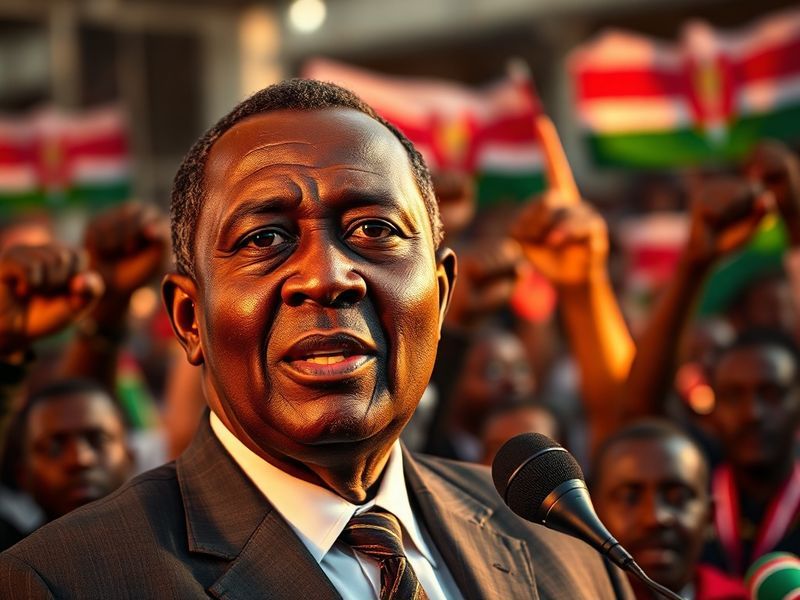
william ruto
Since taking office in 2022, William Ruto has steered Kenya through a period of significant political and economic transformation. The former deputy president under Uhuru Kenyatta rose to power on promises of bottom-up economics and anti-corruption reforms. But his presidency has unfolded amid intense scrutiny, both domestically and internationally, as he navigates Kenya’s role in regional stability and global markets.
Ruto’s leadership style blends populist rhetoric with pragmatic governance. He campaigned on a platform that contrasted sharply with the entrenched political dynasties of Kenya’s past. His victory marked a turning point in a country where political power has long been concentrated among a few elite families. Yet, his presidency has also faced criticism over economic policies, security challenges, and diplomatic balancing acts.
From Political Outsider to Head of State
William Ruto’s political journey is one of resilience and reinvention. Born in 1966 in Kamagut, Uasin Gishu County, Ruto began his career as a teacher before entering politics in the 1990s. He quickly rose through the ranks of the Kenya African National Union (KANU), becoming a key figure in the opposition movement against Daniel arap Moi’s regime.
His alliance with Uhuru Kenyatta in the 2013 elections proved pivotal. Together, they formed the Jubilee Alliance, which won the election and led to Ruto serving as deputy president for two consecutive terms. This partnership, however, fractured as Kenyatta shifted his support to opposition leader Raila Odinga in 2018, forming the handshake coalition. Ruto’s response was to position himself as the champion of the “hustler nation,” a term he used to describe ordinary Kenyans struggling to make ends meet.
In the 2022 election, Ruto ran as the Kenya Kwanza Alliance candidate. His campaign emphasized economic empowerment for the poor, a stark contrast to the perceived elitism of his opponents. Despite facing allegations of corruption and vote-buying, he won a narrow victory, becoming Kenya’s fifth president and the first from the Rift Valley region in decades.
Key Milestones in Ruto’s Political Career
- 1997: Elected as Member of Parliament for Eldoret North, marking his entry into national politics.
- 2002-2007: Served as Minister for Home Affairs under President Moi and later as Minister for Agriculture under President Mwai Kibaki.
- 2013-2022: Served as Deputy President under Uhuru Kenyatta, gaining significant administrative experience.
- 2022: Elected President of Kenya, defeating Raila Odinga in a tightly contested election.
Economic Policies and Bottom-Up Economics
At the heart of Ruto’s presidency is his signature economic policy: bottom-up economics. The approach aims to redistribute wealth by directly supporting small businesses, farmers, and low-income households. This contrasts with traditional top-down economic strategies that favor large corporations and infrastructure projects.
One of the most visible aspects of this policy is the Hustler Fund, a government initiative that provides microloans to informal traders and small-scale entrepreneurs. Since its launch in 2022, the fund has disbursed billions of shillings to over a million beneficiaries. While supporters praise its accessibility, critics argue that the loans are too small to make a meaningful difference and that repayment rates remain a concern.
Ruto has also pursued austerity measures to reduce government spending, including cuts to the public wage bill and reductions in allowances for state officers. These measures aim to curb debt accumulation and reassure international investors. However, they have drawn backlash from civil servants and unions, who argue that the cuts disproportionately affect low-income workers.
The president’s economic vision extends beyond Kenya’s borders. He has positioned the country as a regional hub for trade and investment, particularly in sectors like technology and renewable energy. His administration has also sought to strengthen ties with the United States and Europe, while maintaining a delicate balance with China, Kenya’s largest bilateral creditor.
Security Challenges and Regional Diplomacy
Security remains a critical challenge for Ruto’s government. Kenya faces threats from al-Shabaab militants in neighboring Somalia, as well as internal security issues such as banditry and political violence. Ruto has continued his predecessor’s military engagements in Somalia, deploying Kenyan troops as part of the African Union Transition Mission in Somalia (ATMIS).
However, the war in Somalia has drawn criticism over its human and financial costs. Kenyan taxpayers fund a significant portion of the operation, while the country has suffered terrorist attacks on its soil, including a deadly 2023 siege at the Westgate Mall in Nairobi. Balancing military commitments with domestic security priorities has proven difficult for Ruto’s administration.
On the diplomatic front, Ruto has sought to reposition Kenya as a mediator in regional conflicts. His government played a role in brokering peace talks between rival factions in South Sudan and has mediated disputes in the Horn of Africa. These efforts have burnished Kenya’s image as a stable and responsible actor in a volatile region.
Yet, Ruto’s foreign policy has not been without controversy. His administration has faced scrutiny over its response to the conflict in Sudan, where Kenya has been accused of prioritizing economic interests over humanitarian concerns. Additionally, his government’s decision to host the 2023 Africa Climate Summit in Nairobi highlighted Kenya’s ambition to lead on climate action, but also underscored the country’s vulnerability to environmental challenges like drought and flooding.
The Future of Ruto’s Presidency
As Ruto enters the latter half of his first term, his presidency faces a mix of opportunities and challenges. Economically, his bottom-up approach has yet to demonstrate transformative results, and public debt remains a pressing issue. Socially, his government must address rising unemployment and inequality, which continue to fuel discontent among young Kenyans.
Politically, Ruto’s alliance with Deputy President Rigathi Gachagua and other allies has solidified his grip on power. However, the opposition, led by Raila Odinga, remains a formidable force. Odinga’s Azimio La Umoja coalition has consistently challenged Ruto’s policies in court and on the streets, accusing his administration of authoritarianism and economic mismanagement.
Looking ahead, Ruto’s legacy may hinge on his ability to deliver tangible improvements in living standards. If the Hustler Fund and other initiatives succeed in lifting millions out of poverty, his populist narrative could gain broader acceptance. Conversely, if economic hardships persist, his presidency may be remembered for its unfulfilled promises.
Internationally, Kenya’s role in regional and global affairs will continue to shape Ruto’s legacy. His government’s efforts to mediate conflicts and attract investment could elevate Kenya’s standing on the world stage. However, balancing these ambitions with domestic priorities will require skillful navigation of Kenya’s complex political landscape.
For now, Ruto remains a polarizing figure—a president who has defied expectations to rise to power, but whose policies and leadership style continue to divide opinion. Whether he can translate his vision into lasting change will determine his place in Kenya’s history.
What’s Next for Kenya Under Ruto?
The coming years will test Ruto’s ability to deliver on his promises. Key areas to watch include:
- Economic Recovery: Will the Hustler Fund and other initiatives reduce poverty and stimulate growth?
- Debt Management: Can Kenya reduce its reliance on foreign borrowing while funding critical projects?
- Security Stability: How will Kenya address the threat of terrorism and internal conflicts?
- Regional Leadership: Will Kenya’s diplomatic efforts strengthen its influence in East Africa?
- Political Unity: Can Ruto bridge divides within Kenyan society and foster national cohesion?
For deeper insights into Kenya’s political and economic landscape, explore our Politics and Analysis sections on Dave’s Locker. These categories offer comprehensive coverage of the forces shaping Kenya and the broader African continent.
Conclusion
William Ruto’s presidency represents a pivotal moment in Kenya’s history. His rise from political underdog to head of state reflects the country’s evolving democratic landscape. Yet, his tenure is also a reminder of the challenges that come with leadership—balancing competing interests, managing expectations, and delivering on ambitious promises.
As Kenya navigates an era of global uncertainty and domestic transformation, Ruto’s decisions will have far-reaching consequences. Whether his policies succeed or fail, his presidency will undoubtedly leave a lasting imprint on the nation’s trajectory. For now, the world watches closely as Kenya charts its course under a leader who has already defied the odds once—and may do so again.