iran us
“`html
US-Iran Relations: A Decade of Tension and Shifting Alliances
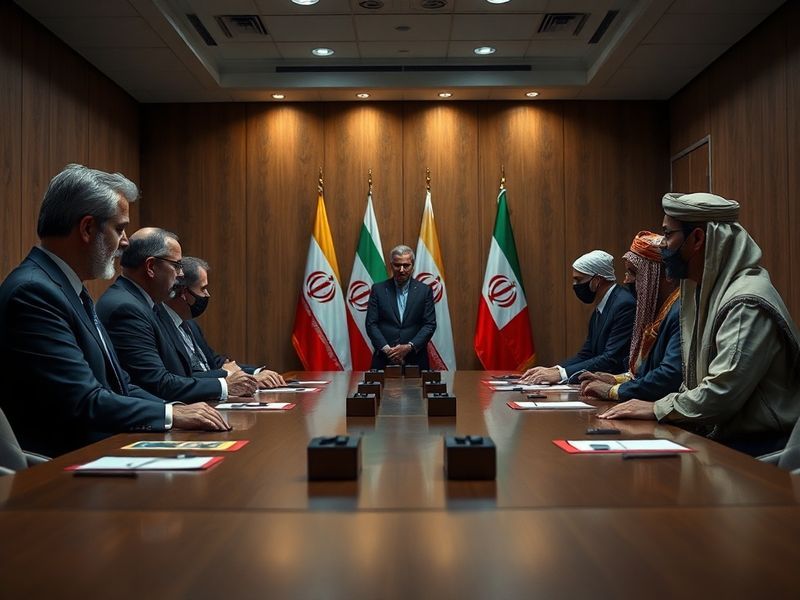
Diplomatic relations between the United States and Iran have been fraught with tension for decades, marked by a complex web of geopolitical maneuvering, economic sanctions, and cultural exchanges that often go unnoticed. The relationship is not merely a bilateral issue but a microcosm of broader global power struggles, where oil, nuclear ambitions, and regional influence play pivotal roles. Beyond the headlines, the story of US-Iran relations is one of resilience, adaptation, and the enduring human connections that persist despite political divides.
The Historical Context: From Allies to Adversaries
The roots of the current US-Iran conflict trace back to the mid-20th century. During World War II, Iran was a strategic ally to both the US and the UK, providing a critical supply route for Allied forces. However, the 1953 coup, orchestrated by the CIA and British intelligence, overthrew Iran’s democratically elected Prime Minister Mohammad Mossadegh and reinstated the Shah, Mohammad Reza Pahlavi. This intervention set the stage for decades of US-backed authoritarian rule in Iran, culminating in the 1979 Islamic Revolution, which toppled the Shah and established an anti-Western theocracy under Ayatollah Ruhollah Khomeini.
The revolution’s aftermath saw the US Embassy in Tehran seized, with 52 Americans held hostage for 444 days. This event severed diplomatic ties between the two nations, a rift that has yet to be fully mended. Subsequent decades saw sporadic attempts at dialogue, but the relationship remained dominated by mutual distrust. The 1980s brought the Iran-Iraq War, during which the US initially supported Saddam Hussein’s Iraq, further straining US-Iran relations. Later, the 1990s and early 2000s saw intermittent efforts at rapprochement, but these were often overshadowed by accusations of Iran’s nuclear ambitions and support for militant groups.
The Nuclear Deal and Its Aftermath: A Brief Thaw
One of the most significant moments in recent US-Iran history was the 2015 Joint Comprehensive Plan of Action (JCPOA), commonly known as the Iran nuclear deal. Negotiated under the Obama administration, the JCPOA aimed to curb Iran’s nuclear program in exchange for the lifting of economic sanctions. The agreement was hailed as a diplomatic triumph, offering a glimmer of hope for normalized relations. However, the deal’s longevity was short-lived.
In 2018, the Trump administration unilaterally withdrew from the JCPOA, reimposing sanctions and tightening economic pressure on Iran. The move was justified as a response to Iran’s ballistic missile program and regional aggression, but critics argued it undermined global non-proliferation efforts and isolated the US diplomatically. Iran responded by gradually breaching the deal’s terms, resuming uranium enrichment and reducing its adherence to international monitoring.
The Biden administration has since sought to revive the nuclear deal, engaging in indirect talks with Iran through European intermediaries. Yet, progress has been slow, complicated by Iran’s internal political dynamics and the US’s own domestic constraints. The failure to revive the JCPOA highlights the fragility of diplomatic efforts in a climate of deep-seated mistrust.
Regional Proxy Wars: The Shadow Conflict
Beyond the nuclear issue, the US and Iran are locked in a broader struggle for influence across the Middle East. This proxy war has played out in countries like Syria, Iraq, Yemen, and Lebanon, where both nations support opposing factions. Iran’s Islamic Revolutionary Guard Corps (IRGC) and its proxy groups, such as Hezbollah, have extended Tehran’s reach, while the US has maintained military bases and alliances with regional partners like Saudi Arabia and Israel.
The Syrian civil war, which began in 2011, became a focal point of this rivalry. Iran, alongside Russia, backed the regime of Bashar al-Assad, while the US supported various rebel groups and later the Kurdish-led Syrian Democratic Forces. The conflict drew in foreign fighters, arms suppliers, and geopolitical interests, turning Syria into a battleground for competing visions of the region’s future.
In Iraq, the US invasion in 2003 toppled Saddam Hussein, creating a power vacuum that Iran filled by supporting Shia political parties and militias. The rise of ISIS in 2014 further complicated the dynamic, as both the US and Iran found themselves fighting the same enemy, albeit with different end goals. Today, Iraq remains a contested space, with Iran-backed militias and US forces maintaining a fragile coexistence.
Key Flashpoints in the Proxy Conflict
- Yemen: Iran supports the Houthi rebels, while the US backs the Saudi-led coalition fighting them. The war has led to one of the world’s worst humanitarian crises.
- Lebanon: Hezbollah, backed by Iran, wields significant political power, while the US supports the Lebanese Armed Forces and anti-Hezbollah factions.
- Gulf Tensions: Attacks on oil tankers in the Strait of Hormuz and drone strikes on Saudi oil facilities have raised fears of a broader conflict, with both sides blaming the other.
- Israel: Iran’s threats to “wipe Israel off the map” and its support for groups like Hamas and Hezbollah have made it a top security concern for Israel and its US ally.
Cultural Exchanges: The Unseen Bridge
Amid the political hostilities, cultural and academic exchanges have offered a rare glimpse into the shared humanity between Iranians and Americans. Iranian cinema, for instance, has gained international acclaim, with directors like Abbas Kiarostami and Asghar Farhadi exploring universal themes of love, loss, and resilience. Farhadi’s The Salesman, which won the Academy Award for Best Foreign Language Film in 2017, is a poignant example of how art can transcend political barriers.
Similarly, Iranian musicians, poets, and writers have found audiences in the US, despite travel restrictions and visa bans. The late poet Forugh Farrokhzad’s work, for example, continues to inspire generations, offering a window into Iran’s complex social fabric. These cultural exchanges serve as a reminder that people-to-people connections can endure even when governments clash.
Academic collaborations, though increasingly restricted, have also played a role in fostering understanding. Programs like Fulbright scholarships have enabled Iranian and American students to study and research together, albeit in dwindling numbers. These initiatives highlight the potential for dialogue, even in the absence of formal diplomatic relations.
The Human Cost: Sanctions and Isolation
The economic sanctions imposed by the US have had a devastating impact on ordinary Iranians. While intended to pressure the Iranian government, the sanctions have also restricted access to medicine, food, and basic goods. Hospitals have struggled to obtain critical supplies, and inflation has eroded the purchasing power of millions. The COVID-19 pandemic exacerbated these challenges, leaving many Iranians without adequate healthcare or economic relief.
For Iranian Americans, the situation is particularly fraught. Many face difficulties reuniting with family members due to travel bans and consular closures. The emotional toll of separation is compounded by the stigma of being associated with a “hostile” regime, even if they oppose their government’s policies. Stories of families divided by oceans and bureaucratic red tape underscore the human cost of geopolitical conflicts.
Looking Ahead: Prospects for the Future
The future of US-Iran relations remains uncertain, with multiple scenarios possible. A revival of the JCPOA could ease tensions and open the door to broader negotiations, but the political will on both sides appears lacking. Alternatively, further escalation—whether through military strikes, cyber warfare, or economic pressure—could push the region into deeper instability.
One thing is clear: the path forward will require more than just diplomatic maneuvering. It will demand a willingness to acknowledge past grievances, address mutual security concerns, and prioritize the well-being of ordinary citizens on both sides. Cultural and academic exchanges, though often overlooked, could serve as a foundation for rebuilding trust.
For now, the US and Iran remain locked in a cycle of confrontation, each side waiting for the other to make the first move. Yet history suggests that change, when it comes, often arrives in unexpected ways. Whether through a breakthrough in Vienna, a grassroots movement for peace, or a shared crisis that forces collaboration, the story of US-Iran relations is far from over.
—
METADATA
{
“title”: “US-Iran Relations: History, Tensions, and Cultural Links”,
“metaDescription”: “Explore the complex history, nuclear deal, proxy wars, and cultural ties between the US and Iran amid ongoing tensions.”,
“categories”: [“News”, “Analysis”],
“tags”: [“US-Iran relations”, “Iran nuclear deal”, “Middle East proxy wars”, “Iranian cinema”, “sanctions on Iran”],
“imageDescription”: “A split-image composition: on one side, the US and Iranian flags draped over a shattered diplomatic table; on the other, a bustling Tehran street scene with young artists painting a mural featuring both American and Iranian cultural icons. The mood blends tension and hope, symbolizing the duality of the relationship.”
}
—END METADATA—
“`