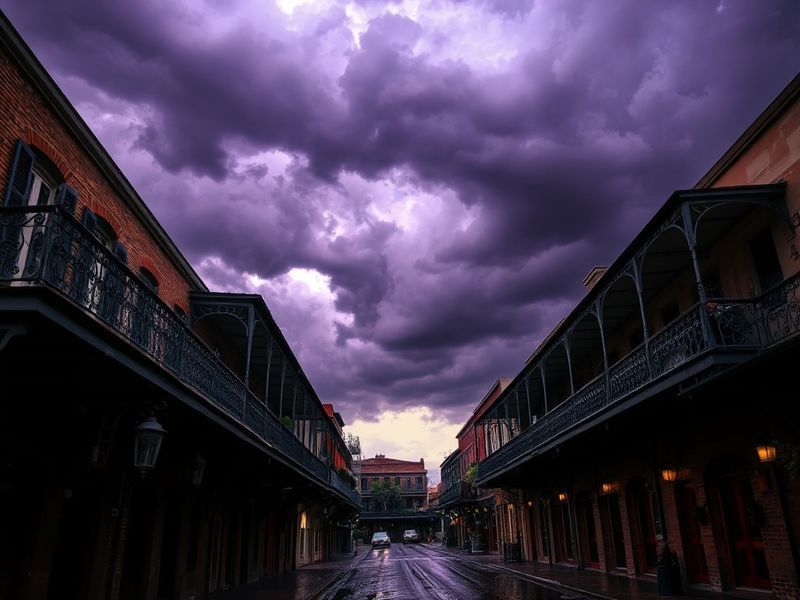
Understanding New Orleans’ Unique Climate
New Orleans exists in a climatic zone that defies simple classification. The city sits in a subtropical region, but its proximity to the Gulf of Mexico creates a weather pattern unlike most American cities. Humidity hovers near 80% for much of the year, while temperatures swing dramatically between seasons. This subtropical maritime climate produces long, hot summers where heat indices often exceed 100°F (38°C), followed by mild winters that rarely see freezing temperatures.
The city’s geography amplifies these effects. Built largely on reclaimed swampland, New Orleans sits just a few feet above sea level, making it particularly vulnerable to both flooding and storm surges. The Mississippi River and Lake Pontchartrain create microclimates that can intensify weather events. During summer, the urban heat island effect—where concrete and asphalt absorb and retain heat—can add 5-10°F to nighttime temperatures compared to surrounding rural areas.
The Hurricane Season That Shapes the City
From June through November, New Orleans braces for hurricane season, which has defined the city’s cultural resilience as much as its architectural patterns. The Atlantic hurricane season’s peak in September coincides with the city’s most vulnerable period. Hurricane Katrina in 2005 demonstrated how weather systems can reshape urban landscapes permanently. The storm’s aftermath led to population shifts, economic restructuring, and new building codes designed specifically to withstand extreme weather.
The city’s relationship with hurricanes extends beyond mere survival. Mardi Gras parade schedules adjust based on storm predictions. Local musicians write songs about evacuation routes. Even the city’s famous cuisine reflects hurricane season—dishes like red beans and rice became popular because they could be made in large batches that lasted through power outages. This cultural adaptation shows how weather isn’t just a backdrop but an active participant in the city’s identity.
Cultural Rituals Born from Weather Patterns
New Orleans has developed elaborate systems to cope with its unpredictable weather. The city’s famous second-line parades often coincide with the first autumn rains, when the humidity breaks and the air becomes breathable again. Jazz funerals sometimes get delayed by thunderstorms, forcing musicians to take shelter mid-procession. These moments reveal how weather isn’t just something the city endures but something it incorporates into its traditions.
Architectural solutions tell another story. The shotgun houses that line many neighborhoods feature high ceilings and transom windows specifically designed to promote air circulation before the advent of modern air conditioning. Balconies on Creole townhouses serve dual purposes—they provide shade from the relentless sun while offering vantage points to watch approaching storms. Even the city’s famous cemeteries reflect weather considerations. The above-ground tombs weren’t just cultural preferences but practical solutions to the water table issues that make traditional burials impossible in much of the city.
Global Connections in Local Weather Phenomena
The weather patterns that define New Orleans extend far beyond Louisiana’s borders. The city’s subtropical climate links it to regions like the Caribbean and Southeast Asia, where similar weather systems create challenges for urban planning. The Mississippi River’s flooding patterns affect agricultural production throughout the Midwest, demonstrating how local weather events can have national economic implications. When New Orleans experiences unusual cold snaps—like the winter storm that brought snow to the city in 2021—it reveals how global weather systems are becoming increasingly interconnected.
Climate change is intensifying these connections. Rising sea temperatures in the Gulf of Mexico are creating stronger, more unpredictable hurricanes. The city’s average annual rainfall has increased by nearly 20% since 1950, according to National Oceanic and Atmospheric Administration data. These changes aren’t just academic concerns—they affect everything from insurance premiums to tourism seasons. The 2023 Mardi Gras season saw shorter parade routes and earlier start times specifically to avoid predicted thunderstorms, showing how weather now dictates even the city’s most sacred traditions.
Preparing for the Future of New Orleans Weather
Modern New Orleans faces an unprecedented challenge: adapting to weather patterns that are both more extreme and more unpredictable. The city’s $14 billion drainage system, one of the largest in the world, struggles to keep pace with increased rainfall. Local officials have implemented green infrastructure projects like permeable pavements and bioswales to manage stormwater differently. These solutions represent a fundamental shift in how the city relates to its environment—not as something to control, but as something to work with.
The community response to weather events has also evolved. Neighborhood associations now maintain detailed emergency plans. Local businesses have developed backup power systems that can keep refrigerators running during outages. Schools practice “weather drills” alongside fire drills. This collective preparedness reflects a deeper understanding that weather isn’t just an occasional disruption but a constant presence that requires ongoing attention.
For visitors, understanding New Orleans weather means more than just packing an umbrella. It means recognizing that the city’s rhythms—from the timing of jazz performances to the availability of certain seafood dishes—are intimately connected to the atmosphere. The weather here isn’t just background noise; it’s an active participant in the city’s ongoing story, shaping both its vulnerabilities and its remarkable resilience.
Weather’s Role in New Orleans’ Economic Landscape
New Orleans’ economy has always been weather-dependent, from the port operations that rely on predictable Mississippi River levels to the tourism industry that thrives during mild winter months. The city’s famous restaurant scene adjusts seasonally—oyster bars close during summer months when water temperatures make shellfish unsafe to eat, while crawfish boils become weekly events when spring rains flood the marshes. These seasonal shifts create a unique economic calendar that visitors and residents alike must navigate.
The film industry has also capitalized on New Orleans’ weather patterns. The city’s ability to stand in for everything from 1920s Chicago to futuristic Mars has made it a prime filming location. Productions often schedule shoots during the city’s “shoulder seasons”—the mild periods between summer heat and hurricane season—when temperatures are comfortable and storm risks are minimal. This economic benefit comes with tradeoffs, as film crews sometimes strain local infrastructure during peak filming periods.
Weather also affects the city’s most famous export: music. Jazz funerals and second-line parades often get postponed by sudden storms, forcing musicians to adapt their schedules. Recording studios report that humidity levels affect instrument tuning, leading to unique acoustic characteristics in local recordings. Even the city’s brass bands develop repertoire that’s specifically designed to be performed quickly when weather forces outdoor events indoors.
Lessons from New Orleans for Other Cities
New Orleans’ relationship with weather offers valuable lessons for urban planners worldwide. The city’s approach to flood management—balancing gray infrastructure (like levees and pumps) with green infrastructure (like wetlands restoration)—has become a model for coastal cities facing similar challenges. Rotterdam in the Netherlands and Jakarta in Indonesia have both studied New Orleans’ post-Katrina recovery strategies, particularly its emphasis on community engagement in resilience planning.
The city’s cultural adaptation to weather extremes provides another model. New Orleans has demonstrated that resilience isn’t just about physical structures but about social cohesion and cultural practices. The city’s tradition of “krewe” organizations that organize Mardi Gras parades has been adapted to create neighborhood emergency response teams. Musicians have turned evacuation routes into musical compositions. These creative solutions show how cities can transform weather challenges into cultural strengths.
Perhaps most importantly, New Orleans teaches that weather adaptation requires acknowledging vulnerability rather than denying it. The city’s famous “laissez-faire” attitude extends to its weather preparedness—acknowledging that while you can’t control the storms, you can control how you respond to them. This philosophy has served the city well, allowing it to bounce back from disasters that would cripple less adaptable communities.
For other cities facing climate change, New Orleans offers both warnings and inspiration. Its experiences show the devastating consequences of inadequate preparation while demonstrating the power of community-driven solutions. The city’s weather isn’t just a series of challenges to overcome but a fundamental part of its identity—one that has shaped everything from its architecture to its music to its cuisine. In an era of increasing climate uncertainty, New Orleans stands as both a cautionary tale and a model of adaptation.
For more on how weather affects urban culture, explore our Culture section. Interested in the intersection of climate and economics? Check out our Business coverage.