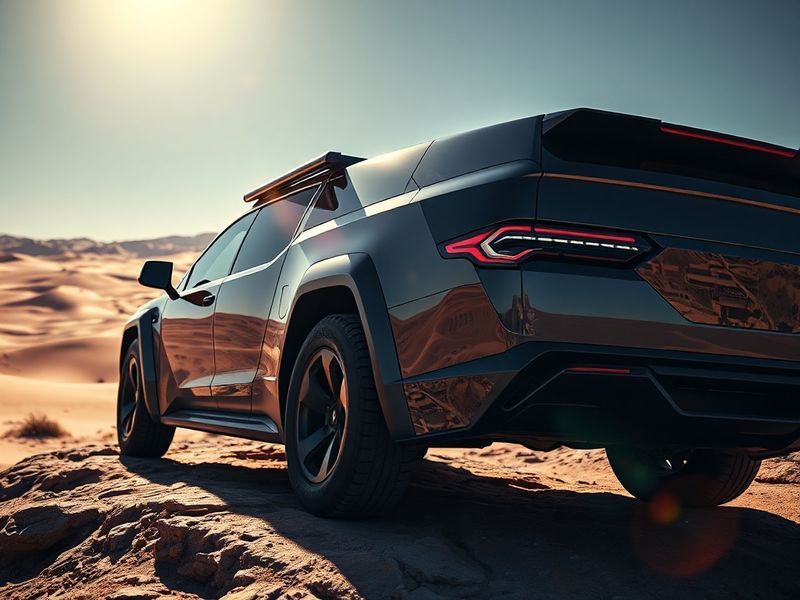
tesla cybertruck
“`html
Tesla Cybertruck: The Radical Electric Truck Redefining Automotive Design
The Tesla Cybertruck entered the automotive scene in 2019 with a bold promise: to disrupt the truck market through uncompromising innovation. Its angular, stainless-steel exoskeleton and bulletproof glass claims immediately sparked conversation—some called it revolutionary, others questioned its practicality. Nearly five years after its dramatic unveiling, the Cybertruck has evolved from a viral prototype into a production reality, now rolling off the assembly line at Tesla’s Gigafactory in Texas. This transformation reflects more than just a shift in manufacturing; it signals a new chapter in how we think about electric vehicles and their role in the future of transportation.
The Design Philosophy Behind the Unconventional Shape
The Cybertruck’s most striking feature is its geometric design, diverging sharply from the rounded contours of traditional pickup trucks. The vehicle’s body consists of ultra-hard 30X cold-rolled stainless steel, a material chosen for its durability and resistance to dents and corrosion. Its flat panels and sharp creases were not merely aesthetic choices—they were engineered to maximize structural integrity while minimizing weight. Tesla emphasized that the design allows for a stronger, lighter frame without relying on traditional automotive materials like aluminum or fiberglass.
Elon Musk has repeatedly described the Cybertruck as a “modern muscle car” in terms of its angular aggression. The vehicle’s V-shaped windshield and angular rear window further enhance its futuristic silhouette. Inside, the minimalist cabin features a 17-inch touchscreen central console, a departure from the knobs and dials found in most trucks. The seating configuration includes a front bench option, a nod to practicality for families or those seeking more passenger space.
But the design hasn’t been without controversy. Critics argue that the sharp edges and flat surfaces may increase drag at high speeds, affecting efficiency. Others point to the lack of curves as potentially uncomfortable for passengers during long drives. Despite these concerns, Tesla’s approach reflects a deliberate rejection of conventional aesthetics in favor of bold experimentation—a philosophy that has defined the Cybertruck’s public perception.
Performance and Capabilities: More Than Just a Truck
The Cybertruck is offered in three variants: the single-motor Rear-Wheel Drive, dual-motor All-Wheel Drive, and tri-motor Cyberbeast. Each configuration delivers impressive acceleration and towing capacity, challenging the notion that electric vehicles compromise on power. The tri-motor Cyberbeast, for instance, accelerates from 0 to 60 mph in under 2.7 seconds, outperforming many sports cars. It also boasts a towing capacity of up to 11,000 pounds, rivaling traditional gas-powered heavy-duty trucks.
Range remains a key selling point. The long-range model offers up to 340 miles per charge, while the base rear-wheel-drive version delivers approximately 250 miles. Tesla’s proprietary 48V architecture and battery thermal management system help maintain efficiency in various climates. The vehicle also features adaptive air suspension, which can raise or lower the ride height depending on terrain or driving conditions.
Off-road capability is another area where the Cybertruck excels. With up to 17 inches of ground clearance, a 35-degree approach angle, and a 28-degree departure angle, it can navigate rough trails with confidence. The adaptive air suspension allows drivers to adjust ride height on the fly, enhancing both off-road capability and highway comfort. Tesla also offers optional stainless-steel armor plating, further reinforcing the vehicle’s rugged persona.
Charging infrastructure is critical for long-distance travel, and Tesla’s Supercharger network provides a significant advantage. The Cybertruck supports up to 250 kW charging speeds, enabling drivers to add approximately 200 miles of range in about 15 minutes at compatible stations. This capability positions the Cybertruck as a practical choice for both daily commuting and extended road trips.
Production Delays and Market Impact
Despite the initial excitement, the Cybertruck’s journey to market has been marked by delays. Originally slated for a 2021 release, production was pushed back multiple times due to supply chain challenges, manufacturing complexities, and the need to refine the stainless-steel stamping process. These setbacks were not unique to Tesla; the entire automotive industry faced similar hurdles as it transitioned toward electric vehicle production.
Tesla began deliveries of the first Cybertrucks in late 2023, with a limited batch of Founders Series models. The initial batch sold out within days, with reservations requiring a $250,000 deposit—a price point that places the vehicle in the luxury segment. Tesla has since announced plans to scale production, with a target of 250,000 units per year by 2025. This ambitious goal underscores Tesla’s confidence in the Cybertruck’s long-term viability.
The truck’s entry into the market has prompted reactions from competitors. Ford, Rivian, and GM have all accelerated their own electric truck programs in response. Rivian’s R1T and Ford’s F-150 Lightning have gained traction in the electric pickup segment, but the Cybertruck’s unique design and performance metrics set it apart. Industry analysts suggest that the Cybertruck could appeal to a younger, tech-savvy demographic that values innovation over tradition.
Pricing remains a point of debate. The base model starts at $60,990, positioning it competitively against gas-powered trucks like the Ford F-150. However, the high-end trims exceed $100,000, which may limit its mass-market appeal. Tesla’s strategy appears to focus on establishing the Cybertruck as a premium electric vehicle first, with potential for more affordable versions in the future.
Cultural Significance and the Future of Trucks
The Cybertruck has transcended the automotive industry to become a cultural symbol. Its appearance in media, social platforms, and even memes has cemented its status as a conversation starter. The vehicle embodies the tension between tradition and innovation, drawing both admiration and skepticism from the public. For some, it represents the future of mobility—clean, powerful, and unapologetically bold. For others, it challenges the very identity of what a truck should look like.
Tesla’s approach to the Cybertruck reflects a broader shift in the automotive landscape. As governments worldwide push for stricter emissions regulations, traditional automakers are under pressure to electrify their lineups. The Cybertruck demonstrates that electric vehicles no longer need to conform to existing design norms. Instead, they can redefine what a vehicle is capable of, both mechanically and visually.
Looking ahead, the Cybertruck’s success will depend on several factors. Production scalability, charging infrastructure, and public acceptance of its radical design will all play critical roles. Tesla’s ability to deliver on its promises will influence consumer confidence in electric trucks as a viable alternative to internal combustion engines.
For enthusiasts of trending automotive technology and those following the evolution of electric vehicles, the Cybertruck represents more than just a new product—it is a statement. It challenges the status quo and invites us to reconsider the boundaries of automotive design and engineering. Whether it ultimately succeeds as a commercial product or remains a bold experiment, its impact on the industry is already undeniable.
As the first wave of Cybertrucks hits the road, one thing is clear: Tesla has once again pushed the envelope. The question now is whether the rest of the automotive world will follow—or if the Cybertruck will remain a singular vision of what trucks could become.
—
METADATA
{
“title”: “Tesla Cybertruck: Radical Design Meets Real-World Power in 2025”,
“metaDescription”: “Explore Tesla’s Cybertruck: its bold design, high-performance specs, production journey, and impact on the electric truck market.”,
“categories”: [“Technology”, “Automotive”],
“tags”: [“Tesla Cybertruck”, “electric pickup truck”, “EV innovation”, “Tesla Gigafactory”, “future of trucks”],
“imageDescription”: “A Cybertruck parked on a desert road at sunset, showcasing its angular stainless-steel body, sharp geometric lines, and futuristic silhouette against a warm orange sky. The vehicle is slightly angled, emphasizing its V-shaped windshield and massive wheels, with a subtle glow from the setting sun reflecting off its metallic surface.”
}
—END METADATA—
“`