oklahoma city bombing
“`html
Oklahoma City Bombing: The Day That Shook America
The Oklahoma City bombing remains one of the most devastating acts of domestic terrorism in U.S. history. On April 19, 1995, at 9:02 a.m., a massive explosion tore through the Alfred P. Murrah Federal Building, killing 168 people—including 19 children—and injuring hundreds more. The attack, carried out by Timothy McVeigh and Terry Nichols, exposed deep vulnerabilities in American security and left an indelible mark on the nation’s psyche.
The Attack and Immediate Aftermath
The bombing was not just an act of violence; it was an assault on the federal government’s legitimacy. McVeigh, a disaffected Army veteran with extremist views, targeted the Murrah Building because it housed federal agencies, including the Bureau of Alcohol, Tobacco, and Firearms (ATF). His motive was rooted in anti-government sentiment, fueled by events like the Waco siege and Ruby Ridge.
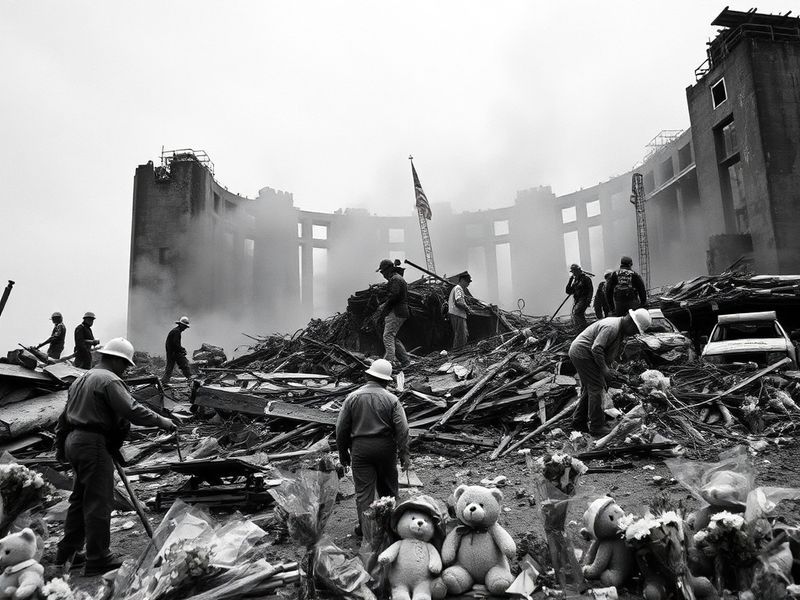
The explosion destroyed one-third of the building, leaving a crater 30 feet wide. First responders worked tirelessly in the rubble, searching for survivors while dealing with the emotional toll of recovering bodies, many of them children from the building’s daycare center. The scene was described by survivors as a “war zone,” with emergency workers comparing it to the aftermath of a bombing in a combat zone.
Within hours, authorities identified McVeigh as the primary suspect. He was arrested just 90 minutes after the explosion, still driving a yellow Mercury Marquis without a license plate. Nichols turned himself in two days later. Their arrest led to one of the largest investigations in FBI history, culminating in a trial that revealed the meticulous planning behind the attack.
Key Figures and Their Motivations
The Oklahoma City bombing was not an impulsive act but the result of years of radicalization. McVeigh and Nichols were part of a growing movement of anti-government extremists who believed the federal government was tyrannical. Their beliefs were shaped by events like the Ruby Ridge standoff in 1992 and the Waco siege in 1993, both of which reinforced their distrust of law enforcement.
McVeigh, in particular, saw himself as a revolutionary fighting against a corrupt system. His writings and interviews later revealed a man consumed by rage, not just toward the government but toward the American people for allowing what he saw as oppression to continue. Nichols, while less ideologically driven, provided logistical support, helping McVeigh acquire the materials needed for the bomb.
- Timothy McVeigh: The mastermind behind the attack, motivated by anti-government extremism and a desire to avenge perceived injustices.
- Terry Nichols: Provided materials and logistical support, though his level of involvement remains debated.
- Michael Fortier: A friend of McVeigh’s who helped plan the attack but later became a key witness for the prosecution.
The trial of McVeigh and Nichols was a media spectacle, with the proceedings broadcast live. McVeigh was convicted on 11 federal counts, including conspiracy and use of a weapon of mass destruction, and sentenced to death. He was executed by lethal injection on June 11, 2001. Nichols received life in prison without parole after a separate trial.
Broader Implications for American Security
The Oklahoma City bombing forced the U.S. government to confront the threat of domestic terrorism in ways it had not before. Prior to 1995, counterterrorism efforts were primarily focused on international threats, such as those posed by groups like al-Qaeda. The attack exposed a gaping hole in domestic security, particularly in how the government monitored and responded to extremist movements.
In the aftermath, Congress passed the Antiterrorism and Effective Death Penalty Act of 1996, which expanded the government’s ability to investigate and prosecute terrorist acts. The FBI also revamped its domestic terrorism unit, shifting resources to focus on homegrown extremism. Additionally, the bombing led to changes in building security protocols, including setback requirements for federal buildings and increased surveillance in high-risk areas.
Yet, the lessons of Oklahoma City were not fully absorbed. In the years following the attack, domestic extremism continued to grow, culminating in events like the January 6, 2021, Capitol riot. The attack also highlighted the dangers of radicalization online, as extremist ideologies spread through forums and social media, often unchecked by platforms or authorities.
A National Reckoning with Loss and Resilience
The bombing left Oklahoma City forever changed. The city’s sense of security was shattered, and its residents were forced to grapple with grief on an unprecedented scale. Memorials and vigils became a regular part of life, and the community’s resilience became a defining characteristic of its identity.
In 2000, the Oklahoma City National Memorial was dedicated on the site of the former Murrah Building. The memorial features a field of empty chairs—one for each victim—arranged in nine rows to represent the nine floors of the building. The Reflecting Pool and the Survivor Tree, a once-damaged American elm that survived the blast, stand as symbols of hope and renewal.
For survivors and the families of victims, the pain of the bombing never fully fades. Many continue to advocate for stronger gun control laws, mental health awareness, and improved disaster response systems. The attack also sparked conversations about the role of the media in covering tragedies, as well as the ethical responsibilities of journalists in the wake of such events.
As America grapples with ongoing threats of extremism and violence, the lessons of Oklahoma City remain as relevant as ever. The attack was a stark reminder that the greatest threats to national security are not always foreign but can come from within. It also served as a testament to the power of community and resilience in the face of unimaginable tragedy.
Further Reading
For more on domestic extremism and its impact on American society, explore our News and Analysis sections. These categories delve into the broader context of extremism, security, and resilience in modern America.
—
METADATA
{
“title”: “Oklahoma City Bombing: How Domestic Terrorism Changed America”,
“metaDescription”: “The 1995 Oklahoma City bombing was a turning point in U.S. history, exposing vulnerabilities in security and reshaping counterterrorism efforts.”,
“categories”: [“News”, “Analysis”],
“tags”: [“Oklahoma City bombing”, “domestic terrorism”, “Timothy McVeigh”, “federal building attack”, “counterterrorism”],
“imageDescription”: “A somber black-and-white photograph of the Alfred P. Murrah Federal Building ruins, with emergency workers and debris scattered across the scene. The image captures the devastation of the 1995 bombing, emphasizing the scale of destruction and the human toll of the attack.”
}
—END METADATA—
“`