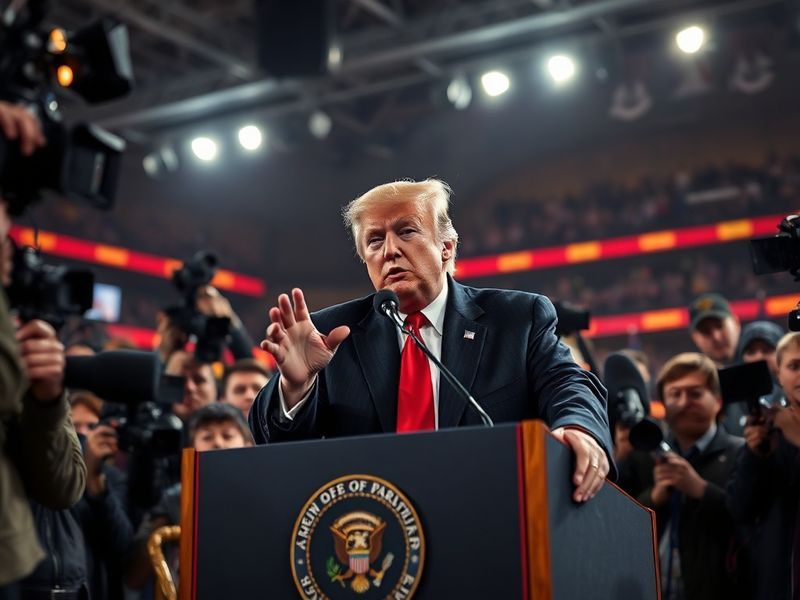
The attempted assassination of former U.S. President Donald Trump on July 13, 2024, was more than a political incident—it was a seismic event that exposed deep fractures in America’s cultural and political landscape. As crowds gathered in Butler, Pennsylvania, for a campaign rally, a gunman opened fire, leaving one attendee dead and several others injured, including Trump himself. The images of the former president raising his fist, blood streaked across his face, became an indelible symbol of a nation on edge.
This attack didn’t occur in a vacuum. It followed years of escalating political violence and rhetoric that has polarized not just the United States but global observers as well. The incident has forced nations worldwide to confront their own vulnerabilities to extremism and the consequences of unchecked political division. While the motives behind the attack remain under investigation, the ripple effects are already reshaping conversations about security, democracy, and the future of leadership.
Global Reactions: Shock, Condemnation, and Calls for Unity
International responses to the Trump attack ranged from immediate condemnation to reflections on America’s political climate. Leaders from Europe, Asia, and beyond expressed solidarity with Trump and the victims, emphasizing the universal threat posed by political violence. French President Emmanuel Macron called the attack “unacceptable” and stressed the need to “protect democracy.” Meanwhile, German Chancellor Olaf Scholz described the incident as a “blow to democratic values.”
In Israel, Prime Minister Benjamin Netanyahu offered his support, stating, “The attempt on President Trump’s life is a stark reminder of the dangers posed by extremism.” Even adversaries like Iran’s foreign ministry condemned the attack, calling it “a dangerous escalation.” Such reactions highlight how deeply the incident resonated beyond U.S. borders, uniting disparate nations under a shared concern for political stability.
Closer to home, reactions in the U.S. were predictably divided. While Democrats and Republicans alike condemned the violence, interpretations of its causes varied sharply. Some leaders, like Senate Majority Leader Chuck Schumer, called for reflection on the “toxic political environment” that may have contributed to the attack. Others, including Trump’s allies, framed it as evidence of a left-wing conspiracy to undermine his campaign. This polarization underscores how deeply the attack has become entangled in America’s ongoing culture wars.
The Security Failures and What They Reveal
Questions about security lapses at the Butler rally have dominated post-attack discussions. The shooter, identified as 20-year-old Thomas Matthew Crooks, was able to scale a rooftop near the event venue with a rifle. Local law enforcement and Secret Service agents were present, yet the assailant evaded multiple layers of security. This failure has sparked investigations into the protocols governing high-profile political events, particularly those involving controversial figures.
Security experts point to several potential breakdowns. First, there were reports that local police were not fully integrated into the Secret Service’s advance planning. Second, the shooter’s online activity—including suspicious posts on social media—went unnoticed despite warnings to the FBI. Third, the lack of a no-fly zone over the area may have created an unchecked vulnerability. These lapses raise troubling questions about whether the U.S. is adequately prepared to protect its leaders in an era of increasing political violence.
Internationally, the attack has prompted other nations to reassess their own security measures for political figures. In the UK, where Prime Minister Rishi Sunak has faced multiple protests and security threats, officials announced a review of protective protocols for high-risk individuals. Similarly, in India, where political assassinations have a long and tragic history, commentators drew parallels to the 2019 killing of journalist-activist Gauri Lankesh, calling for stricter enforcement of security guidelines.
The Cultural Divide: How Violence Became a Political Tool
The Trump attack didn’t happen in isolation. It is the latest in a series of violent incidents tied to political extremism in the U.S., from the January 6 Capitol riot to the 2017 Charlottesville car attack. These events reflect a broader trend: the normalization of violence as a political tool. Social media algorithms amplify divisive rhetoric, while misinformation spreads unchecked, creating an environment where fringe actors feel empowered to act.
This culture of confrontation is not unique to the U.S. Around the world, political violence has surged alongside the rise of populist movements. In Brazil, supporters of former President Jair Bolsonaro stormed government buildings in 2023, echoing the U.S. Capitol breach. In the Philippines, political assassinations tied to local elections remain a persistent issue. Even in stable democracies like Germany, far-right groups have grown bolder, with attacks on politicians rising by 30% in the last five years, according to Amnesty International.
What ties these incidents together is a growing disillusionment with democratic institutions. When citizens lose faith in the electoral process, they become more susceptible to extremist narratives that justify violence. The Trump attack may serve as a wake-up call—or it may deepen the cycle of retaliation. Either way, it has become a defining moment in understanding how political violence reshapes societies.
What Comes Next: Accountability and the Path Forward
As investigations into the Trump attack continue, the focus has turned to accountability. The FBI has classified the incident as an act of domestic terrorism, which could lead to enhanced penalties for the shooter’s associates if they are found to have aided him. Legal experts suggest that this classification may also encourage law enforcement to prioritize cases involving political violence, which have historically been under-prosecuted.
Yet accountability extends beyond the legal system. The attack has forced political leaders to confront their role in fostering division. Some, like former Republican Speaker Paul Ryan, have called for a return to “civility and decency” in political discourse. Others argue that structural changes—such as campaign finance reform and stricter social media regulations—are necessary to reduce extremism. The challenge lies in implementing these changes before another tragedy occurs.
For Trump’s campaign, the attack has galvanized his base. His first public appearance after the shooting drew massive crowds, with supporters chanting “USA! USA!” as he declared, “I am your warrior.” The incident has also intensified scrutiny of his rhetoric, with critics arguing that his inflammatory language may have contributed to the toxic environment that led to the violence. Whether this moment will temper his approach or embolden his rhetoric remains an open question.
On the global stage, the attack has reminded nations of the fragility of democracy. In a world where authoritarianism is on the rise and trust in institutions is declining, incidents like this serve as a cautionary tale. The question now is whether the international community will unite to address the root causes of political violence—or whether the cycle of retaliation will continue unchecked.
Key Takeaways
- The Trump attack exposed critical security failures, raising questions about the U.S.’s ability to protect its leaders.
- Global reactions reflected widespread concern about the normalization of political violence.
- Cultural and political divisions in the U.S. have created an environment where extremism thrives.
- Accountability and structural reforms may be necessary to prevent future attacks.
Looking Ahead
The aftermath of the Trump attack is still unfolding, but its impact is undeniable. It has forced a reckoning with the consequences of unchecked division and the dangers of political violence. Whether this moment leads to healing or further conflict will depend on the choices made by leaders and citizens alike. One thing is clear: the world is watching, and the stakes could not be higher.
For more on the intersection of politics and security, explore our News and Analysis sections.