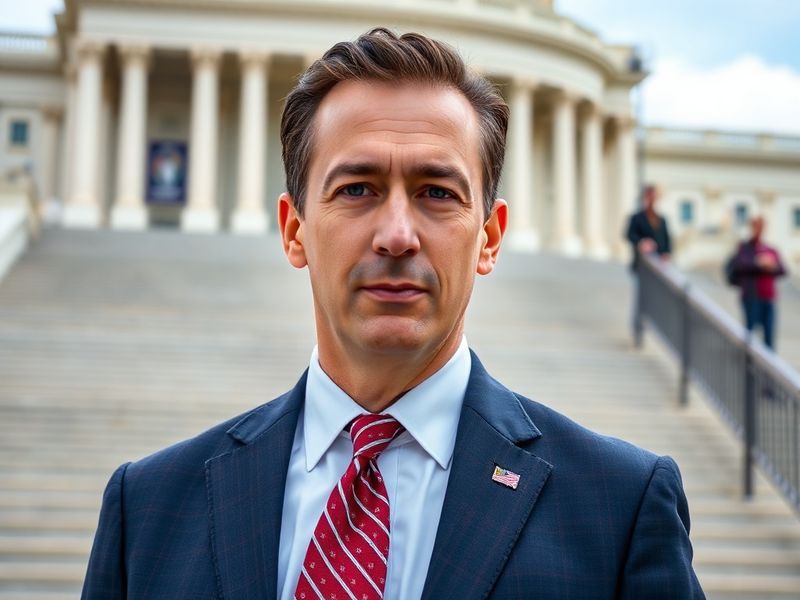
In an era where political divisions often overshadow collaboration, Rep. Brian Fitzpatrick (R-PA) has carved out a reputation as one of the few bipartisan voices in the U.S. House of Representatives. Elected in 2016 after his brother, Mike Fitzpatrick, retired, Brian Fitzpatrick has consistently bucked party lines to prioritize pragmatic solutions over partisan loyalty. His approach reflects a growing recognition among voters that effective governance requires compromise, even in an increasingly polarized political landscape.
Fitzpatrick’s district, Pennsylvania’s 1st, is a microcosm of the nation’s political divide. It includes a mix of suburban communities, rural areas, and parts of Philadelphia, creating a diverse constituency with competing interests. Yet, Fitzpatrick has managed to maintain a high approval rating by focusing on issues that resonate across party lines, such as veterans’ affairs, infrastructure, and healthcare. His willingness to work with Democrats on these issues has earned him praise from both sides of the aisle, setting him apart in a Congress often defined by gridlock.
Early Life and Career: From Law Enforcement to Congress
Before entering politics, Brian Fitzpatrick built a career in law enforcement. He served as an FBI agent for nearly a decade, working on counterterrorism and organized crime cases. This experience shaped his approach to governance, instilling in him a belief in the importance of evidence-based decision-making and collaboration across agencies. After leaving the FBI, he worked as a federal prosecutor, further honing his skills in negotiation and legal strategy.
Fitzpatrick’s transition from law enforcement to politics was driven by a desire to make a broader impact. His 2016 campaign emphasized transparency, integrity, and a commitment to serving constituents over party interests. This message resonated with voters in Bucks County, a suburban area that had historically leaned Republican but was becoming more politically diverse. Fitzpatrick’s victory in a swing district demonstrated that voters were hungry for a different kind of leadership—one that prioritized results over ideology.
Key Policy Positions and Legislative Achievements
Fitzpatrick’s legislative record reflects his commitment to bipartisanship. One of his signature issues is veterans’ affairs. As a member of the House Veterans’ Affairs Committee, he has championed legislation to improve healthcare access for veterans, streamline the disability claims process, and expand mental health resources. His efforts have earned him the support of veterans’ advocacy groups across the political spectrum.
Another area where Fitzpatrick has made an impact is infrastructure. Pennsylvania, with its aging roads, bridges, and public transit systems, is in dire need of investment. Fitzpatrick has been a vocal advocate for federal infrastructure funding, working with Democrats and Republicans to secure resources for his district. His willingness to collaborate on this issue has not only delivered tangible benefits to his constituents but also demonstrated the potential for bipartisan cooperation in Washington.
Fitzpatrick has also taken a pragmatic approach to healthcare. While he opposes Medicare for All, he has supported measures to lower prescription drug costs, expand access to rural healthcare, and protect patients with pre-existing conditions. His focus on these targeted solutions has allowed him to address the concerns of his constituents without alienating his base.
- Veterans’ Affairs: Fitzpatrick has introduced and co-sponsored multiple bills to improve healthcare and benefits for veterans, earning a 100% rating from the Veterans of Foreign Wars.
- Infrastructure: He has been a key advocate for the $1.2 trillion Infrastructure Investment and Jobs Act, which allocated over $10 billion to Pennsylvania for roads, bridges, and public transit.
- Healthcare: Fitzpatrick has supported legislation to cap insulin prices, expand telehealth services, and protect the Affordable Care Act’s pre-existing condition protections.
- Bipartisanship: He has co-sponsored more bills with Democrats than most Republicans in the House, according to data from the Lugar Center’s Bipartisan Index.
Navigating a Polarized Political Climate
Fitzpatrick’s ability to navigate a polarized political climate is no small feat. In an era where party loyalty often trumps compromise, he has remained steadfast in his belief that governance requires listening to all sides. This approach has not been without its challenges. Within his own party, Fitzpatrick has faced criticism from conservatives who view his bipartisan efforts as a betrayal of Republican principles. Yet, he has consistently argued that effective leadership requires putting the needs of constituents above partisan dogma.
His willingness to break with party lines has sometimes put him at odds with leadership. For example, Fitzpatrick was one of only 10 House Republicans to vote to impeach President Donald Trump following the January 6th Capitol riot. The vote was a rare moment of defiance in a party that had largely closed ranks around Trump. While the decision drew criticism from some in his district, it also earned him praise from independents and Democrats who saw it as a courageous stand for democracy.
Fitzpatrick’s approach to governance is also reflected in his campaign strategy. Unlike many politicians who rely on polarizing rhetoric to energize their base, Fitzpatrick focuses on issues that unite rather than divide. His campaign messaging emphasizes transparency, accountability, and results—values that resonate with voters tired of political gamesmanship. This strategy has allowed him to maintain a strong connection with his constituents, even as national politics grows more contentious.
The Future of Bipartisanship in Congress
As Congress grapples with pressing issues like inflation, climate change, and global instability, the need for bipartisan solutions has never been greater. Fitzpatrick’s career offers a blueprint for how leaders can bridge divides and deliver results. His willingness to work across party lines has not only earned him respect in Washington but also demonstrated the potential for a more functional government.
Looking ahead, Fitzpatrick’s role in Congress will likely continue to evolve. With the 2024 election on the horizon, he faces the challenge of maintaining his bipartisan appeal while appealing to a base that is increasingly polarized. His ability to strike this balance will be a test of his political acumen and a bellwether for the future of bipartisanship in American politics.
For voters frustrated by political gridlock, Fitzpatrick’s career is a reminder that compromise is not weakness—it is a necessity. In a system designed to reward division, his willingness to work across the aisle offers a glimmer of hope that governance can still be about solving problems rather than scoring points.
As he continues to advocate for his district and the nation, Fitzpatrick’s legacy may well be defined by his commitment to a form of politics that prioritizes the common good over partisan loyalty. Whether this approach will endure in an increasingly polarized political landscape remains to be seen. But for now, it stands as a compelling example of what leadership can look like when it is guided by principle rather than party.
What’s Next for Rep. Brian Fitzpatrick?
As Fitzpatrick looks to the future, several key challenges and opportunities lie ahead. One of the most pressing is the 2024 election, where he will seek to defend his seat in a district that has become increasingly competitive. His ability to appeal to independents and disaffected Democrats will be critical to his success.
Another area to watch is his role in shaping national policy. With issues like Ukraine aid, climate change, and healthcare dominating the agenda, Fitzpatrick’s voice will be an important one in the ongoing debate over America’s future. His willingness to work across party lines could make him a key player in brokering deals on some of the most contentious issues of our time.
For voters, Fitzpatrick’s career offers a valuable lesson: politics doesn’t have to be a zero-sum game. By prioritizing collaboration over confrontation, he has shown that it is possible to make progress even in the most divided of times. Whether this approach will become the norm remains to be seen, but for now, it stands as a testament to the power of principled leadership.
As we navigate an era of unprecedented division, Rep. Brian Fitzpatrick’s career is a reminder that there is another way. It is a way that values listening over shouting, collaboration over conflict, and results over rhetoric. In a political landscape often defined by chaos, his steady commitment to bipartisanship offers a rare and welcome example of what governance can—and should—look like.
For more insights on congressional trends and bipartisan efforts, visit our News and Politics sections.