Weather Forecasting: How Science Predicts Our Future
“`html
Weather Forecasting: Science, Accuracy, and Real-World Impact
The ability to predict the weather has evolved from ancient folklore to a sophisticated science that shapes daily life, economic decisions, and public safety. Modern forecasting combines meteorology, advanced technology, and data analysis to provide increasingly reliable predictions. Yet, despite these advancements, challenges remain in accurately forecasting extreme weather events and long-term climate trends.
Understanding how weather forecasting works—and its implications—requires examining its history, methods, and the broader impact on society. From farmers relying on seasonal forecasts to airlines adjusting flight paths, weather predictions play a critical role in countless industries and personal decisions.
The Evolution of Weather Forecasting: From Folklore to Supercomputers
Weather forecasting has a long history that reflects humanity’s enduring fascination with the skies. Early civilizations relied on observations of natural signs, such as animal behavior, cloud patterns, and celestial events, to predict weather. The ancient Greeks, including Aristotle, wrote treatises on meteorology, though their theories often blended science with mythology.
The 19th century marked a turning point with the invention of the telegraph, which allowed weather data to be shared across vast distances in real time. This innovation enabled the first systematic weather observations and the establishment of national weather services. The development of radar in the mid-20th century further revolutionized forecasting by allowing meteorologists to track storms and precipitation patterns.
Today, supercomputers process billions of data points every second, using complex models to simulate atmospheric conditions. These models incorporate satellite imagery, ocean temperatures, and atmospheric pressure to generate forecasts that are both detailed and far-reaching. The shift from empirical observations to data-driven science has transformed weather forecasting from an art into a precise discipline.
How Modern Forecasting Works: Technology and Methodology
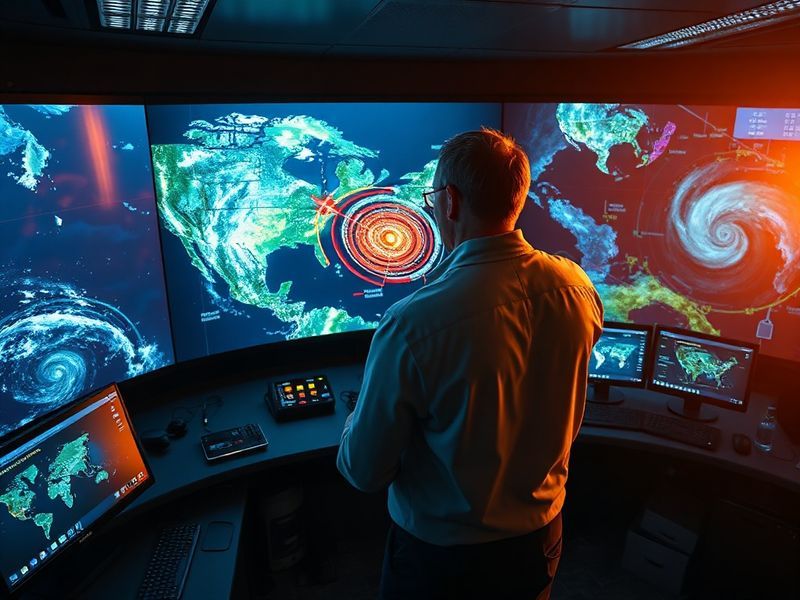
Modern weather forecasting relies on a combination of observational data, computational models, and expert analysis. The process begins with collecting data from a global network of sources, including satellites, weather balloons, buoys, and ground-based stations. These instruments measure temperature, humidity, wind speed, air pressure, and precipitation, providing a comprehensive snapshot of current conditions.
Once collected, this data is fed into numerical weather prediction (NWP) models—sophisticated computer programs that simulate the atmosphere using mathematical equations. These models divide the atmosphere into a three-dimensional grid, calculating how conditions in one area will influence another. The most advanced models, such as the Global Forecast System (GFS) and the European Centre for Medium-Range Weather Forecasts (ECMWF), can produce forecasts up to 10 days in advance with remarkable accuracy.
However, forecasting is not without its limitations. Small errors in initial data can compound over time, leading to significant discrepancies in long-range predictions. To mitigate this, meteorologists use ensemble forecasting—a technique that runs multiple simulations with slight variations in initial conditions. By comparing these runs, forecasters can assess the likelihood of different outcomes and provide probabilistic forecasts.
Key Components of Weather Forecasting
- Observational Data: Satellites, radars, and ground stations collect real-time data on atmospheric conditions.
- Numerical Models: Computer simulations use physics-based equations to predict future weather patterns.
- Ensemble Forecasting: Multiple simulations with slight variations help gauge forecast confidence.
- Human Expertise: Meteorologists interpret model outputs and adjust forecasts based on experience and local knowledge.
- Communication: Forecasts are disseminated through various channels, from television broadcasts to mobile apps.
The Impact of Weather Forecasting on Society and the Economy
The influence of accurate weather forecasting extends far beyond deciding whether to carry an umbrella. Agriculture, one of the most weather-dependent industries, relies on seasonal forecasts to plan planting and harvesting. A misjudged frost or drought can devastate crops, leading to food shortages and economic losses. Conversely, favorable weather can boost yields and stabilize markets.
Transportation is another sector deeply affected by weather conditions. Airlines adjust flight paths to avoid turbulence or storms, while shipping companies reroute vessels to prevent delays caused by rough seas. Severe weather can ground flights, close ports, and disrupt supply chains, costing businesses millions. Accurate forecasts help mitigate these disruptions by providing advance warning.
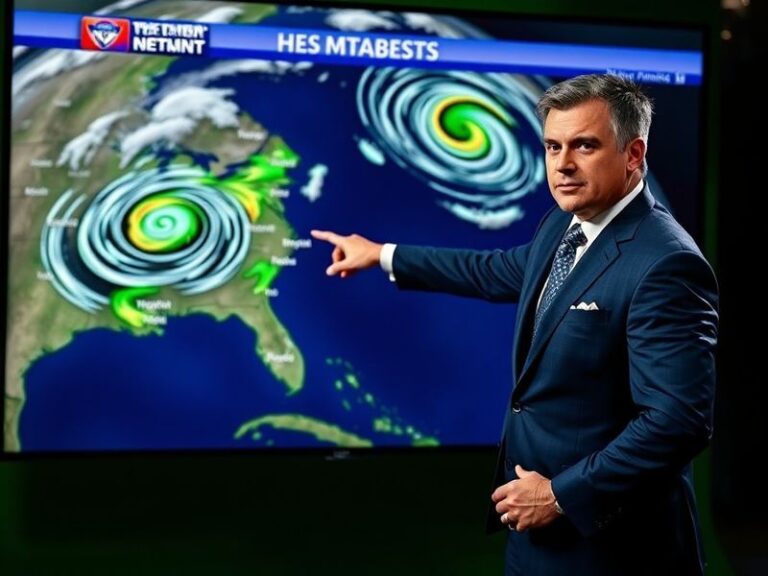
Public safety is perhaps the most critical area where weather forecasting plays a vital role. Severe weather events, such as hurricanes, tornadoes, and blizzards, pose significant threats to life and property. Timely warnings allow communities to evacuate, emergency services to prepare, and infrastructure to be reinforced. The National Weather Service and similar organizations worldwide issue alerts based on forecast models, saving countless lives each year.
Beyond immediate impacts, weather forecasting also informs long-term planning. Urban planners use climate projections to design resilient infrastructure, while insurance companies adjust premiums based on flood and storm risk assessments. Even energy providers rely on temperature forecasts to anticipate demand for heating and cooling, ensuring grid stability.
Challenges and the Future of Weather Forecasting
Despite its advancements, weather forecasting still faces significant challenges. One of the most pressing is the increasing frequency and intensity of extreme weather events, often linked to climate change. Hurricanes, wildfires, and heatwaves are becoming more unpredictable, straining the limits of current forecasting capabilities. Improving models to account for these changes requires not only more data but also a deeper understanding of atmospheric dynamics.
Another challenge is the “butterfly effect”—the idea that small, seemingly insignificant changes in initial conditions can lead to vastly different outcomes. This phenomenon underscores the need for higher-resolution models that can capture finer details in the atmosphere. Advances in artificial intelligence and machine learning are beginning to address this by identifying patterns in data that traditional models might miss.
Looking ahead, the future of weather forecasting will likely be shaped by several key trends. The launch of new satellites, such as the GOES-R series, provides higher-resolution imagery and more frequent updates, improving the accuracy of short-term forecasts. Meanwhile, the integration of IoT (Internet of Things) devices, such as smart sensors in urban areas, will enhance local forecasting capabilities.
Climate change also demands a shift in how we approach forecasting. Long-term projections must account for rising global temperatures, shifting precipitation patterns, and more frequent extreme events. This requires collaboration between meteorologists, climatologists, and policymakers to develop adaptive strategies for both mitigation and resilience.
As technology continues to advance, the line between weather forecasting and climate science will likely blur. The goal is not just to predict the weather but to understand its underlying drivers and prepare for the changes ahead. In this context, forecasting becomes more than a tool—it is a cornerstone of sustainable development.
What’s Next for Weather Forecasting?
The field is poised for transformative changes in the coming decades. Here’s what to watch:
- AI and Machine Learning: These technologies are improving the speed and accuracy of forecasts by identifying patterns in vast datasets.
- High-Resolution Models: Finer grid spacing in models will provide more detailed local forecasts, especially in urban areas.
- Citizen Science: Crowdsourced data from weather enthusiasts and IoT devices is supplementing traditional observation networks.
- Climate Integration: Forecasting will increasingly incorporate climate projections to address long-term risks.
- Global Collaboration: International partnerships are essential for sharing data and improving models, particularly for transboundary weather systems.
Conclusion: Why Weather Forecasting Matters Now More Than Ever
Weather forecasting is a testament to humanity’s ability to harness science and technology for practical benefit. From ancient stargazers to today’s supercomputers, the quest to understand the atmosphere has driven innovation and saved lives. As climate change intensifies, the stakes have never been higher. Accurate, timely forecasts are no longer a luxury but a necessity for adapting to a rapidly changing world.
For industries, governments, and individuals, staying informed means being prepared. Whether it’s a farmer deciding when to plant, a city planning for heatwaves, or a family checking the weekend forecast, weather predictions shape decisions big and small. The future of forecasting lies not just in predicting the weather but in using that knowledge to build a more resilient and sustainable future.
As technology advances and our understanding of the atmosphere deepens, the accuracy and utility of weather forecasts will only improve. The challenge now is to ensure that this information reaches those who need it most—timely, accessible, and actionable. In an era of uncertainty, one thing is clear: the sky is no longer the limit.
For more on how technology intersects with daily life, explore our Technology and Science categories for deeper analysis and insights.