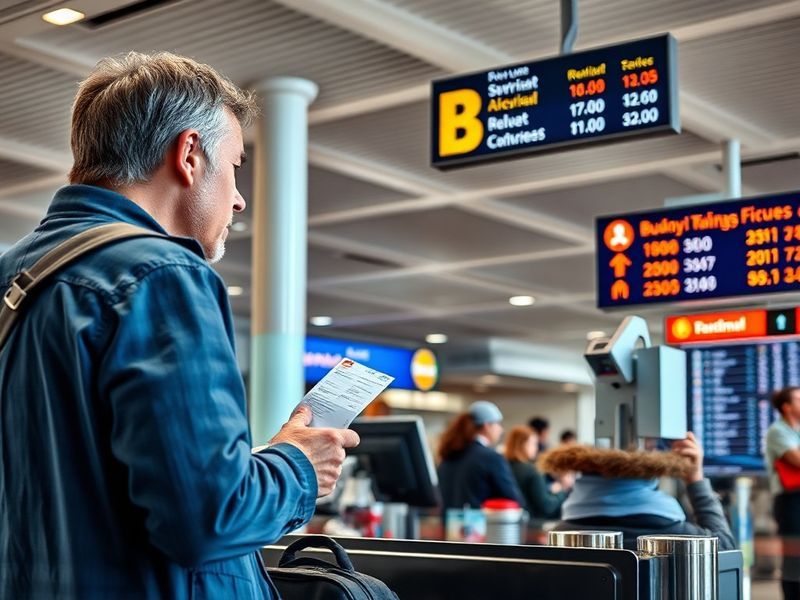
The Evolution of Budget Air Travel
Low-cost carriers, commonly known as budget airlines, have transformed the aviation industry over the past four decades. What began as a niche experiment in the United States during the late 1970s evolved into a global phenomenon reshaping how people travel. The model prioritized affordability over frills, stripping away traditional amenities to offer bare-bones fares that often undercut legacy carriers by 50% or more.
Southwest Airlines, founded in 1967 but officially launching as a low-cost carrier in 1971, is widely credited as the pioneer. Its no-frills approach—no assigned seating, no in-flight meals, and quick turnaround times at airports—proved revolutionary. By focusing on operational efficiency rather than luxury, Southwest demonstrated that air travel could be accessible to a broader demographic. The model soon spread to Europe, where Ryanair launched in 1984, and Asia, where AirAsia took flight in 1996.
The Global Spread of Budget Airlines
Today, low-cost carriers dominate air travel in many regions, particularly in Europe and Southeast Asia. In Europe, budget airlines account for nearly 40% of all flights, with carriers like easyJet and Wizz Air connecting secondary cities that legacy airlines once ignored. Meanwhile, in Southeast Asia, AirAsia, Lion Air, and Scoot have turned once-expensive intercontinental trips into affordable weekend getaways. Even in traditionally expensive markets like Australia and South America, budget airlines have carved out significant market share.
The success of these carriers is not uniform. In North America, budget airlines like Spirit and Frontier have faced criticism for their aggressive upselling tactics and hidden fees, leading to a mixed reputation. Conversely, in regions like India and Africa, where air travel was once a luxury, budget airlines such as IndiGo and Fastjet have democratized access to the skies, enabling economic growth and cultural exchange.
Cultural Impact: More Than Just Cheaper Tickets
The rise of low-cost carriers has influenced far more than just travel costs. It has redefined tourism, accelerated cultural exchange, and even shaped urban development around airports. In cities like Barcelona and Berlin, budget airlines have turned once-sleepy destinations into bustling tourist hubs, with Ryanair alone serving over 130 million passengers annually. This influx of visitors has revitalized local economies but also sparked debates about overtourism and environmental sustainability.
Culturally, budget airlines have made international travel a routine part of life for millions. A weekend in Prague or a quick trip to Lisbon is no longer reserved for the wealthy. This shift has broadened perspectives, allowing people from diverse backgrounds to experience new cultures firsthand. However, it has also raised questions about the homogenization of travel experiences, as budget airlines often prioritize quantity over quality, leading to crowded planes and less personalized service.
The Business Model: How Low-Cost Carriers Stay Ahead
At the core of every budget airline’s success is a ruthlessly efficient business model. Legacy airlines rely on a hub-and-spoke system, funneling passengers through major airports to maximize connections. Budget airlines, however, typically operate on a point-to-point model, flying directly between secondary airports to reduce costs and turnaround times. This approach minimizes delays and keeps aircraft in the air, where they generate revenue.
The revenue model extends beyond ticket prices. Budget airlines generate significant income from ancillary fees—charges for checked baggage, seat selection, priority boarding, and even printing a boarding pass at the airport. In 2023, Spirit Airlines reported that ancillary revenue accounted for 54% of its total revenue, a testament to how far the industry has shifted from traditional ticket sales.
Operational Efficiency and Cost-Cutting Strategies
Budget airlines employ a variety of strategies to keep costs low. These include:
- Single-Aircraft Fleet: Operating a single type of aircraft, such as the Boeing 737 or Airbus A320, simplifies maintenance, reduces training costs, and streamlines parts inventory.
- High Aircraft Utilization: Planes spend more time in the air and less time on the ground. For example, Ryanair aims for a 25-minute turnaround, compared to 45 minutes or more for legacy carriers.
- Secondary Airports: Avoiding congested hubs like London Heathrow or New York JFK allows budget airlines to negotiate lower landing fees and reduce delays.
- Direct Sales: Selling tickets exclusively through online platforms eliminates the need for travel agents and reduces commission fees.
- Minimal Crew Perks: Flight attendants and pilots often receive lower salaries than their legacy counterparts, and amenities like free meals or premium seating are eliminated.
These strategies enable budget airlines to offer fares that seem almost too good to be true. However, they also come with trade-offs. Passengers often endure crowded cabins, limited legroom, and a lack of flexibility, as most budget airlines charge hefty fees for changes or cancellations. Despite these drawbacks, the model has proven resilient, even surviving the COVID-19 pandemic better than many legacy carriers.
The Future of Budget Airlines: Challenges and Opportunities
The next decade will test the resilience of low-cost carriers as they face mounting challenges. Environmental concerns are at the forefront, with budget airlines under increasing scrutiny for their carbon footprint. While newer aircraft models like the Airbus A320neo are more fuel-efficient, the sheer volume of flights operated by budget airlines—Ryanair alone carried 168 million passengers in 2023—means their environmental impact remains significant.
Regulatory hurdles also pose a threat. In Europe, the European Union has begun to crack down on what it sees as unfair business practices, such as excessive ancillary fees and misleading fare advertisements. Meanwhile, in the United States, the Department of Transportation has proposed stricter rules on transparency for baggage and change fees. These regulations could erode one of the budget airlines’ key revenue streams.
Innovation and Adaptation
Despite these challenges, budget airlines are innovating to stay relevant. Some are introducing premium economy options to attract business travelers, while others are experimenting with subscription models, offering unlimited flights for a monthly fee. In Asia, airlines like AirAsia have diversified into other travel-related services, including hotels and ride-sharing, to create a one-stop travel ecosystem.
Technological advancements are also playing a role. Artificial intelligence is being used to optimize flight routes and predict demand, while blockchain technology is being explored to streamline baggage handling and reduce fraud. These innovations could help budget airlines maintain their edge in an increasingly competitive market.
The relationship between budget airlines and legacy carriers is also evolving. While low-cost carriers have disrupted the industry, legacy airlines are fighting back by launching their own budget subsidiaries, such as Delta’s Delta Comfort+ or Lufthansa’s Eurowings. This trend blurs the lines between the two models, forcing passengers to weigh the trade-offs between cost and comfort more carefully.
Conclusion: A Lasting Legacy
Low-cost carriers have undeniably changed the face of global travel. They have made air travel accessible to millions, fostered economic growth in developing regions, and forced the entire industry to rethink its approach to pricing and service. While challenges like environmental sustainability and regulatory pressures loom large, the budget airline model remains a powerful force in aviation.
For travelers, the rise of budget airlines has been a double-edged sword. On one hand, it has democratized travel, allowing people to explore the world without breaking the bank. On the other, it has contributed to overcrowding, environmental strain, and a decline in personalized service. As the industry continues to evolve, passengers will need to weigh these factors when choosing between budget and legacy airlines.
One thing is certain: the low-cost carrier revolution is far from over. As technology advances and consumer expectations shift, budget airlines will continue to adapt, ensuring that the dream of affordable air travel remains alive for generations to come.
For more insights into the travel industry, explore our Travel section, where we cover everything from budget travel tips to the latest trends in tourism.