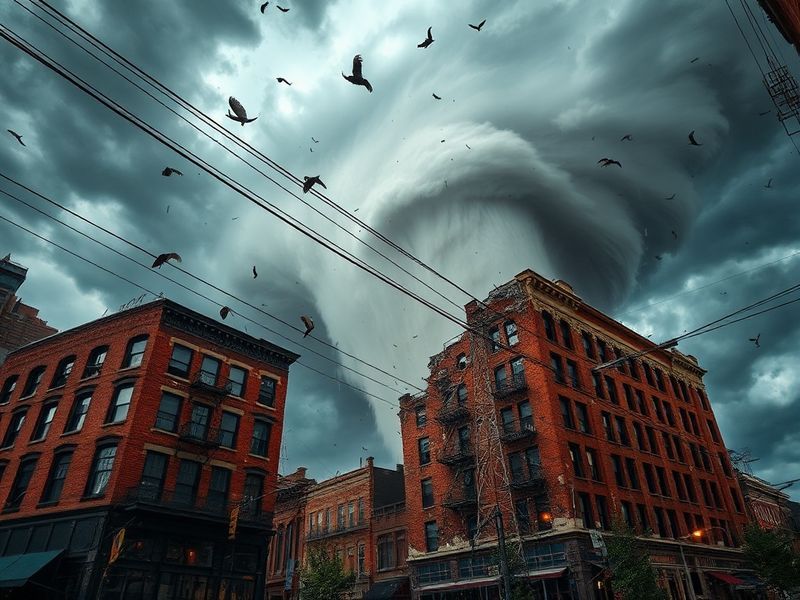
The evening of March 3, 2020, began like any other in Nashville, Tennessee. The city’s honky-tonk bars filled with music lovers, its downtown skyline glowed under streetlights, and locals went about their routines. By the time the last chord faded from the Grand Ole Opry, a different kind of force was gathering just beyond the Cumberland River. What followed was one of the most destructive tornado outbreaks in Middle Tennessee history—a disaster that would test the resilience of a city known more for its music than its meteorology.
The tornado, later classified as an EF-3 with winds up to 165 mph, carved a 60-mile path through Davidson and Wilson counties. It tore through neighborhoods like East Nashville and Donelson, flattening homes, uprooting trees, and leaving a trail of destruction that echoed the raw power of nature. In the aftermath, Nashville faced not only the challenge of physical recovery but also the emotional toll of a community forced to confront its vulnerability.
The Storm’s Path: A Geographic and Historical Perspective
Tornadoes are not uncommon in the American South, but the Nashville event stood out for its intensity and urban impact. According to the National Oceanic and Atmospheric Administration (NOAA), Tennessee averages 28 tornadoes per year, with a higher concentration during spring and fall storm seasons. What made this tornado unusual was its direct hit on a densely populated area, a reminder that tornadoes do not discriminate between rural and urban landscapes.
The storm followed a well-documented pattern of “ Dixie Alley ” tornadoes, a region stretching from Texas to the Carolinas known for violent, long-track twisters. Unlike the more famous “Tornado Alley” in the Great Plains, Dixie Alley tornadoes often occur at night, catching residents off guard. The Nashville tornado touched down around 1:30 a.m., when most were asleep. This timing amplified the disaster’s impact, as early warning systems struggled to reach people in time.
Historically, Nashville has experienced severe weather, including the 1998 tornado that killed seven people. But the 2020 event was different in scale and media coverage. It became a global story not just for its destruction, but for how the city responded—a testament to Nashville’s character and its people’s determination to rebuild.
Cultural Echoes: Music, Community, and Resilience
Nashville’s identity is inseparable from its music. The city’s recovery from the tornado became a narrative of resilience, one that resonated far beyond Tennessee. Local artists, from country stars to indie musicians, turned the disaster into a moment of solidarity. Benefit concerts, like the “Nashville Strong” telethon, raised millions for victims. Songs such as “Tennessee Whiskey” singer Chris Stapleton’s cover of “Maybe It’s Time” became anthems of hope.
The city’s music venues, some damaged in the storm, became symbols of rebirth. The historic Ryman Auditorium, though spared, stood as a silent witness to the chaos. Meanwhile, smaller clubs like The Basement East reopened with renewed purpose, hosting benefit shows for displaced families. This cultural response highlighted how Nashville’s creative spirit became a coping mechanism—a way to process loss and celebrate survival.
Community organizations played a crucial role. Groups like the American Red Cross and local churches mobilized volunteers to clear debris, distribute food, and provide shelter. The tornado became a case study in grassroots recovery, demonstrating how social cohesion can outlast even the most violent storms. In a city known for its hospitality, the disaster revealed the depth of neighborly bonds.
Global Lessons: Climate Change and Urban Preparedness
From a global perspective, the Nashville tornado offered a sobering reminder of climate change’s growing influence on extreme weather. Studies by the Intergovernmental Panel on Climate Change (IPCC) suggest that warmer temperatures and shifting atmospheric patterns may increase the frequency of severe storms in regions like Dixie Alley. While no single event can be attributed solely to climate change, the Nashville tornado fit a broader trend of intensifying weather patterns observed worldwide.
Urban planners in Nashville took note. The city’s rebuilding efforts incorporated stricter building codes, improved early warning systems, and enhanced emergency response plans. Cities like Chicago and Houston, which also face extreme weather risks, studied Nashville’s recovery as a model for resilience. The disaster underscored a global challenge: how to protect growing urban populations from increasingly unpredictable natural forces.
Internationally, cities in Japan, India, and Europe have faced similar challenges. In 2013, a tornado in the Italian town of Taranto killed dozens and highlighted the need for better disaster preparedness in regions unaccustomed to such events. Nashville’s experience became a case study in how communities can adapt—balancing economic growth with safety, tradition with innovation.
Rebuilding and Remembering: A City’s Journey Forward
Two years after the tornado, Nashville’s skyline tells a story of renewal. New homes stand where old ones were swept away. Parks and green spaces have been replanted. The sound of construction tools has replaced the silence of destruction. Yet scars remain—both visible and invisible. Mental health professionals reported a rise in anxiety and PTSD among survivors, a reminder that recovery is not just physical.
The city’s rebuilding efforts were not without controversy. Debates arose over zoning laws, insurance payouts, and the pace of reconstruction. Some argued for stricter floodplain regulations, while others pushed for rapid rebuilding to restore economic stability. The tension between progress and preservation mirrored challenges faced by cities worldwide, from New Orleans after Hurricane Katrina to Venice in the face of rising sea levels.
Today, Nashville’s story serves as both a warning and an inspiration. It reminds us that disasters do not respect borders, cultures, or economies. Yet it also shows how communities can come together—through music, volunteerism, and innovation—to overcome even the most devastating forces.
As climate change continues to reshape our world, Nashville’s experience offers a blueprint for resilience. It is a testament to the power of human connection, the importance of preparedness, and the unshakable spirit of a city that refused to be defined by destruction.
For those who lived through it, the tornado remains a defining moment. But for Nashville, it is not the end of the story. It is merely a chapter in a longer, more resilient narrative.