tornado watch vs warning
“`html
Understanding the Difference Between a Tornado Watch and a Tornado Warning
Weather alerts can often feel like an alphabet soup of confusion, especially when terms like “watch” and “warning” are thrown around. For those living in tornado-prone regions, knowing the distinction between a tornado watch and a tornado warning can make the difference between safety and danger. These alerts are not just bureaucratic jargon—they are life-saving tools designed to communicate risk levels in real time. While both are issued by the National Weather Service (NWS) in the United States, their meanings and the actions they require from the public differ significantly.
Globally, tornadoes occur in various forms and intensities, from the violent twisters of Tornado Alley in the U.S. to the less frequent but still destructive waterspouts in the Mediterranean or the tornadoes that occasionally strike Bangladesh, one of the most vulnerable countries in the world. The systems for issuing alerts vary by country, but the core principle remains the same: a watch means conditions are favorable, while a warning means danger is imminent.
The Tornado Watch: Preparedness Over Panic
A tornado watch is issued when weather conditions are favorable for the development of severe thunderstorms and tornadoes. It does not mean a tornado is currently happening or will definitely happen. Instead, it serves as an early heads-up to stay alert and be prepared. The NWS defines a tornado watch as a “longer lead-time product” that covers a large area, often spanning multiple states or regions. These watches can last several hours, giving residents time to review their safety plans, gather emergency supplies, and monitor local weather updates.
In the U.S., tornado watches are typically issued by the Storm Prediction Center (SPC) in Norman, Oklahoma, and cover a broad geographic area. For example, a watch might encompass parts of Texas, Oklahoma, and Kansas—regions collectively known as Tornado Alley. While the U.S. has a well-established system for tornado watches, other countries have adapted similar approaches. In Europe, where tornadoes are less common but still occur, meteorological agencies issue “severe weather warnings” that broadly indicate the potential for tornadoes alongside other hazards like hail or damaging winds.
During a tornado watch, it is crucial to take the following steps:
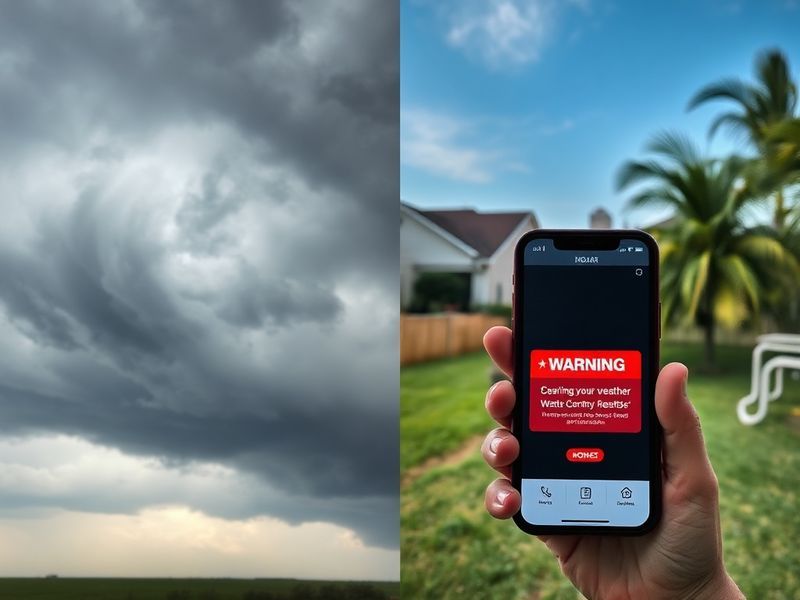
- Stay informed: Keep a weather radio or a reliable app handy to receive real-time updates.
- Identify your safe space: Know where to go if a warning is issued—basements, storm shelters, or interior rooms on the lowest floor of a sturdy building.
- Prepare an emergency kit: Include water, non-perishable food, flashlights, batteries, a first-aid kit, and any necessary medications.
- Avoid unnecessary travel: If possible, stay home or in a safe location until the watch expires.
The psychological impact of a tornado watch is also worth noting. For many, it triggers a state of heightened awareness, which can lead to anxiety, especially in regions where tornadoes are rare. In Japan, for instance, where tornadoes are infrequent but do occur, the public often relies on a combination of weather apps and local news alerts to stay informed. The cultural approach to weather preparedness in Japan emphasizes community awareness and quick dissemination of information through local networks.
The Tornado Warning: Immediate Action Required
If a tornado watch is a yellow flag, a tornado warning is the red flag. A tornado warning is issued when a tornado has been spotted on the ground or is indicated by weather radar. This alert means that danger is imminent and immediate action is necessary. Unlike a watch, a warning is issued for a much smaller, specific area and typically lasts for a shorter duration—usually 30 to 60 minutes. The NWS emphasizes that when a warning is issued, people should take action immediately to protect their lives and property.
In the U.S., tornado warnings are broadcast through a variety of channels, including emergency alert systems on phones, weather radios, and local news broadcasts. Sirens may also sound in communities equipped with outdoor warning systems. The effectiveness of these warnings depends on how quickly and clearly the information is disseminated. For example, in the 2011 Joplin, Missouri, tornado—a catastrophic EF-5 event that killed 161 people—many residents reported not hearing the warning sirens due to a combination of factors, including power outages and the siren’s limited range.
Globally, the system for tornado warnings varies. In Bangladesh, where tornadoes can be particularly deadly due to high population density and vulnerable infrastructure, warnings are often issued through local radio and community leaders. The challenge in such regions is not just the warning system itself but also the ability of the population to respond effectively. Education and drills play a critical role in ensuring that people know what to do when a warning is issued.
When a tornado warning is active, the following actions are critical:
- Seek shelter immediately: Move to a basement or an interior room on the lowest floor of a building, away from windows. If you are in a mobile home, evacuate to a sturdy structure.
- Cover yourself: Use a mattress, heavy blankets, or a helmet to protect your head and body from flying debris.
- Stay away from doors and windows: Even if the tornado appears to be passing, winds and debris can still cause injury.
- Listen for updates: Continue monitoring local news or a weather radio for changes in the storm’s path or intensity.
- Do not wait to see the tornado: If a warning is issued, assume the tornado is already occurring or will occur very soon. Do not rely on visual confirmation, which can be deadly if you delay taking shelter.
The cultural context of tornado warnings also highlights the importance of community resilience. In rural areas of the American Midwest, for instance, neighbors often check on one another during severe weather, especially elderly or disabled residents who may need assistance. In contrast, urban areas face different challenges, such as the difficulty of finding shelter in densely populated buildings or the risk of flying glass in high-rise structures. These differences underscore the need for tailored preparedness strategies based on local infrastructure and demographics.
Real-World Examples: Lessons from Past Tornadoes
History has shown that the line between a tornado watch and a tornado warning can mean the difference between survival and tragedy. One of the most infamous examples is the 2011 Super Outbreak, which produced 362 tornadoes across the southeastern U.S. over four days. During this event, the NWS issued multiple tornado watches and warnings, allowing some communities to take preemptive action. However, the sheer scale of the outbreak overwhelmed local resources, highlighting the need for improved communication and coordination.
In contrast, the 2013 Moore, Oklahoma, tornado—a devastating EF-5 storm—was preceded by a tornado warning that gave residents approximately 16 minutes of lead time. While this may seem like a short window, it was enough for many to seek shelter. The tragedy still resulted in 24 deaths, but the warning system likely saved countless lives by providing advance notice. This event prompted discussions about the effectiveness of warning systems and the need for better public education on tornado preparedness.
Internationally, the 1996 Bangladesh tornado—a deadly F4 storm that killed nearly 1,000 people—exposed the vulnerabilities of a region with limited warning infrastructure. The lack of a robust early warning system contributed to the high death toll, as many residents had little to no time to react. Since then, Bangladesh has made strides in improving its meteorological services, including partnerships with international organizations to enhance forecasting and communication capabilities.
These examples illustrate that while technology and systems have advanced, the human element remains critical. Public awareness, education, and drills are just as important as the alerts themselves. Countries like Finland and Germany, which experience occasional tornadoes, have integrated severe weather education into school curricula to ensure that future generations are prepared.
Technology and the Future of Tornado Alerts
The evolution of technology has significantly improved the accuracy and timeliness of tornado warnings. Doppler radar, for instance, allows meteorologists to detect rotation within thunderstorms, providing critical lead time for warnings. Advances in machine learning and artificial intelligence are also being explored to enhance predictive capabilities, potentially reducing false alarms and improving warning accuracy.
In Japan, where tornadoes are less frequent but still pose a risk, the Japan Meteorological Agency (JMA) has developed a system that combines radar data with real-time observations to issue warnings. The agency also leverages social media and mobile alerts to reach the public quickly. Similarly, in Europe, the European Severe Weather Database (ESWD) collects and disseminates reports of tornadoes and other severe weather events, helping to improve forecasting models.
For outdoor enthusiasts and those who spend time in remote areas, personal weather devices like handheld radar units or satellite communicators can provide lifesaving information. Brands like Garmin and Spot offer products that allow users to receive weather alerts even in areas without cell service, bridging the gap between technology and safety.
Looking ahead, the integration of IoT (Internet of Things) devices, such as smart home sensors, could further enhance tornado preparedness. Imagine a system that automatically alerts residents when a tornado warning is issued and provides real-time updates on the storm’s path. While such technology is still in its infancy, it represents the next frontier in severe weather safety.
Conclusion: Knowledge is the Ultimate Safeguard
Understanding the difference between a tornado watch and a tornado warning is more than an academic exercise—it is a matter of life and death. A watch prepares you for the possibility of danger, while a warning demands immediate action. Both are essential components of a comprehensive severe weather safety plan. Whether you live in Tornado Alley, the tornado-prone regions of Bangladesh, or an area where tornadoes are rare, being informed and prepared can make all the difference.
As climate change continues to influence weather patterns, the frequency and intensity of tornadoes may shift, making these alerts even more critical. Communities must prioritize education, drills, and investment in warning systems to ensure that residents are not caught off guard. For those who enjoy the outdoors or travel to regions with severe weather risks, staying equipped with the right tools and knowledge is equally important.
In the end, the goal is simple: to turn alerts into actions that save lives. Whether it’s a watch that prompts you to review your emergency kit or a warning that sends you to shelter, each second counts. Stay alert, stay prepared, and remember—the difference between a watch and a warning could be the difference between safety and sorrow.
—
METADATA
{
“title”: “Tornado Watch vs Warning: What You Need to Know to Stay Safe”,
“metaDescription”: “Learn the critical differences between a tornado watch and warning, plus global preparedness strategies to protect your family.”,
“categories”: [“Science”, “