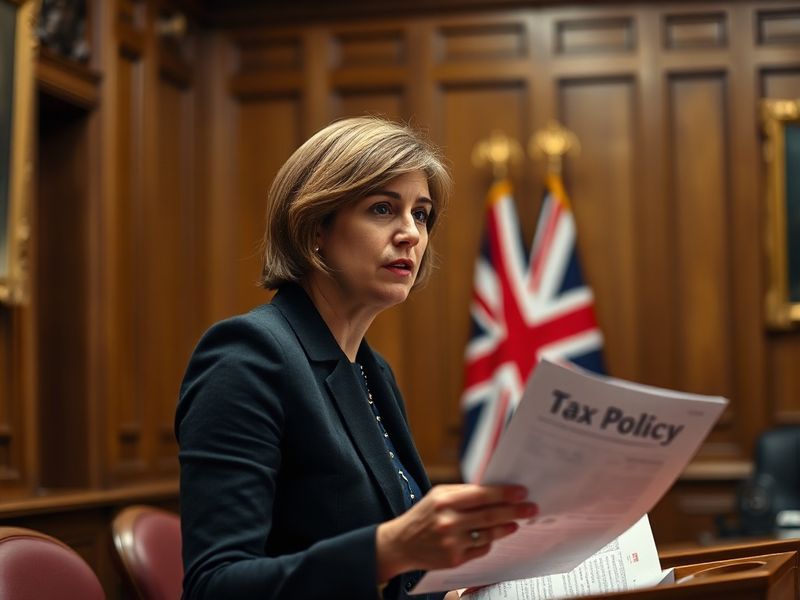
Rachel Reeves, the UK’s new Chancellor of the Exchequer, has outlined significant tax reforms aimed at addressing economic stagnation and funding public services. The changes, introduced in her first major fiscal statement, reflect a shift toward progressive taxation and increased scrutiny of corporate tax avoidance. While the measures are designed to generate revenue without stifling growth, they have sparked debate among economists, businesses, and households alike.
The reforms include adjustments to income tax thresholds, corporation tax rates, and measures to close loopholes in the tax system. Reeves has framed these changes as necessary to restore fiscal stability and invest in critical infrastructure. However, critics argue that some policies may disproportionately affect middle-income earners and small businesses. Below, we break down the key elements of the tax changes and their potential impact.
Key Changes in the UK Tax Reforms
The Chancellor’s package introduces several notable adjustments to the tax landscape. One of the most significant is the freeze on income tax thresholds, which will remain unchanged until 2028. This move is expected to bring an additional £4 billion into the Treasury by dragging more earners into higher tax brackets as wages rise. Additionally, the main rate of corporation tax has been increased from 19% to 25%, aligning with the government’s aim to ensure large corporations contribute more to public finances.
Another major reform is the crackdown on tax avoidance schemes. The government has allocated £750 million to HM Revenue and Customs (HMRC) to target aggressive tax planning by multinational corporations and wealthy individuals. This includes stricter enforcement of existing rules and new legislation to prevent profit-shifting to low-tax jurisdictions. The reforms also introduce a new “windfall tax” on energy companies, which have seen record profits in recent years.
For individuals, the changes include adjustments to National Insurance contributions. The threshold for paying National Insurance will rise slightly, providing some relief for lower-income workers. However, the freeze on income tax thresholds means that higher earners will see their tax bills increase over time. The government has also extended the freeze on fuel duty, which will remain at current levels for another year.
Impact on Households
The freeze on income tax thresholds will have a tangible effect on household budgets. As wages rise due to inflation, more people will be pushed into higher tax brackets, effectively reducing their take-home pay. This is particularly concerning for middle-income families who may not qualify for additional support but will still face higher tax liabilities. The Institute for Fiscal Studies estimates that this measure alone could cost the average household an extra £1,000 per year by 2028.
However, the government has attempted to offset some of these costs with targeted support. The Household Support Fund, which provides financial assistance to low-income families, has been extended for another six months. Additionally, the freeze on fuel duty means that drivers will not face an immediate increase in petrol and diesel costs, providing some relief at the pump.
For pensioners, the changes are mixed. The state pension will increase in line with inflation, ensuring that retirees do not lose purchasing power. However, those with significant investment income may face higher taxes due to the freeze on dividend tax allowances. The government has also frozen the inheritance tax threshold, which could lead to more estates being subject to the tax.
Impact on Businesses
The increase in corporation tax from 19% to 25% is one of the most contentious elements of the reforms. While the government argues that this aligns the UK with international standards, business groups warn that it could deter investment and harm competitiveness. The Confederation of British Industry (CBI) has expressed concerns that higher taxes could discourage multinational corporations from locating operations in the UK, particularly in a post-Brexit landscape.
Small and medium-sized enterprises (SMEs) may feel the pinch more acutely. Many SMEs operate on tight margins, and even a small increase in tax liabilities could impact their ability to invest in growth or hire new staff. The government has attempted to mitigate this by maintaining the small profits rate at 19% for businesses with profits under £50,000, but the overall tax burden remains higher.
On the positive side, the crackdown on tax avoidance could level the playing field for businesses that already comply with tax laws. By closing loopholes, the government aims to ensure that all companies contribute their fair share, reducing the competitive advantage enjoyed by those that exploit tax havens. Additionally, the new windfall tax on energy companies is expected to generate £2 billion in revenue, which will be reinvested into green energy initiatives.
For businesses involved in international trade, the reforms introduce new complexities. The government has signalled its intention to align UK tax policies with global standards set by the OECD, which could simplify cross-border transactions but also require additional compliance efforts. Companies will need to stay abreast of these changes to avoid penalties and ensure they are structuring their operations efficiently.
Reactions from Economists and Policymakers
The Chancellor’s tax reforms have elicited a range of responses from economists, policymakers, and industry leaders. Supporters argue that the measures are necessary to address the UK’s fiscal challenges and fund essential public services. The Institute for Public Policy Research (IPPR) has praised the focus on progressive taxation, noting that it could reduce inequality by ensuring that the wealthiest individuals and corporations pay their fair share.
Critics, however, warn that the reforms could stifle economic growth. The Institute of Economic Affairs (IEA) has argued that higher taxes on businesses and individuals will discourage investment and innovation, ultimately harming the economy in the long run. The IEA’s analysis suggests that the freeze on income tax thresholds could reduce household spending power by up to £15 billion annually, dampening consumer demand.
Within the government, there is a clear divide. While Reeves has framed the reforms as a balanced approach to fiscal responsibility, some backbench MPs have expressed concerns about the potential electoral consequences. The Liberal Democrats, for example, have criticised the freeze on income tax thresholds, arguing that it amounts to a stealth tax on middle-income earners. Meanwhile, Labour MPs have largely supported the measures, emphasising the need to fund public services and reduce inequality.
What’s Next for the UK Tax System?
The immediate impact of the tax changes will be felt over the next few years, but the long-term implications remain uncertain. The government has signalled that further reforms are likely, particularly in the areas of capital gains tax and inheritance tax. Reeves has hinted at a review of these taxes in the coming months, which could lead to additional adjustments designed to close loopholes and ensure fairness.
For businesses, the focus will likely shift toward compliance and strategic planning. Companies will need to reassess their tax structures to ensure they are optimised for the new regime. This may involve consulting with tax advisors, reorganising operations, or exploring new investment opportunities that align with the revised tax landscape.
For households, the key will be to monitor the impact of the changes on personal finances. Those affected by the freeze on income tax thresholds may need to adjust their budgets or seek additional sources of income. Meanwhile, pensioners and low-income families should explore the support available to them, such as the Household Support Fund or pension credit.
The government’s commitment to transparency and fairness in taxation is likely to remain a central theme in future policy announcements. Reeves has repeatedly emphasised the need to rebuild trust in the tax system, particularly in the wake of scandals involving corporate tax avoidance and aggressive tax planning. By cracking down on loopholes and ensuring that all taxpayers contribute their fair share, the government aims to create a more equitable and sustainable fiscal environment.
As the UK navigates its post-pandemic recovery and grapples with the economic challenges of the 21st century, the tax reforms introduced by Rachel Reeves represent a significant step toward reshaping the country’s fiscal landscape. Whether these changes will achieve their intended goals remains to be seen, but their impact will be felt by millions of households and businesses across the country.
Key Takeaways for Taxpayers and Businesses
To summarise, the UK tax changes introduced by Rachel Reeves will have wide-ranging effects on households, businesses, and the broader economy. Here are the key takeaways:
- Households: The freeze on income tax thresholds will increase tax liabilities for many earners, particularly those on middle incomes. However, targeted support measures, such as the extension of the Household Support Fund, will provide some relief.
- Businesses: The increase in corporation tax and crackdown on tax avoidance will affect profitability and compliance requirements. SMEs may face particular challenges, but the measures could level the playing field for compliant businesses.
- Economy: The reforms aim to address fiscal imbalances and fund public services, but critics warn they could dampen economic growth. The long-term impact will depend on how businesses and households adapt to the new tax environment.
- Future Reforms: Further adjustments to capital gains tax, inheritance tax, and other areas are likely. Taxpayers and businesses should stay informed about potential changes and plan accordingly.
For those seeking more detailed guidance on how these changes may affect them, resources such as Dave’s Locker Finance section offer expert analysis and practical advice. Staying informed will be crucial as the UK’s tax landscape continues to evolve.
Conclusion
Rachel Reeves’ tax reforms mark a significant shift in the UK’s fiscal policy, with wide-ranging implications for households, businesses, and the economy. While the measures aim to restore fiscal stability and fund public services, they also raise important questions about fairness, growth, and competitiveness. As the reforms take effect, their true impact will become clearer, but one thing is certain: the UK’s tax landscape is undergoing a period of profound change.
For taxpayers and businesses alike, the key to navigating this new environment will be adaptability and forward planning. By staying informed and seeking expert advice, individuals and organisations can mitigate the risks and capitalise on the opportunities presented by these reforms. As the government continues to refine its tax policies, the conversation around fairness, efficiency, and sustainability in taxation will only intensify.