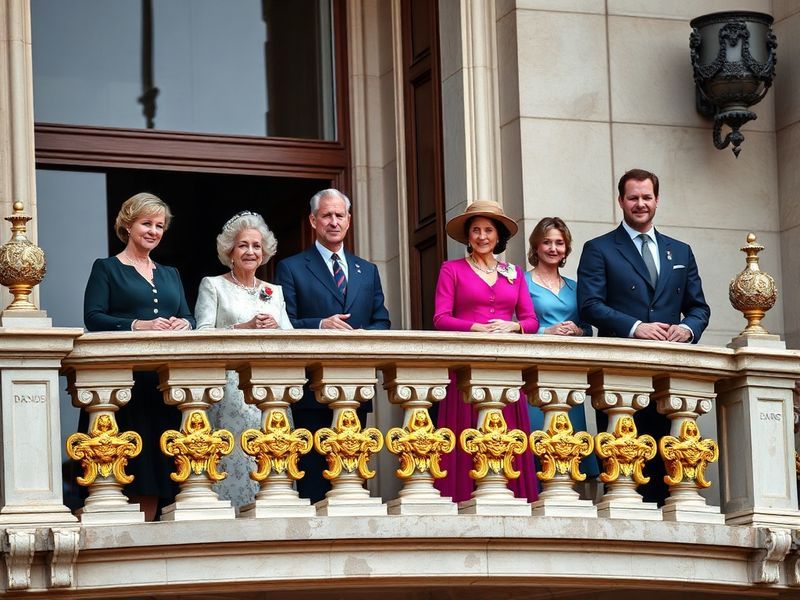
Royals Through the Ages: Tradition Meets Modern Influence
“`html
Royals: The Enduring Legacy and Modern Role of Monarchies
The institution of royalty has shaped civilizations for centuries, evolving from absolute rulers to symbolic figures in many modern nations. While some monarchies retain significant political power, others serve primarily ceremonial roles, yet their cultural and historical influence remains undeniable. This duality makes royals a fascinating subject—one that blends tradition with contemporary relevance.
In an era of rapid globalization and shifting political landscapes, the relevance of royal families is often debated. Are they relics of the past, or do they still hold meaningful roles in society? The answer varies by country, with some monarchies thriving as national unifying forces while others face scrutiny and calls for reform. Understanding this complex dynamic requires examining their historical roots, modern functions, and the controversies that surround them.
The Historical Roots of Royalty
Monarchies trace their origins to ancient civilizations, where rulers were often seen as divine or chosen by the gods. In medieval Europe, kings and queens wielded immense power, controlling vast territories and influencing the lives of their subjects. The concept of the divine right of kings, popularized in the 16th and 17th centuries, reinforced the idea that monarchs derived their authority directly from a higher power.
Over time, the power of monarchs diminished in many regions due to revolutions, constitutional reforms, and the rise of democratic governments. The French Revolution of 1789, for example, marked a turning point by overthrowing the monarchy and establishing a republic. Similarly, the Glorious Revolution in England in 1688 led to a constitutional monarchy, where the crown’s powers were limited by law. These historical shifts laid the groundwork for the modern roles that royals play today.
From Absolute Rule to Constitutional Symbols
Today, most European monarchies operate under constitutional frameworks, where the royal family’s role is largely symbolic. The British monarchy, one of the most well-known, exemplifies this transition. While King Charles III holds no political power, the monarchy serves as a unifying figurehead, embodying national identity and continuity. Ceremonial duties, such as state openings of parliament and diplomatic engagements, highlight the monarchy’s modern function.
In contrast, some monarchies, like those in Saudi Arabia and Morocco, retain significant political influence. These rulers often govern alongside advisory councils or legislative bodies, blending traditional authority with modern governance. The balance between tradition and adaptation is a defining feature of contemporary royalty.
The Modern Role of Royalties
In the 21st century, royal families face the challenge of maintaining relevance in an increasingly secular and egalitarian world. Their survival often depends on their ability to adapt to changing societal expectations while preserving cultural heritage. Public perception plays a crucial role in this dynamic, as modern royals must navigate the fine line between tradition and modernity.
One of the most significant roles of modern royals is that of a unifying symbol. In countries like the Netherlands and Sweden, the monarchy serves as a non-partisan figure that transcends political divisions. Events such as royal weddings and national celebrations become moments of collective pride, reinforcing national identity. This symbolic function is particularly valuable in diverse societies where unity can be fragile.
Additionally, many royal families engage in philanthropy and advocacy, using their platforms to address social issues. For instance, Prince William and Princess Kate’s work through the Royal Foundation focuses on mental health, early childhood development, and the environment. Similarly, Crown Princess Mary of Denmark has championed causes like gender equality and children’s welfare. These initiatives help modernize the image of royalty, making it more relatable to younger generations.
Economic Impact and Public Perception
The economic impact of royal families is another area of interest. In the UK, the monarchy contributes significantly to tourism, with landmarks like Buckingham Palace and Windsor Castle drawing millions of visitors annually. The 2022 Platinum Jubilee, celebrating Queen Elizabeth II’s 70-year reign, generated an estimated £1.2 billion for the British economy. This financial benefit underscores the monarchy’s role as a cultural and economic asset.
However, not all publics view royals favorably. In countries like Spain and Thailand, royal families have faced criticism and calls for reform. Scandals, perceived extravagance, and questions about accountability can erode public trust. The 2020 protests in Thailand, where demonstrators demanded reforms to the monarchy, highlighted the tensions between tradition and democratic expectations. These challenges force royal families to reconsider their public engagement strategies.
Controversies and Challenges Facing Modern Monarchies
Despite their symbolic roles, royal families are not immune to controversy. Scandals involving members of royal households often dominate headlines, sparking debates about the institution’s future. The 1992 separation of Prince Charles and Princess Diana, followed by her tragic death in 1997, exposed the personal and public struggles within the British monarchy. More recently, Prince Harry and Meghan Markle’s decision to step back from royal duties in 2020 raised questions about the pressures of modern monarchy.
Another recurring issue is the cost of maintaining royal families. Critics argue that taxpayer money funds lavish lifestyles, while proponents contend that the monarchy’s economic benefits outweigh the expenses. In 2021, the Dutch monarchy’s annual budget exceeded €400 million, a figure that sparked public debate. Balancing fiscal responsibility with tradition remains a persistent challenge for many royal households.
Succession and Representation
The issue of succession often brings modern dilemmas to the forefront. Traditionally, royal lines followed strict primogeniture rules, where the eldest son inherited the throne. However, many countries have reformed these laws to allow female heirs to succeed. For example, Sweden amended its succession laws in 1980 to permit female monarchs, paving the way for Crown Princess Victoria to become queen. Similarly, the UK changed its succession laws in 2013 to end male-preference primogeniture, ensuring that Princess Charlotte would retain her place in the line of succession.
Representation is another critical concern. Critics argue that royal families often lack diversity, reflecting the privileged backgrounds of their members. The marriage of Prince Harry to Meghan Markle, a biracial American actress, was a step toward addressing this issue. However, the broader question of inclusivity within monarchies remains unresolved. As societies become more diverse, the pressure on royal families to reflect these changes grows.
The Future of Royalties in a Changing World
The future of royal families hinges on their ability to adapt to societal shifts while preserving their core values. In an age of social media and instant communication, royals must carefully manage their public image. The British royal family’s strategic use of platforms like Instagram and YouTube has helped modernize their outreach, particularly among younger audiences. However, this digital presence also exposes them to greater scrutiny and criticism.
Another factor is the evolving expectations of younger generations. Millennials and Gen Z often view institutions like monarchy with skepticism, prioritizing transparency and accountability. Royal families that fail to meet these expectations risk alienating the very demographics they need to engage. The Dutch monarchy’s efforts to connect with younger audiences through social media and interactive events demonstrate a proactive approach to this challenge.
Ultimately, the survival of royals may depend on their willingness to embrace reform. Countries like Norway and Belgium have shown that monarchies can thrive by adopting progressive policies and engaging with modern issues. Whether through philanthropy, digital engagement, or constitutional updates, the most resilient royal families will be those that balance tradition with innovation.
Lessons from Abolished Monarchies
The decline of monarchies in countries like Greece, Italy, and Nepal offers valuable lessons. In Greece, the monarchy was abolished in 1973 following a referendum, with the public favoring a republic. Similarly, Italy’s monarchy ended in 1946 after a constitutional referendum, marking the birth of the Italian Republic. These transitions were often driven by a desire for democratic governance and economic stability.
However, the absence of a monarchy does not necessarily lead to political or social instability. Many of these countries have flourished as republics, demonstrating that national identity can thrive without a royal family. The key takeaway for existing monarchies is that their continued relevance depends on their ability to justify their existence in the eyes of the public.
For those interested in exploring the broader cultural impact of royal families, our entertainment section offers deeper insights into their influence on media and popular culture. Additionally, the culture category provides further analysis on how royal traditions intersect with modern society.