<!DOCTYPE html>
<html lang="en">
<head>
    <meta charset="UTF-8">
    <meta name="viewport" content="width=device-width, initial-scale=1.0">
    <title>Flower Moon 2024: Meaning, Viewing Tips & Cultural Significance</title>
</head>
<body>
    <article>
        <h1>Flower Moon 2024: Meaning, Viewing Tips & Cultural Significance</h1>

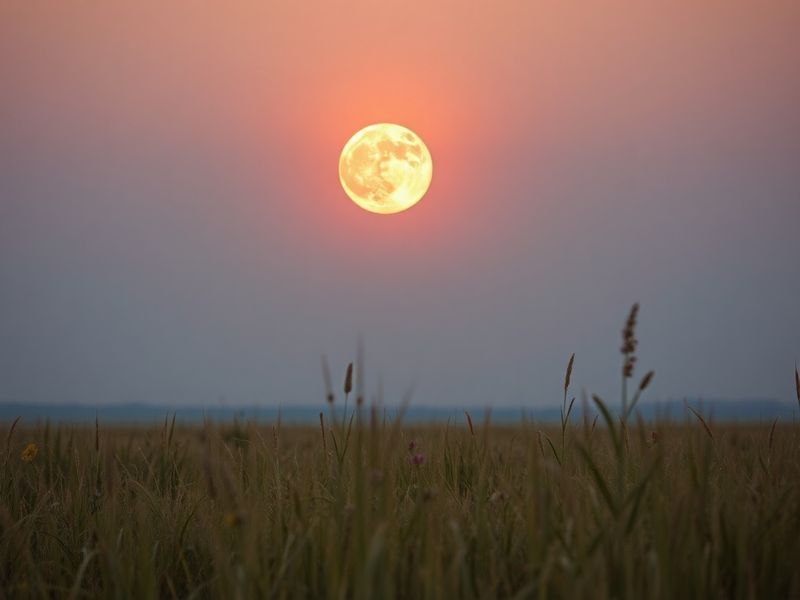
        <p>The Flower Moon arrives in May, marking one of the most visually striking full moons of the year. Named by Indigenous communities in North America, this celestial event coincides with the blooming of spring flowers, creating a natural connection between Earth’s cycles and human observation.</p>

        <p>This year’s Flower Moon is particularly noteworthy because it will be accompanied by a penumbral lunar eclipse. While not as dramatic as a total eclipse, the subtle shading effect offers a unique viewing experience for stargazers. The eclipse will be visible across much of Europe, Africa, Asia, and Australia, providing a rare opportunity to witness two celestial events in one night.</p>

        <h2>What Is the Flower Moon?</h2>

        <p>The Flower Moon is the traditional name for the full moon occurring in May, derived from the Algonquin peoples who named it to reflect the abundance of blooming flowers during this month. Other Indigenous names for this moon include:</p>

        <ul>
            <li><strong>Corn Planting Moon</strong> – Recognizing the time when crops are sown</li>
            <li><strong>Milk Moon</strong> – A reference to the lactation period of cows</li>
            <li><strong>Hare Moon</strong> – Symbolizing the fertility of hares during spring</li>
        </ul>

        <p>In Hindu tradition, this moon is called <strong>Vaisakha Purnima</strong>, a day of spiritual significance marked by festivals like Buddha Purnima. Meanwhile, in Celtic lore, it was known as the <strong>Bright Moon</strong>, a time for celebrating new beginnings and the return of light.</p>

        <h2>When and How to See the 2024 Flower Moon</h2>

        <p>The Flower Moon will reach peak illumination on <strong>May 23, 2024, at 9:53 AM EDT (13:53 UTC)</strong>. For most observers, the best viewing window will be the night of May 22 into the early hours of May 23. The moon will appear full for about three days, from Tuesday evening through Friday morning, providing multiple opportunities to observe it.</p>

        <p>To optimize your viewing experience, consider these tips:</p>

        <ol>
            <li><strong>Check local moonrise times</strong> – The moon will rise in the east around sunset, but exact timing varies by location. Websites like <a href="https://www.timeanddate.com/moon/" target="_blank" rel="noopener noreferrer">Time and Date</a> provide precise schedules.</li>
            <li><strong>Find an unobstructed eastern horizon</strong> – Trees, buildings, and terrain can block the view, especially during moonrise.</li>
            <li><strong>Use binoculars or a telescope</strong> – While the Flower Moon is visible to the naked eye, magnification reveals lunar maria (dark plains) and craters in greater detail.</li>
            <li><strong>Minimize light pollution</strong> – Urban areas with artificial lighting may dull the moon’s brightness. Rural locations or dark-sky preserves offer the best visibility.</li>
        </ol>

        <p>For those unable to view the moon in person, live streams from observatories like the <a href="https://www.nasa.gov/" target="_blank" rel="noopener noreferrer">NASA</a> website or the <a href="https://www.virtualtelescope.eu/" target="_blank" rel="noopener noreferrer">Virtual Telescope Project</a> will provide real-time footage.</p>

        <h2>Cultural and Scientific Significance</h2>

        <p>Beyond its beauty, the Flower Moon holds deep cultural meaning. In many Indigenous traditions, full moons were used to track time, plan agricultural activities, and mark spiritual ceremonies. The naming of moons reflects a close relationship with nature, where celestial events guided daily life.</p>

        <p>Scientifically, the Flower Moon offers opportunities for observation and study. Lunar eclipses—even penumbral ones—provide data on Earth’s atmosphere as sunlight filters through it. The subtle dimming of the moon during the eclipse can reveal atmospheric conditions, such as volcanic ash or pollution levels.</p>

        <p>This year’s event also aligns with ongoing research into <a href="https://www.daveslocker.net/science" target="_blank" rel="noopener noreferrer">lunar cycles and their potential effects on human behavior</a>. While scientific consensus on lunar influence remains mixed, some studies suggest correlations between full moons and sleep patterns or emergency room visits. The Flower Moon serves as a reminder of humanity’s enduring fascination with the cosmos.</p>

        <h2>Broader Implications: Why Celestial Events Matter</h2>

        <p>Events like the Flower Moon transcend mere spectacle. They foster connections between generations, bridging ancient traditions with modern astronomy. In an age dominated by digital distractions, celestial phenomena offer a moment of collective awe—a shared experience that unites people across cultures and geographies.</p>

        <p>Moreover, the Flower Moon highlights the importance of preserving dark skies. Light pollution not only diminishes our ability to observe celestial events but also disrupts ecosystems and human health. Advocacy groups, such as the <a href="https://www.darksky.org/" target="_blank" rel="noopener noreferrer">International Dark-Sky Association</a>, work to combat this issue, emphasizing the need for sustainable lighting solutions.</p>

        <p>The Flower Moon also serves as an educational tool. For teachers and parents, it presents an opportunity to engage children with astronomy, combining storytelling with scientific exploration. Simple activities, like tracking moon phases or using apps like <a href="https://stellarium.org/" target="_blank" rel="noopener noreferrer">Stellarium</a>, can spark curiosity about the universe.</p>

        <h3>A Global Perspective</h3>

        <p>Different cultures interpret the Flower Moon in unique ways. In Japan, the full moon of May is celebrated during the <strong>Hanami</strong> season, where cherry blossoms are admired alongside the moon’s glow. Meanwhile, in parts of Europe, May’s full moon is associated with <strong>Beltane</strong>, a festival marking the midpoint between spring and summer, symbolizing fertility and renewal.</p>

        <p>These diverse interpretations underscore the universal human connection to the moon. Whether through science, spirituality, or tradition, the Flower Moon invites reflection on our place in the universe.</p>

        <h2>Conclusion</h2>

        <p>The Flower Moon is more than just a phase in the lunar cycle—it is a cultural touchstone, a scientific opportunity, and a reminder of nature’s rhythms. As we observe this celestial event, we participate in a tradition that spans thousands of years, linking ancient communities with modern stargazers.</p>

        <p>Whether you’re an amateur astronomer, a cultural enthusiast, or simply someone who appreciates the night sky, the Flower Moon offers a chance to pause and look upward. Take a moment on May 22–23 to witness this luminous spectacle, and consider the stories and science it represents.</p>
    </article>

    <!-- Metadata Section -->