SpaceX Starlink Launch from Vandenberg: Global Internet Expansion
“`html
SpaceX Starlink Expands from Vandenberg: A Strategic Move
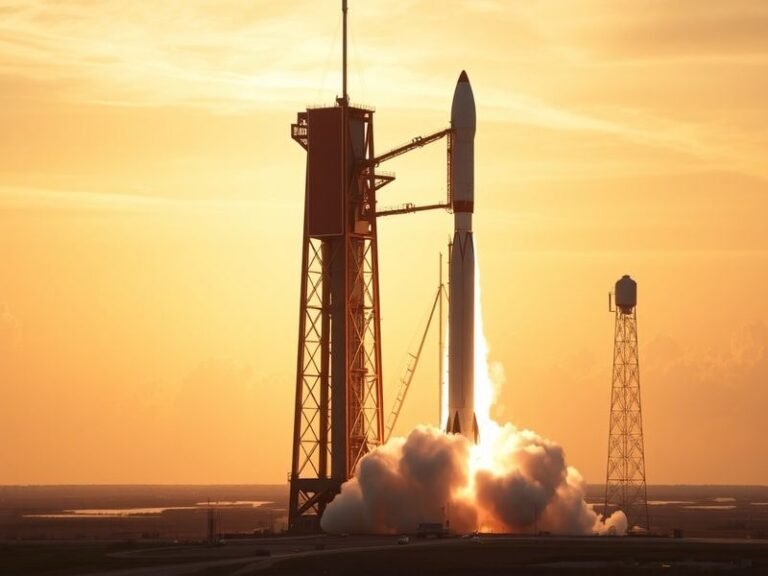
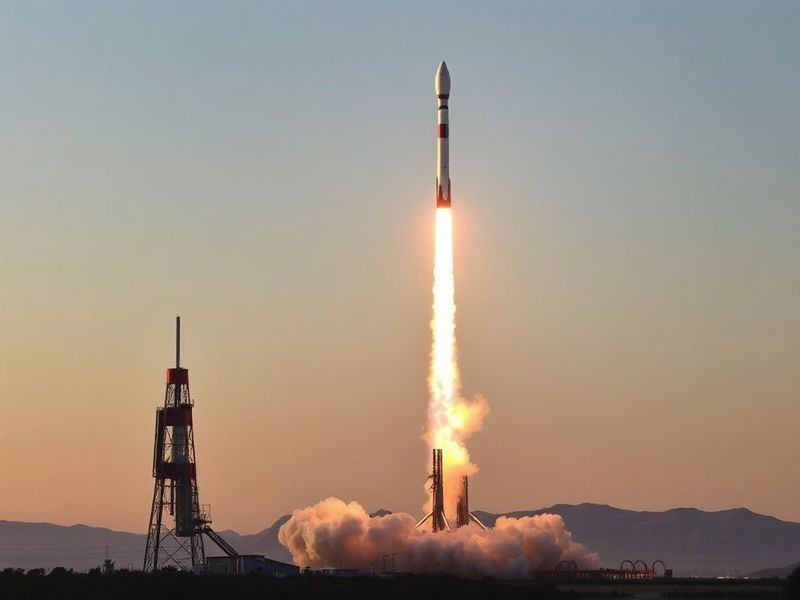
On a clear Tuesday morning at Vandenberg Space Force Base in California, SpaceX successfully launched another batch of Starlink satellites. This marked the 12th mission from the West Coast this year alone, continuing a rapid cadence of orbital deployments. The Falcon 9 rocket lifted off at 6:44 a.m. PT, carrying 21 Starlink spacecraft into low Earth orbit. What makes this launch particularly significant is not just its payload, but its location—and what it signals for the future of global internet coverage.
Vandenberg has become a critical hub for SpaceX’s Starlink program. Unlike launches from Cape Canaveral, which primarily serve equatorial orbits, launches from California enable polar and high-inclination orbits. These are essential for providing coverage to high-latitude regions like Alaska, Canada, and northern Europe—areas where traditional satellite internet services have struggled to deliver reliable connectivity.
This launch also demonstrated SpaceX’s ability to maintain a high operational tempo. In 2024, SpaceX has averaged over one Starlink launch per week. Such consistency is not just impressive—it’s necessary. Each satellite added strengthens the constellation’s density, reducing latency and improving signal reliability for users across the globe.
Why Vandenberg Matters: Geography, Orbit, and Coverage
The choice of Vandenberg isn’t arbitrary. Situated on the central California coast, the spaceport offers unique advantages. Its southern trajectory over the Pacific Ocean minimizes risk to populated areas during launch. More importantly, the polar orbit achieved from Vandenberg allows Starlink to cover every corner of the Earth, including the poles—something geostationary satellites cannot do.
This is especially valuable for industries operating in remote or extreme environments: shipping lanes in the Arctic, scientific research stations in Antarctica, and even remote military outposts. The latest batch of satellites includes improved laser crosslinks, enabling faster data transfer between spacecraft without relying on ground stations. This reduces latency further and enhances real-time communication capabilities.
Moreover, SpaceX has been transparent about its goal: to provide high-speed, low-latency internet to every person on Earth, regardless of location. With over 5,000 active satellites in orbit as of early 2024, the constellation is already one of the largest in history. But the network’s true power lies in its density. More satellites mean better coverage, faster speeds, and greater resilience against outages.
Key Advantages of Vandenberg Launches
- Polar Orbit Access: Enables global coverage, including high-latitude regions.
- Lower Risk: Launches over the ocean reduce the danger to populated areas.
- Increased Launch Cadence: Fewer weather delays and more flexible scheduling compared to Florida’s hurricane season.
- Scalability: Supports rapid expansion of the Starlink constellation to meet growing demand.
The Bigger Picture: How Starlink Is Reshaping Global Internet Access
While individual launches make headlines, the cumulative effect of these missions is transforming the internet landscape. Starlink has already connected over two million users in more than 70 countries. In rural and underserved regions, it’s often the first reliable broadband option available. This has implications far beyond convenience—it’s a matter of economic opportunity, education, and even healthcare.
For example, in Alaska, where traditional ISPs have struggled to reach remote villages, Starlink has enabled telemedicine consultations and remote education. In Ukraine, during the ongoing conflict, Starlink terminals have become a lifeline for military communications and civilian internet access. These aren’t isolated cases; they represent a shift in how we think about connectivity in the 21st century.
But the expansion isn’t without challenges. Critics point to concerns about space debris, light pollution from satellite trails, and the monopolistic potential of a single company controlling such a critical infrastructure. SpaceX has addressed some of these by implementing orbital decay strategies and reducing satellite brightness. However, the long-term sustainability of mega-constellations remains a topic of active debate among astronomers and policymakers.
What’s Next: The Future of Starlink and Satellite Internet
The next phase for Starlink includes the deployment of its second-generation satellites, known as V2 Mini. These larger, more powerful satellites promise up to four times the capacity of their predecessors. They also feature improved propulsion systems and enhanced thermal management, which will extend their operational lifespan.
SpaceX has also hinted at partnerships with telecommunications companies to integrate Starlink into 5G and 6G networks. This could lead to hybrid systems where ground-based towers and satellites work in tandem, providing seamless connectivity even in urban areas. The company’s Starship program, once operational, could dramatically reduce launch costs, accelerating the deployment of thousands more satellites.
Yet, competition is heating up. Amazon’s Project Kuiper, OneWeb, and China’s Guowang constellation are all vying for a share of the global broadband market. This rivalry could drive innovation and lower costs for consumers. It could also force SpaceX to differentiate its service through reliability, customer support, and value-added features like integrated Wi-Fi routers and cloud services.
For now, though, SpaceX continues to dominate. The Vandenberg launch cycle is just one piece of a much larger puzzle—a puzzle that aims to connect the unconnected, empower the underserved, and redefine what’s possible in the digital age.
Looking Ahead: Key Milestones for Starlink
- 2024: Expansion of polar coverage with continued Vandenberg launches.
- 2025: Deployment of full-scale V2 satellites aboard Starship.
- 2026: Integration with terrestrial 5G networks in select markets.
- 2027: Potential for global latency under 20 milliseconds across most regions.
As Starlink grows, so does its impact. It’s not just a satellite network—it’s an infrastructure revolution. And with each launch from Vandenberg, that revolution gains momentum.
For more insights into the commercial space industry and emerging technologies, visit our Technology and Science sections. Stay tuned for ongoing coverage of SpaceX’s progress and the evolving landscape of global connectivity.