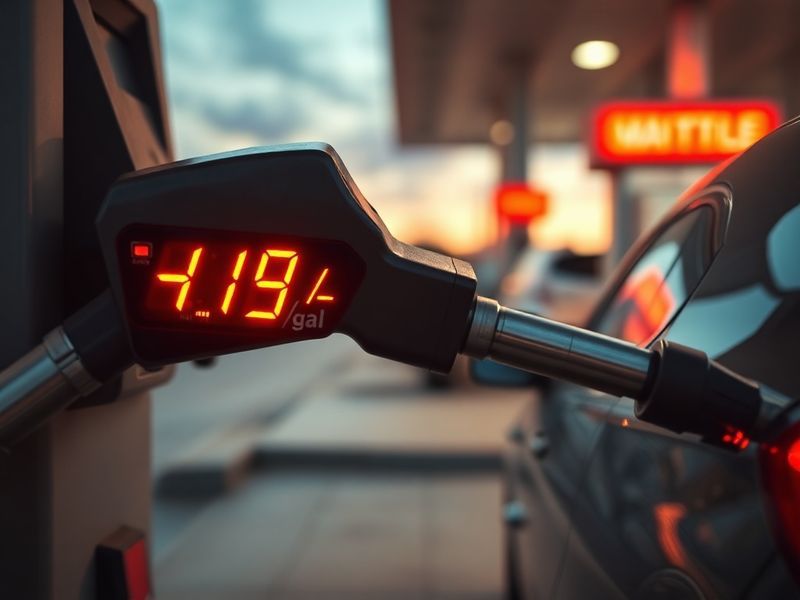
The price at the pump has become a source of frustration for millions of drivers. Whether it’s a daily commute or a weekend road trip, the cost of gasoline now dominates conversations from kitchen tables to corporate boardrooms. But what exactly is driving these relentless increases? The answer lies in a complex web of global economics, geopolitical tension, and environmental policy—none of which show signs of easing soon.
Understanding the surge in fuel prices requires looking beyond the pump. It means examining supply chains disrupted by war, refining capacity stretched thin by regulation, and consumer demand that refuses to slow down. While gas prices fluctuate daily, the underlying trends tell a longer story—one of vulnerability in energy infrastructure and the high cost of transitioning to cleaner energy sources.
The Role of Global Oil Markets and Supply Constraints
At the heart of rising gas prices is the global oil market, where supply and demand operate on a razor’s edge. Over the past three years, this balance has been repeatedly disrupted. The COVID-19 pandemic caused demand to collapse in 2020, leading to a historic price plunge. But as economies reopened, demand rebounded faster than expected, outpacing the world’s ability to restore production.
Oil-producing nations, led by OPEC and its allies, have been cautious in increasing output. Despite calls from Western governments to stabilize prices, production cuts have remained in place—partly to manage inventory levels and partly to protect long-term revenue. The result? A tighter market where even minor disruptions send shockwaves through pump prices.
Consider the following key factors influencing supply:
- Limited spare production capacity: Only a handful of countries, notably Saudi Arabia and the UAE, hold significant spare capacity. Most others are already pumping near full tilt.
- Underinvestment in new drilling: Years of low oil prices and pressure from ESG (Environmental, Social, Governance) investors have led energy companies to reduce capital expenditures.
- Sanctions and geopolitical risks: Sanctions on Russia, one of the world’s top oil exporters, removed about 2 million barrels per day from the global market—roughly 2% of global supply.
These constraints mean that any disruption—whether from a hurricane in the Gulf of Mexico, a cyberattack on a pipeline, or a drone strike in the Red Sea—can send prices climbing within hours.
Refining Bottlenecks: Why More Oil Doesn’t Always Mean Cheaper Gas
Even when crude oil prices stabilize, drivers often don’t see relief at the pump. That’s because refining capacity—the facilities that turn crude into gasoline—has not kept pace with demand. In the U.S., for example, the number of operable refineries has declined from 149 in 2009 to 124 in 2024, according to the U.S. Energy Information Administration.
Several forces are behind this decline:
- Regulatory pressure: Stricter environmental rules have made it costly to build or expand refineries, especially in states with stringent air quality standards.
- Economic incentives: With the rise of electric vehicles and biofuels, some energy companies have shifted investment away from traditional refining toward alternative fuels and renewable energy.
- Profit margins and consolidation: Refining is a low-margin, high-risk business. Smaller, less efficient plants have been shut down or acquired by larger firms, reducing overall capacity.
When refineries operate near full capacity, even small disruptions—like a fire at a plant in the Midwest or maintenance delays—can cause gasoline inventories to drop, triggering price spikes. This structural imbalance explains why prices often remain elevated even after crude oil prices fall.
The Hidden Cost of Energy Transition Policies
Beyond supply and refining, government policies are quietly shaping the cost of gasoline. Climate change initiatives, while essential for long-term sustainability, have introduced new costs into the fuel supply chain.
For instance, the U.S. Renewable Fuel Standard requires increasing amounts of biofuels like ethanol to be blended into gasoline. While this reduces reliance on foreign oil, it also adds complexity and cost to the refining process. Refineries must install additional equipment and manage compliance programs, expenses that are often passed on to consumers.
Similarly, carbon pricing mechanisms in Canada and parts of Europe—where emitters pay a fee per ton of CO₂—have increased the cost of producing and transporting gasoline. These policies are designed to curb emissions, but they also raise the price of conventional fuels, making them less competitive with alternatives over time.
In short, the transition to cleaner energy is not free. It comes with upfront costs that are slowly filtering through to the price at the pump, even as the benefits—like cleaner air and reduced climate risk—accrue over decades.
What Drivers Can Expect in the Months Ahead
Looking forward, the outlook for gas prices remains uncertain. On one hand, global oil demand is expected to peak sometime in the next decade, potentially easing pressure on prices. On the other, the path to that peak is uneven. Developing economies in Asia and Africa continue to rely heavily on gasoline and diesel, and their consumption is rising.
Geopolitical flashpoints—such as tensions in the Middle East, U.S.-China trade disputes, or instability in oil-producing regions—could trigger sudden price surges. Meanwhile, climate policies and extreme weather events threaten to disrupt both supply and refining operations.
For consumers, the best defense may be a combination of efficiency and flexibility: using public transit when possible, maintaining fuel-efficient vehicles, and staying informed about regional price trends. For policymakers, the challenge is balancing short-term affordability with long-term sustainability—no easy task in a polarized political climate.
One thing is clear: the era of cheap gasoline is over. The new normal is higher prices, greater volatility, and an energy system in transition. Understanding the forces behind these changes is the first step toward navigating them.
For more on how energy trends are reshaping industries, visit our Technology and Business sections, where we explore the intersection of innovation, policy, and consumer impact.
Key Takeaways
- Global oil supply remains tight due to underinvestment and geopolitical disruptions.
- Refining capacity has declined, making the system more vulnerable to shocks.
- Environmental regulations and biofuel mandates add hidden costs to gasoline.
- Climate policies and energy transitions are raising long-term fuel expenses.
- Future price stability depends on geopolitics, technological change, and economic shifts.