Donald Campbell: The Speed Legend Who Defied Limits
Donald Campbell: The Man Who Pushed Speed Limits to the Extreme
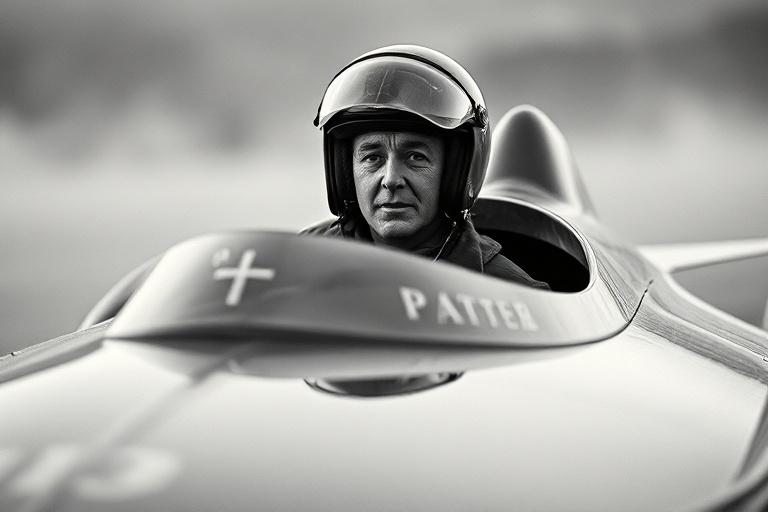
Donald Campbell remains one of the most audacious figures in the history of motorsport, a man whose obsession with speed led to both triumph and tragedy. Born in 1921 to Sir Malcolm Campbell, a fellow land and water speed record holder, Donald inherited not just a name but a relentless drive to surpass every barrier. His story is not merely one of mechanical achievement; it is a testament to human ambition, the cost of obsession, and the thin line between glory and disaster.
Campbell’s life unfolded during an era when speed records were broken with almost ritualistic frequency. The 1950s and 1960s were a golden age for land and water speed attempts, fueled by post-war technological optimism and a public hungry for spectacle. Yet for all the progress, Campbell’s pursuit was uniquely personal. He did not race for trophies alone—he raced against the ghosts of his father’s legacy and the limits of physics itself.
A Legacy Born Under Pressure
Growing up in the shadow of Sir Malcolm Campbell—who set multiple land and water speed records—Donald faced immense pressure to live up to his father’s name. While Malcolm was knighted for his achievements, Donald sought recognition on his own terms, even if it meant risking everything. His early attempts in the 1950s focused on land speed records, culminating in 1955 when he broke the 300 mph barrier in his jet-powered Bluebird CN7.
But Campbell was not content with land alone. He turned his attention to water speed records, a domain where his father had also excelled. In 1955, he set his first water record at 202.32 mph in Bluebird K7, a sleek hydroplane. Over the next decade, he would break the record five more times, each attempt more daring than the last. His final water record of 276.33 mph in 1964 stood for 12 years, a mark of his enduring impact.
The Bluebird Project: Engineering and Obsession
Campbell’s Bluebird vehicles were more than machines—they were extensions of his will. Bluebird CN7, designed for land records, was a marvel of 1960s engineering, powered by a Bristol-Siddeley Orpheus jet engine. Yet despite its sophistication, the car was plagued by handling issues during its initial runs. Campbell’s persistence paid off in 1964 when he finally conquered the land speed record at 403.10 mph in Australia, becoming the first—and still only—person to hold both land and water speed records simultaneously.
His hydroplane, Bluebird K7, was equally innovative. A three-point hydroplane, it skimmed across the water at incredible speeds, riding on a cushion of air. The design minimized drag but made the craft notoriously difficult to control at high velocities. Campbell’s meticulous preparation and sheer bravery allowed him to push K7 to its limits, often enduring violent oscillations and near-misses that left observers stunned.
The Final Attempt: A Fateful Day on Coniston Water
On January 4, 1967, Campbell prepared for his most ambitious attempt yet: breaking his own water speed record and reaching 300 mph. The location was Coniston Water in England’s Lake District, chosen for its relatively calm conditions. With a crowd of spectators and media in attendance, Campbell accelerated Bluebird K7 to a record-breaking 297 mph before disaster struck.
Witnesses reported that K7 became airborne, somersaulted, and disintegrated upon impact. Campbell’s body was recovered days later, confirming the worst. The cause of the crash remains debated—some cite a possible structural failure, others suggest Campbell lost control during a high-speed porpoising maneuver. Whatever the reason, his death marked the end of an era. The Bluebird project, which had consumed his life, died with him.
Beyond the Records: Campbell’s Enduring Influence
Donald Campbell’s legacy extends far beyond the numbers etched into history. He embodied the spirit of an age when risk was romanticized, and innovation was measured in shattered barriers rather than safety margins. His story raises important questions about the cost of obsession and the ethics of pushing human and mechanical limits.
Today, Campbell’s Bluebird vehicles are preserved in museums, serving as relics of a grittier, more daring time in motorsport. His records have been surpassed—land speed records now exceed 700 mph—but his name remains synonymous with sheer determination. Motorsport historian and journalist Keith Howard once noted, “Campbell didn’t just chase speed; he chased the idea of transcending human limitations.”
Key Takeaways from Donald Campbell’s Life and Career
- Dual Record Holder: Donald Campbell is the only person to have held both land and water speed records simultaneously, a feat that may never be replicated.
- Technological Pioneer: His Bluebird vehicles pushed the boundaries of aerodynamics and hydrodynamics, influencing future high-speed designs.
- Relentless Ambition: Despite multiple near-fatal crashes and setbacks, Campbell returned to the track time and again, driven by an unyielding pursuit of speed.
- Tragic End: His death in 1967 marked the close of an era in speed record attempts, leaving behind a legacy that continues to inspire and caution.
- Cultural Icon: Campbell’s story transcends motorsport, symbolizing the post-war era’s blend of technological optimism and unbridled ambition.
The Modern Implications: What Campbell’s Story Teaches Us
In an age where safety regulations and risk assessment dominate motorsport, Campbell’s career offers a stark contrast. His willingness to accept danger in pursuit of glory reflects a bygone era, yet his story resonates in contemporary discussions about innovation and the human drive to excel. Modern engineers and athletes often look to Campbell as a reminder that progress often requires daring.
Moreover, Campbell’s life underscores the importance of legacy and identity. Like many who follow in their parents’ footsteps, he struggled with the weight of expectation. Yet unlike his father, who enjoyed a long life, Donald’s story ended tragically, leaving behind a narrative that is as much about sacrifice as it is about achievement.
For enthusiasts of speed, history, or human endeavor, Donald Campbell remains a compelling figure. His life reminds us that behind every record lies a story of perseverance, ingenuity, and, ultimately, mortality.
For those interested in motorsport history and its intersections with technology and culture, explore more on Automotive and History at Dave’s Locker.
Conclusion: The Man Who Defined Speed—and Paid the Price
Donald Campbell’s life was a paradox: a man who sought to conquer speed but was ultimately consumed by it. His records were broken, his methods surpassed, yet his legend endures. In an era where speed is often quantified and controlled, Campbell’s story serves as a reminder of the raw, unfiltered pursuit of the impossible.
He was not just a speedster; he was a symbol of an age when men dared to defy gravity, water, and fate itself. Today, as we marvel at the latest hypercars and supersonic jets, it is worth remembering Donald Campbell—not just for what he achieved, but for what he represents: the indomitable human spirit, pushing forward even when the cost is everything.