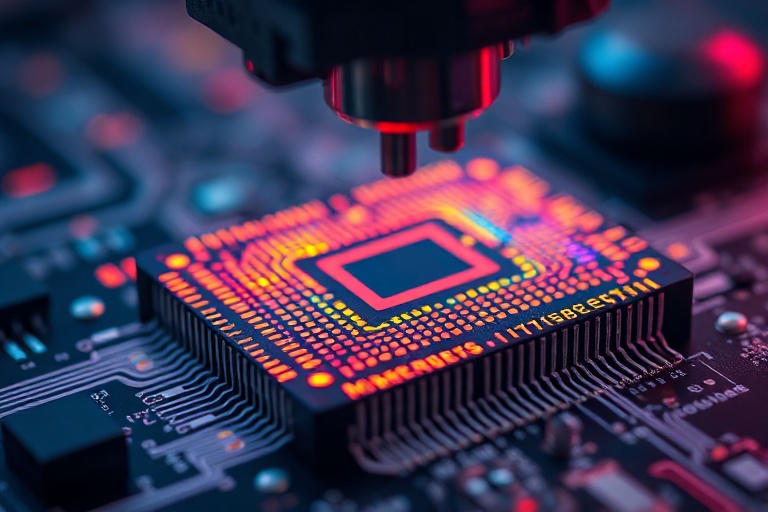
MRAM Stock: A Guide to Investing in Next-Gen Memory Technology
Understanding MRAM Stock: The Next Frontier in Memory Technology
Magnetoresistive random-access memory, commonly known as MRAM, represents one of the most promising advancements in semiconductor technology. Unlike traditional memory types such as DRAM or flash, MRAM combines the speed of SRAM with the non-volatility of flash memory, making it a potential game-changer for industries reliant on fast, reliable data storage. As companies like Everspin Technologies and TSMC push the boundaries of MRAM production, investors have begun to take notice of MRAM stock as a long-term opportunity in the tech sector.
At its core, MRAM stores data using magnetic charges rather than electrical charges, which allows it to retain information even when power is turned off. This unique characteristic positions MRAM as a superior alternative in applications where power efficiency and data persistence are critical, such as in automotive systems, IoT devices, and high-performance computing. The growing demand for energy-efficient and high-speed memory solutions has sparked renewed interest in MRAM technology, driving both innovation and investment.
The Technology Behind MRAM: Why It Stands Out
MRAM operates on the principle of tunneling magnetoresistance, where the resistance of a magnetic tunnel junction (MTJ) changes based on the alignment of magnetic layers. This change in resistance is used to represent binary data (0s and 1s), enabling fast read and write operations. One of the key advantages of MRAM is its ability to perform at speeds comparable to SRAM while consuming significantly less power and retaining data without a constant power supply.
There are several types of MRAM, including:
- Toggle MRAM – The first generation of MRAM, which uses magnetic fields to switch the state of memory cells.
- Spin-Transfer Torque MRAM (STT-MRAM) – A more advanced version that uses spin-polarized currents to switch magnetic states, offering higher density and lower power consumption.
- Spin-Orbit Torque MRAM (SOT-MRAM) – The latest innovation, which uses spin-orbit interactions to improve switching efficiency and speed.
These advancements have made MRAM increasingly viable for mass production. Companies like TSMC and GlobalFoundries are now offering MRAM as part of their embedded memory solutions, signaling a shift toward broader industry adoption.
Leading Players in the MRAM Market
The MRAM market is still in its early stages, but several companies are leading the charge in research, development, and commercialization. Everspin Technologies, often regarded as the pioneer in MRAM, has been producing STT-MRAM since 2016 and supplies memory solutions to industries such as aerospace, automotive, and data storage. Its long-standing expertise in the field gives it a competitive edge, though it faces stiff competition from larger semiconductor manufacturers.
Taiwan Semiconductor Manufacturing Company (TSMC) has also made significant strides in MRAM integration. In 2021, TSMC announced a collaboration with Everspin to develop embedded MRAM solutions for advanced process nodes. This partnership could accelerate MRAM adoption in consumer electronics and IoT devices, where TSMC already holds a dominant market position. Additionally, companies like Samsung and Intel are investing in MRAM research, though they have not yet commercialized products at scale.
A key differentiator among these players is their approach to manufacturing. While Everspin focuses on standalone MRAM chips, TSMC and other foundries are integrating MRAM into existing CMOS processes, making it more accessible for system-on-chip (SoC) designs. This flexibility could prove crucial as the industry moves toward hybrid memory architectures that combine MRAM with traditional memory types.
Investing in MRAM Stock: Opportunities and Risks
For investors looking to capitalize on the growth of MRAM technology, the stock market offers limited but intriguing options. Everspin Technologies (NASDAQ: MRAM) remains the most direct way to gain exposure to MRAM, as it is the only publicly traded company solely dedicated to MRAM production. However, its market capitalization is relatively small, and its stock can be volatile due to the speculative nature of the MRAM market.
Investors may also consider indirect exposure through major semiconductor manufacturers that are investing in MRAM. TSMC, for instance, is a key player in advancing MRAM technology, though its primary revenue still comes from traditional logic chips. Similarly, companies like Qualcomm and NVIDIA are exploring MRAM for future product designs, which could indirectly benefit MRAM-related stocks.
Before investing, it’s important to weigh the potential rewards against the risks. On the positive side, MRAM’s superior performance characteristics could drive significant demand in high-growth sectors such as artificial intelligence, autonomous vehicles, and 5G infrastructure. However, the technology is still in the early stages of adoption, and widespread commercialization could take years. Additionally, competition from other emerging memory technologies, such as resistive RAM (ReRAM) and phase-change memory (PCM), poses a long-term challenge.
The Future of MRAM: What Lies Ahead?
The next five years will be critical for MRAM as it transitions from niche applications to mainstream adoption. Analysts predict that the MRAM market could grow at a compound annual growth rate (CAGR) of over 20% through 2027, driven by increasing demand for low-power, high-speed memory solutions. One of the most promising areas for MRAM is in embedded systems, where its non-volatility and reliability make it ideal for automotive microcontrollers and industrial IoT devices.
Another area to watch is the integration of MRAM with other advanced technologies. For example, researchers are exploring the use of MRAM in neuromorphic computing, where memory and processing are combined to mimic the human brain’s efficiency. If successful, this could open up entirely new markets for MRAM beyond traditional memory applications.
Regulatory and environmental factors may also shape the future of MRAM. As governments worldwide push for stricter energy efficiency standards, memory technologies that reduce power consumption will gain favor. MRAM’s ability to operate at lower voltages compared to DRAM could position it as a preferred choice in green computing initiatives.
For now, the MRAM stock landscape remains speculative but full of potential. Investors willing to take a long-term view may find opportunities in both pure-play MRAM companies and larger semiconductor firms leading the charge in innovation. As with any emerging technology, patience and careful analysis will be key to navigating this evolving market.
To stay updated on trends in semiconductor technology and other tech investments, visit our Technology and Finance category pages for in-depth analysis and expert insights.
Conclusion
MRAM stands at the intersection of innovation and opportunity, offering a compelling alternative to traditional memory technologies. While challenges remain in scaling production and achieving widespread adoption, the potential benefits of MRAM—speed, power efficiency, and data retention—make it a technology worth watching. For investors, MRAM stock represents a high-risk, high-reward proposition that could pay off as the market matures. As companies continue to refine MRAM designs and integrate them into next-generation devices, the stage is set for MRAM to play a pivotal role in the future of computing.