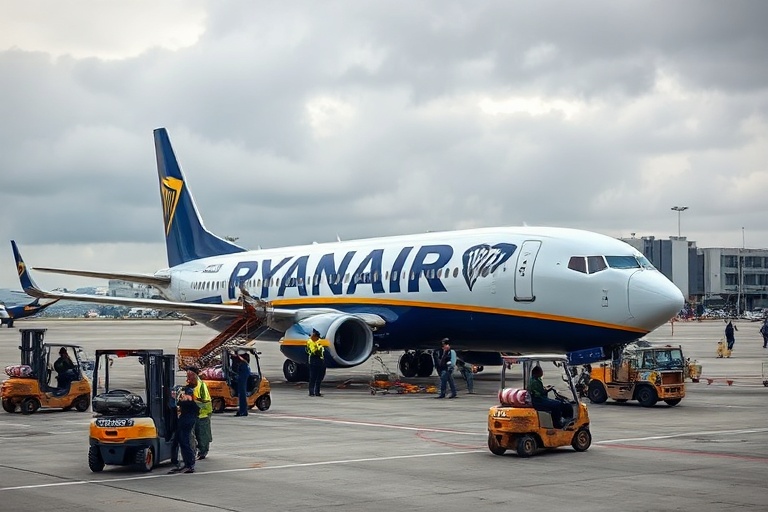
Ryanair’s Strategic Shift in Greece
Ryanair’s decision to close its Greek base at Athens International Airport has sent ripples through the European aviation sector. The closure, announced in June 2024, marks the end of a decade-long presence in Greece for the low-cost carrier. While the move aligns with Ryanair’s broader strategy of streamlining operations, it raises questions about the future of budget travel in Southern Europe. Greece, a perennial hotspot for tourists, now faces a gap in connectivity that could reshape how travelers plan their trips.
The closure affects 10 routes operated from Athens, including popular destinations like Santorini, Mykonos, and Corfu. These routes, which have become integral to Greece’s summer tourism economy, will now require alternative arrangements. Travelers accustomed to direct flights from Athens may need to book connecting flights through other European hubs, adding both time and cost to their journeys. For a country where tourism accounts for nearly 25% of GDP, the timing of this closure—just before the peak travel season—could not be more consequential.
The Economic Ripple Effect on Greece
The impact of Ryanair’s departure extends beyond mere flight schedules. Greece’s tourism industry, which thrives on accessibility, now faces a potential decline in arrivals from key European markets. Budget airlines like Ryanair have long been the backbone of affordable travel to Greece, particularly for travelers from Germany, the UK, and Scandinavia. Without these direct connections, some tourists may opt for alternative destinations where low-cost carriers maintain a stronger presence.
Local businesses, from hotels in Santorini to tavernas in Crete, rely heavily on the steady influx of tourists brought by Ryanair’s affordable fares. A decline in visitor numbers could strain these enterprises, particularly small and family-owned operations that lack the financial cushion of larger chains. The Greek government has yet to comment publicly on the closure, but industry analysts suggest that negotiations may be underway to mitigate the fallout.
For travelers, the closure could mean higher prices and more complex itineraries. Airlines like easyJet and Wizz Air may absorb some of the demand, but their capacity is limited compared to Ryanair’s former network. Travelers might also consider alternative entry points, such as flying into Thessaloniki or regional airports like Heraklion, though these options often require additional ground transportation.
Ryanair’s Broader Strategy: Cost-Cutting or Market Realignment?
Ryanair’s decision to close its Greek base is part of a larger trend of cost-cutting and operational efficiency under CEO Michael O’Leary. The airline has been aggressively renegotiating contracts with airports and reducing its footprint in markets where profitability is under pressure. Greece, despite its popularity, has not been immune to these financial realities. Rising fuel costs, airport fees, and labor expenses have squeezed margins, prompting Ryanair to reassess its presence in the region.
This move also reflects a shift in Ryanair’s growth strategy. While the airline has historically expanded aggressively into new markets, it is now focusing on consolidating its operations in core hubs where demand is most stable. Countries like Italy, Spain, and Portugal have seen increased investment, while Greece’s role as a secondary market may have diminished in the eyes of Ryanair’s leadership.
Analysts point out that Ryanair’s withdrawal from Greece could create an opportunity for other low-cost carriers. Airlines like Volotea and Sky Express, which have a stronger foothold in the Greek market, may step in to fill the void. However, their ability to scale up quickly remains uncertain. For now, Ryanair’s competitors are likely watching closely, ready to capitalize on any gaps left by the airline’s departure.
A Global Perspective: The Future of Budget Travel in Southern Europe
The closure of Ryanair’s Greek base is not an isolated incident. Across Southern Europe, budget airlines are reassessing their strategies in response to shifting economic conditions. The post-pandemic recovery has been uneven, with some destinations rebounding faster than others. Airline executives are increasingly prioritizing routes where demand is predictable and costs are manageable, often at the expense of smaller or less profitable markets.
This trend could have long-term implications for tourism-dependent economies. Countries like Croatia, Malta, and Portugal, which also rely heavily on budget airlines, may face similar challenges if profit margins continue to shrink. The question now is whether governments will intervene to support these airlines or whether travelers will simply adapt to the new reality of higher fares and fewer direct routes.
For travelers, the closure underscores the need for flexibility. Booking flights further in advance and exploring alternative routes could help mitigate the impact. Meanwhile, airlines may introduce seasonal adjustments or partnerships to maintain connectivity. The evolving landscape of budget travel in Southern Europe is a reminder that the industry is as dynamic as the regions it serves.
What Travelers Should Do Next
If you’re planning a trip to Greece this summer, here are a few steps to consider:
- Check for alternative flights: Look into other low-cost carriers like easyJet, Wizz Air, or Volotea, which may offer connecting flights to Greek islands.
- Explore regional airports: Flying into smaller airports like Heraklion or Thessaloniki could provide more options, though ground transportation will be necessary.
- Book early: With fewer direct routes available, securing flights as soon as possible could help avoid last-minute price surges.
- Consider package deals: Tour operators often bundle flights and accommodations, which can sometimes offer better value than booking separately.
For those already in Greece, the closure may not immediately disrupt plans, but it’s worth monitoring updates from local tourism boards and airlines. The Greek government has historically been proactive in supporting the tourism sector, and there may yet be interventions to preserve connectivity.
A Balancing Act for Airlines and Governments
The Ryanair closure in Greece highlights the delicate balance between profitability and accessibility in the airline industry. As airlines like Ryanair prioritize shareholder returns, governments must weigh the economic benefits of tourism against the costs of supporting these carriers. The outcome of this equation will shape the future of travel in Southern Europe for years to come.
For now, travelers and industry stakeholders alike will need to adapt. Whether this marks the beginning of a broader retreat of budget airlines from Southern Europe or a temporary adjustment remains to be seen. One thing is certain: the ripple effects of Ryanair’s decision will be felt far beyond the tarmac of Athens International Airport.