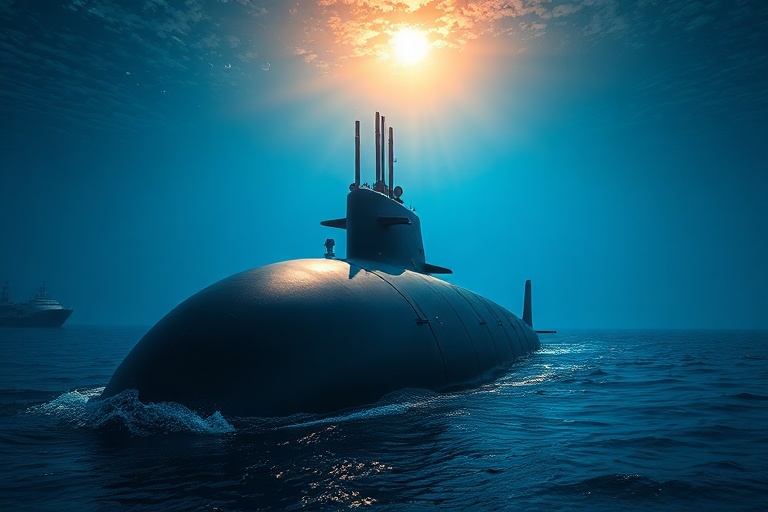
The Evolution and Global Impact of Submarines
The Silent Depths: Submarines and Their Global Impact
Few inventions have shaped modern warfare and exploration as profoundly as the submarine. From its early conceptual roots to today’s nuclear-powered giants, the submarine has evolved from a fragile wooden contraption into one of the most sophisticated machines ever built. Its influence extends beyond military strategy, touching fields as diverse as oceanography, archaeology, and even popular culture.
Submarines operate in a realm where sunlight barely reaches, navigating pressures that would crush most vessels instantly. Their ability to remain undetected while traversing the world’s oceans has made them a cornerstone of naval power. Yet, their story is not just one of warfare and secrecy; it is also a testament to human ingenuity in the face of extreme challenges. Understanding submarines requires examining their historical development, technological advancements, and the cultural myths that surround them.
A Brief History: From Leonardo da Vinci to Nuclear Age
The concept of a vessel that could submerge and resurface dates back centuries. One of the earliest recorded designs comes from the 16th century, when the polymath Leonardo da Vinci sketched a submersible craft. Though his ideas were never built, they laid the groundwork for future innovations. The first functional submarine, the Turtle, was constructed in 1775 by American David Bushnell during the Revolutionary War. Designed to attach explosives to enemy ships, it demonstrated the potential of underwater warfare but proved cumbersome in practice.
By the 19th century, submarines began to take on a more recognizable form. Irish inventor John Philip Holland designed the Holland VI in 1897, which became the first practical submarine purchased by the U.S. Navy. This vessel, powered by gasoline and electric motors, set the template for modern submarines. The early 20th century saw rapid advancements, particularly during World War I, when Germany’s U-boats nearly crippled Allied shipping. The interwar years and World War II accelerated technological progress, with diesel-electric submarines dominating naval fleets until the advent of nuclear power.
Nuclear submarines, introduced in the 1950s, revolutionized underwater travel. Unlike their predecessors, they could remain submerged for months without surfacing, thanks to onboard nuclear reactors. The U.S. Navy’s USS Nautilus, launched in 1954, was the first of these vessels, capable of speeds exceeding 20 knots and unlimited range. This innovation shifted the balance of naval power and opened new frontiers in ocean exploration.
Technology Behind the Depths: How Submarines Work
At the heart of every submarine is a combination of engineering marvels designed to overcome the unique challenges of underwater travel. The most critical component is the pressure hull, a thick, reinforced structure that protects the crew from the crushing forces of the deep. Modern submarines use high-strength steel or titanium alloys to withstand pressures that can exceed 1,000 pounds per square inch at extreme depths.
Propulsion systems vary widely depending on the submarine’s purpose. Diesel-electric submarines, often called “boomers,” use diesel engines on the surface and switch to electric batteries when submerged. Nuclear submarines, on the other hand, rely on pressurized water reactors that generate steam to drive turbines, providing near-limitless endurance. Some experimental vessels, like the Russian Borei-class, even incorporate stealth technologies to minimize detection.
The crew’s ability to operate for extended periods relies on sophisticated life-support systems. These include oxygen generators, carbon dioxide scrubbers, and water reclamation systems that recycle moisture from the air. Navigation is another critical challenge, as GPS signals do not penetrate water. Instead, submarines use inertial navigation systems, sonar, and sometimes even celestial navigation to maintain their course.
Here’s a breakdown of key submarine technologies:
- Pressure Hull: Protects against deep-sea pressures; materials include HY-100 steel and titanium.
- Propulsion: Diesel-electric for short-range missions; nuclear for long endurance and speed.
- Stealth: Anechoic tiles absorb sonar, and quiet propulsion systems reduce detection.
- Life Support: Closed-loop systems recycle air and water; emergency ballast tanks manage buoyancy.
- Weapons Systems: Torpedoes, cruise missiles, and in some cases, ballistic missiles for strategic deterrence.
Submarines in Global Culture: Myths and Realities
Submarines have long captured the public imagination, often depicted as vessels of intrigue, danger, and mystery. Literature and film have played a significant role in shaping these perceptions. Jules Verne’s 1870 novel Twenty Thousand Leagues Under the Sea introduced readers to the Nautilus, a fictional submarine that became a symbol of technological wonder. The book’s blend of adventure and scientific speculation set the stage for future portrayals.
In the 20th century, submarines became central to spy thrillers and war dramas. Films like The Hunt for Red October (1990) and Das Boot (1981) glamorized the submarine as a high-stakes environment where every decision could mean life or death. These stories often emphasized the claustrophobic conditions, the psychological toll on crews, and the ever-present threat of detection. Reality, however, is far more mundane than fiction. Modern submarine crews undergo rigorous training to manage stress and maintain focus during months-long deployments.
Cultural perceptions also vary by country. In the United States, submarines are often associated with technological superiority and the Cold War’s nuclear deterrence strategy. The Soviet Union, meanwhile, emphasized silent running and asymmetrical warfare, leading to the development of ultra-quiet diesel-electric submarines like the Kilo-class. Japan’s submarine force, known for its advanced Soryu-class vessels, reflects the country’s post-World War II commitment to defensive naval power.
The Future of Submarines: Innovation and Challenges
The next generation of submarines is poised to redefine underwater travel. One of the most anticipated advancements is air-independent propulsion (AIP) systems, which allow non-nuclear submarines to operate submerged for weeks rather than days. Sweden’s Gotland-class and Germany’s Type 212 are leading examples of this technology, offering enhanced stealth and operational flexibility.
Autonomous underwater vehicles (AUVs) are also gaining traction, particularly for missions deemed too risky for human crews. These drones can conduct surveillance, mine countermeasures, and deep-sea research without endangering lives. The U.S. Navy’s Orca XLUUV, for instance, is designed to perform long-endurance missions with minimal human oversight.
However, the future is not without challenges. Rising geopolitical tensions, particularly in the South China Sea and Arctic regions, are driving nations to invest heavily in submarine technology. The Arctic, with its melting ice caps, is becoming a new frontier for submarine operations, as nations seek to assert control over emerging shipping routes and resource-rich areas. Meanwhile, cybersecurity threats pose a growing risk, as modern submarines rely increasingly on digital systems vulnerable to hacking.
Environmental concerns are also shaping submarine design. The U.S. Navy has explored hybrid propulsion systems to reduce fuel consumption, while research into biodegradable materials aims to minimize the ecological impact of submarine construction and disposal. As climate change alters ocean currents and temperatures, submarines may play a role in monitoring these changes, further blurring the line between military and scientific applications.
Conclusion: The Submarine’s Enduring Legacy
From the drawing boards of Renaissance inventors to the depths of the Mariana Trench, submarines have evolved into some of the most complex machines ever built. Their impact on global politics, technology, and culture is undeniable, shaping naval strategies, inspiring art, and pushing the boundaries of human exploration. As advancements in stealth, propulsion, and autonomy continue, submarines will remain a critical component of both military and civilian endeavors.
Yet, their legacy is not without controversy. The secrecy surrounding submarine operations fuels speculation and mistrust, while their potential to disrupt global balances of power raises ethical questions. As we look to the future, the challenge will be to harness the submarine’s capabilities for peaceful purposes—whether that means mapping uncharted ocean floors, monitoring climate change, or conducting humanitarian missions in crisis zones.
One thing is certain: the submarine’s journey from Leonardo da Vinci’s sketches to the silent giants patrolling the deep is far from over. It is a story of human ambition, ingenuity, and the relentless pursuit of the unknown.