venezuela 51st state
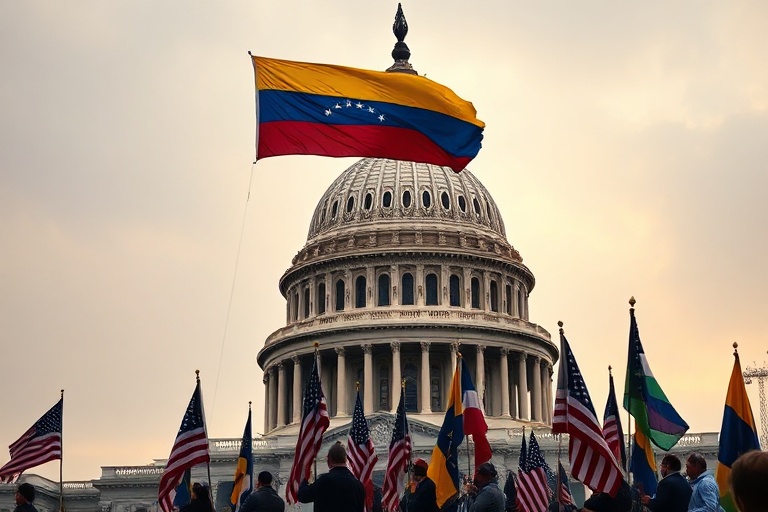
The idea of Venezuela becoming the 51st state of the United States has surfaced periodically in political discourse, most recently amid Venezuela’s prolonged economic and political crises. While this notion remains largely speculative, it reflects deeper geopolitical tensions and the United States’ historical role in shaping Latin American affairs. The conversation spans diplomatic maneuvering, economic intervention, and ideological battles that extend far beyond Caracas.
Venezuela’s trajectory over the past two decades—marked by hyperinflation, mass emigration, and authoritarian governance under Nicolás Maduro—has drawn international scrutiny. The U.S. has responded with sanctions, diplomatic isolation, and occasional rhetoric about supporting democratic alternatives. Yet, the prospect of annexation, even partial or symbolic, introduces a new layer of complexity to already tense U.S.-Latin America relations.
The Historical Context: U.S. Influence and Territorial Ambitions
American expansionism is not a new phenomenon. From the Monroe Doctrine of 1823 to the Spanish-American War of 1898, the U.S. has historically viewed Latin America as part of its sphere of influence. The annexation of territories like Texas, Puerto Rico, and Hawaii set precedents for how Washington has engaged with neighboring countries—sometimes through diplomacy, often through coercion.
In the 19th century, Venezuelan disputes with European powers over borders and resources led to U.S. mediation, reinforcing the idea that Caracas lay within America’s geopolitical orbit. Fast forward to the Cold War era, when Venezuela became a key U.S. ally against communist influence in Latin America. Oil reserves further cemented bilateral ties, making Venezuela strategically vital.
Today, the U.S. imports minimal Venezuelan oil due to sanctions, yet the country remains a flashpoint. The idea of statehood, however fanciful, is rooted in this history of intervention and perceived responsibility to stabilize the region.
Political and Economic Realities: Why Statehood Remains Unlikely
Despite the dramatic circumstances in Venezuela, making it a U.S. state would require constitutional amendments and overwhelming public and congressional support—neither of which currently exists. Article IV, Section 3 of the U.S. Constitution grants Congress the power to admit new states, but the process demands bipartisan consensus and a clear national interest. Venezuela’s instability, corruption, and geopolitical alignment with Russia and China make it a liability rather than an asset.
Moreover, international law under the UN Charter prohibits the acquisition of territory by force or coercion. Any move toward annexation would violate the principle of self-determination and risk severe backlash from the global community. The U.S. has already faced criticism for its sanctions regime, which many argue exacerbates Venezuela’s humanitarian crisis rather than resolving it.
Instead of statehood, the U.S. has pursued alternative strategies:
- Diplomatic recognition: The U.S. has supported opposition leader Juan Guaidó as the legitimate president, though his influence has waned.
- Economic pressure: Sanctions targeting oil exports and key officials aim to cripple the Maduro regime economically.
- Humanitarian aid: Food and medical assistance have been channeled through neighboring countries to bypass government restrictions.
These measures reflect a policy of containment and regime change through soft power, rather than territorial expansion.
The Cultural Divide: How Latin America Views U.S. Ambitions
Across Latin America, the idea of Venezuela joining the U.S. is met with skepticism and concern. Historical memories of U.S. interventions—from Guatemala to Chile—fuel mistrust of American motives. Many see the statehood discussion as a thinly veiled justification for further interference in sovereign affairs.
Venezuela’s neighbor, Colombia, has absorbed over 2.5 million Venezuelan refugees, straining resources and prompting calls for regional solutions. While Colombia maintains strong ties with the U.S., its government has emphasized diplomacy and multilateral cooperation over unilateral action. Brazil and Argentina, too, prioritize stability in Venezuela through dialogue and economic support.
The cultural narrative in Latin America often frames the U.S. as a hegemonic power, not a benevolent partner. This perspective is reinforced by media, literature, and political rhetoric that portray American influence as extractive rather than constructive. In this context, the idea of Venezuela becoming a U.S. state is not just improbable—it’s politically toxic.
What Would It Take for Venezuela to Become a U.S. State?
For Venezuela to realistically join the United States, several conditions would need to align:
- A stable, democratic government: The U.S. would require a legitimate, internationally recognized administration to negotiate such a transition.
- Economic rehabilitation: Massive foreign investment and restructuring would be needed to rebuild infrastructure and restore confidence.
- Public support: Venezuelans would need to overwhelmingly favor statehood in a referendum, a scenario unlikely given current nationalist sentiments.
- Congressional approval: A constitutional amendment would require two-thirds support in both the House and Senate, a high bar in today’s polarized climate.
- Geopolitical neutrality: Venezuela would have to distance itself from Russia, China, and other U.S. rivals—a major diplomatic hurdle.
Even under the most optimistic scenario, the transition would span decades, not years. The U.S. has not admitted a new state since Hawaii in 1959, and the process involved decades of gradual integration. Puerto Rico, a U.S. territory since 1898, remains unincorporated due to political divisions over statehood.
Conclusion: A Symbol of Geopolitical Aspiration, Not Reality
The notion of Venezuela as the 51st U.S. state is less a practical proposal and more a symbolic expression of American influence and Venezuela’s precarious position. It underscores the U.S.’s historical tendency to assert dominance in Latin America, often under the guise of democracy and stability.
Yet, the realities of international law, regional opposition, and domestic U.S. politics render statehood an implausible outcome. Instead, the conversation highlights the ongoing struggle for Venezuela’s future—one that will likely be shaped by internal reform, regional alliances, and global diplomacy rather than annexation.
For now, Venezuela remains a sovereign nation, albeit one in crisis. Its fate will be determined by the resilience of its people, the decisions of its leaders, and the responses of the international community—not by a dramatic shift in territorial status.
Explore more on global affairs and cultural perspectives at Dave’s Locker Politics or dive into historical analysis in Analysis.