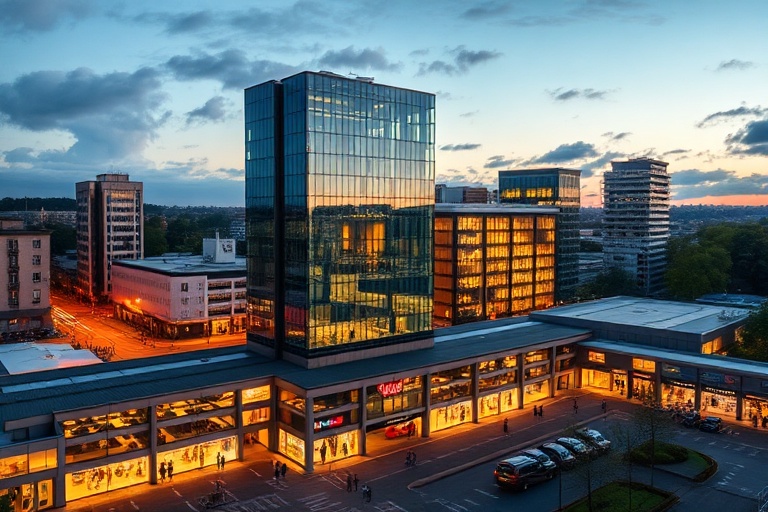
From Saxon Roots to Modern Industry
Bracknell’s story begins in the Saxon era, when its name likely derived from “Braccan heal,” meaning “Bracca’s nook” or corner of land. By the 12th century, the town appeared in historical records as a small agricultural settlement, nestled in the heart of Berkshire’s rolling countryside. For centuries, Bracknell remained a quiet rural community, its landscape dotted with farms and small cottages.
Everything changed in 1949, when the New Towns Act transformed Bracknell into one of Britain’s designated New Towns. The post-war government envisioned planned communities to alleviate housing shortages and stimulate economic growth. Bracknell’s transformation was swift and strategic. Its location—just 30 miles west of London and close to major transport routes—made it an ideal candidate. The town became a hub for industrial relocation, attracting businesses from London’s congested streets.
By the 1960s, Bracknell’s population swelled from under 5,000 to over 25,000. The town’s modern identity emerged through carefully designed housing estates, industrial parks, and community facilities. Unlike many New Towns, Bracknell balanced development with green spaces, preserving pockets of woodland and parks. This blend of urban planning and nature became a blueprint for similar projects across the UK and even influenced international urban development strategies.
Economic Evolution and Global Connections
Bracknell’s economic rise is closely tied to its transformation into a corporate powerhouse. In the 1980s, it earned the nickname “Silicon Valley of the UK” due to the concentration of high-tech firms. Companies like Fujitsu, Dell, and BMW established major operations in the town, drawn by its skilled workforce and infrastructure. This tech-driven growth mirrored global trends, as cities worldwide sought to replicate Silicon Valley’s success.
The town’s economic resilience became evident during the 2008 financial crisis. While many regions struggled, Bracknell’s diversified economy—spanning IT, finance, and manufacturing—helped it weather the storm. Today, the town hosts over 1,000 businesses, contributing significantly to the UK’s GDP. Its proximity to Heathrow Airport and major motorways like the M4 further cements its role as a vital link in global trade networks.
Bracknell’s influence extends beyond the UK. The town has become a case study for urban planners in countries like India, China, and Brazil, where rapid urbanization demands sustainable growth models. International delegations frequently visit to study its industrial parks, housing estates, and transportation links. This global interest underscores Bracknell’s quiet but significant impact on international urban development.
A Cultural Crossroads in the Berkshire Countryside
Despite its industrial and economic significance, Bracknell retains a strong cultural identity. The town’s diversity reflects its global connections. Over 30% of residents are from Black, Asian, and minority ethnic backgrounds, a testament to its role as a melting pot of cultures. This diversity is celebrated through festivals, food, and community events, such as the annual Bracknell Festival of Music and the Diwali celebrations at South Hill Park.
South Hill Park, a cultural venue in the heart of the town, hosts theatre, music, and art exhibitions year-round. Its programme includes everything from classical concerts to contemporary performances, attracting visitors from across the region. The venue’s success highlights Bracknell’s commitment to fostering creativity, even in a town often overshadowed by its economic prowess.
Sports also play a defining role in Bracknell’s cultural landscape. The town is home to the Bracknell Bees, an ice hockey team with a passionate local following. Ice hockey may seem an unlikely sport for a town of Bracknell’s size, but the team’s success has turned it into a point of pride. The sport’s physicality and fast pace resonate with the town’s industrious spirit, offering residents a thrilling escape from their daily routines.
Challenges and Opportunities in a Changing World
Like many towns, Bracknell faces challenges in the 21st century. Housing affordability remains a pressing issue, as demand outstrips supply. The town’s rapid growth has also put pressure on infrastructure, particularly transport links. Commuters often face delays on the A329 and M4, while public transport options remain limited outside peak hours.
Yet, Bracknell’s leaders are tackling these challenges head-on. The town’s regeneration projects, such as the redevelopment of Bracknell Town Centre, aim to create a more vibrant and sustainable urban environment. Plans include new retail spaces, improved pedestrian access, and enhanced digital connectivity. These initiatives reflect a broader trend in urban planning, where towns must balance growth with quality of life.
Environmental sustainability is another key focus. Bracknell has committed to becoming carbon neutral by 2030, aligning with the UK’s broader climate goals. Projects like the expansion of cycling routes and the promotion of electric vehicle charging points demonstrate the town’s commitment to a greener future. These efforts are part of a global movement, as cities worldwide grapple with the impacts of climate change.
Looking ahead, Bracknell’s future appears promising. Its blend of economic strength, cultural diversity, and strategic location positions it well for continued growth. The town’s ability to adapt—whether to economic shifts, cultural changes, or environmental demands—will be crucial. As global urbanization accelerates, Bracknell’s experiences offer valuable lessons for towns and cities everywhere.
Key Takeaways
- Bracknell’s transformation from a Saxon village to a New Town in 1949 marked a turning point in its history.
- The town’s economic growth was driven by high-tech industries, earning it the nickname “Silicon Valley of the UK.”
- Cultural diversity and sports, such as ice hockey, play a significant role in Bracknell’s identity.
- Challenges like housing affordability and infrastructure are being addressed through regeneration projects.
- Bracknell’s commitment to sustainability reflects global trends in urban planning.
Explore More on Dave’s Locker
Interested in learning about other towns with unique histories and economic transformations? Visit our News section for in-depth analysis on regional developments. For a closer look at how technology shapes communities, check out our Technology category.