Giro d’Italia 2026: Route, Riders, and Cultural Impact
Giro d’Italia 2026: A Preview of Cycling’s Next Grand Stage
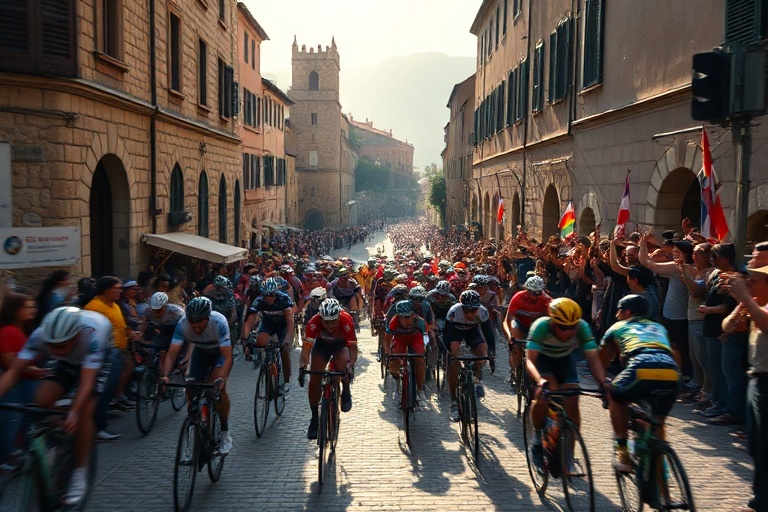
The Giro d’Italia has long stood as one of cycling’s most grueling and visually stunning races. Since its inception in 1909, the event has woven itself into Italy’s national identity, transforming mountain passes into stages for drama and alpine villages into temporary theaters of athletic endurance. As the 2026 edition approaches, anticipation builds not only among Italian tifosi but across the global cycling community. This edition promises to blend tradition with innovation—highlighting emerging talent while paying homage to the race’s storied past.
Scheduled for May 8–31, 2026, the Giro will once again chart a course through Italy’s most breathtaking landscapes. From the sun-drenched coasts of Sicily to the snow-capped peaks of the Dolomites, the route will test riders with a mix of flat sprints, punishing climbs, and technical time trials. What makes this edition particularly intriguing is its thematic focus: sustainability. Organizers have committed to reducing the race’s carbon footprint by 30%, using electric support vehicles and minimizing single-use plastics—reflecting a broader shift in global sports toward environmental responsibility.
The Route: A Journey Through History and Nature
The 2026 Giro d’Italia route was unveiled with careful consideration for both sport and spectacle. It begins with a prologue in Rome, a nod to the race’s historic roots and Italy’s role as the cradle of European cycling. The opening stages wind through Lazio and Campania, offering a mix of rolling hills and fast descents before the peloton heads south to Sicily. This southern leg is notable for its inclusion of Mount Etna, an active volcano that will serve as a dramatic backdrop for a summit finish.
From Sicily, the race ascends through Calabria and into the Apennines, where punishing climbs like the Passo dello Stretto and the Colle delle Finestre await. These ascents are legendary not only for their difficulty but for their cultural resonance. The Finestre, in particular, has become a symbol of Italian cycling’s soul—where riders push beyond physical limits in a landscape that feels untouched by time.
The final week of the Giro is traditionally reserved for the high mountains. In 2026, the race will tackle the iconic Stelvio Pass, the Gavia, and the Mortirolo, each a rite of passage for climbing specialists. The Mortirolo, with its 1,800-meter vertical rise and gradients exceeding 18%, will likely decide the overall winner. The final stage, a time trial in Milan, will cap the race with a sprint finish on the city’s iconic Duomo square, uniting athletic prowess with urban grandeur.
The Global Stage: Why the Giro Matters Beyond Italy
The Giro d’Italia is more than a race—it is a cultural export. Broadcast to over 150 countries, the event draws millions of viewers who may never visit Italy but feel a connection to its landscapes, cuisine, and competitive spirit. For many, the Giro represents the pinnacle of road cycling, second only to the Tour de France in prestige. Yet unlike its French counterpart, the Giro offers a uniquely Italian flavor—one steeped in passion, family traditions, and regional pride.
In recent years, the Giro has also become a platform for global unity. Riders from Europe, Africa, Asia, and the Americas now compete shoulder-to-shoulder, reflecting cycling’s growing diversity. African teams like Team Dimension Data (now part of Team Qhubeka) and Eritrean champions such as Biniam Girmay have brought fresh energy to the peloton. In 2026, expect to see rising stars from Colombia, Australia, and even the United States vying for stage wins and the coveted pink jersey.
Culturally, the Giro serves as a bridge between generations. Older fans reminisce about Marco Pantani’s daring attacks, while younger viewers discover the race through platforms like Dave’s Locker, where highlights and analysis bring the action to life. The race’s integration with Italian society—whether through local food stands serving polenta and grappa or regional bands playing folk music at stage finishes—creates an atmosphere unlike any other in sport.
The Contenders: Who Could Wear the Pink Jersey in 2026?
As the 2026 Giro approaches, speculation swirls around the potential podium finishers. defending champion Tadej Pogačar, fresh off his Tour de France victory, has hinted at a Giro-Tour double in 2026—an ambitious feat last achieved by Eddy Merckx in 1974. His explosive climbing and time-trialing abilities make him the favorite, but the Giro’s unpredictable weather and relentless terrain could level the playing field.
Other top contenders include:
- Primoz Roglic – A master of the high mountains and time trials, Roglic remains a consistent threat despite his recent shift to team management.
- Remco Evenepoel – The Belgian phenom has already won two Grand Tours and will be eager to add the Giro to his collection.
- Juan Ayuso – A rising star from Spain, Ayuso combines climbing prowess with tactical intelligence, making him a dark horse.
- Geraint Thomas – The Welsh veteran brings experience and resilience, particularly strong in the final week.
- Egan Bernal – Still searching for his 2021 form, the Colombian could surprise if he regains his climbing legs.
But the Giro has a way of producing unexpected heroes. In 2020, Tao Geoghegan Hart won the overall title after a late surge, proving that endurance and adaptability often outweigh pre-race expectations. The 2026 edition may well belong to a rider who isn’t yet a household name.
The Bigger Picture: Sustainability and the Future of Grand Tours
The 2026 Giro d’Italia is setting new standards for environmental responsibility in professional cycling. Organizers have partnered with local governments to offset carbon emissions, promote public transportation for spectators, and use biodegradable materials in race signage. These efforts reflect a growing awareness within sports that sustainability is not optional—it is essential.
This shift aligns with broader trends in global athletics. The Tour de France has introduced similar initiatives, while the Olympics have made sustainability a core pillar. For cycling, a sport inherently tied to natural landscapes, the message is clear: the beauty that inspires riders and fans must also be preserved.
Beyond environmentalism, the Giro’s 2026 edition highlights the increasing globalization of cycling. With teams from Asia and Africa gaining prominence, the sport is evolving into a truly international spectacle. This diversity enriches the competition, bringing new styles of riding and storytelling to the forefront.
Conclusion: A Race for the Ages
The Giro d’Italia 2026 is poised to be more than just a cycling event—it is a celebration of endurance, culture, and progress. From the volcanic slopes of Etna to the cobblestone streets of Milan, the race will showcase Italy’s beauty while pushing the boundaries of what’s possible in sport. Whether you’re a lifelong tifoso or a casual fan tuning in for the first time, the Giro offers something unforgettable: the thrill of human achievement against a backdrop of timeless landscapes.
As the peloton rolls out in Rome, the world will once again bear witness to a tradition that transcends sport. It is a reminder that greatness is not measured only in speed or strength, but in the stories we tell—and the places we go to tell them.