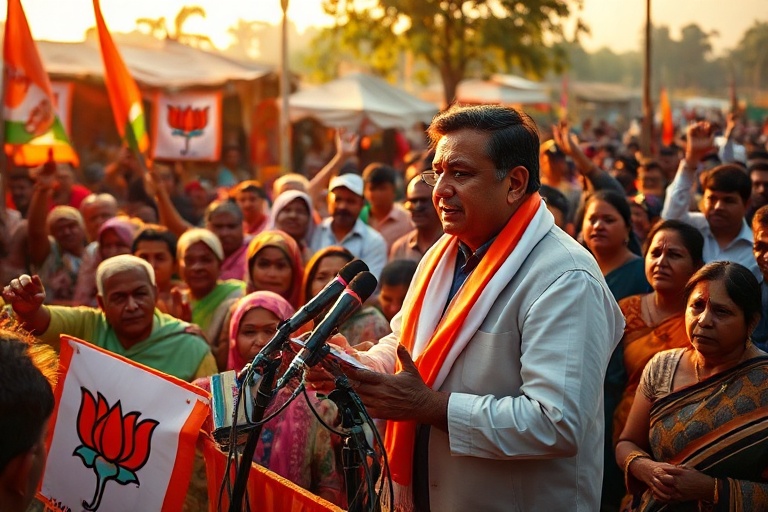
For over two decades, JCD Prabhakar has quietly shaped India’s digital infrastructure, working at the intersection of technology, policy, and public service. As a senior figure in the Ministry of Electronics and Information Technology (MeitY), Prabhakar has been instrumental in steering some of the country’s most ambitious digital initiatives—from Aadhaar to the Digital India campaign. His leadership reflects a rare blend of technical expertise and bureaucratic acumen, positioning him as a key architect of India’s technological sovereignty.
Born in 1968 in Tamil Nadu, Prabhakar’s journey into public service began with a strong academic foundation. He holds a Bachelor’s degree in Electrical Engineering from the Indian Institute of Technology (IIT) Madras and a Master’s in Computer Science from the University of Wisconsin-Madison. His early career included roles in both the private sector and academia, but it was his entry into government service in the late 1990s that marked the beginning of his transformative impact on India’s digital ecosystem.
From Infrastructure to Innovation: A Career Defined by Strategic Leadership
Prabhakar’s career trajectory mirrors India’s own evolution in digital governance. He joined the Indian Administrative Service (IAS) in 1995 and was later deputed to the Department of Electronics and Information Technology. Over the years, he held several key positions, including Director of the National Informatics Centre (NIC) and Joint Secretary in MeitY. Each role allowed him to influence critical aspects of India’s digital infrastructure, from e-governance platforms to cybersecurity frameworks.
One of Prabhakar’s most notable contributions came during his tenure as Director General of the Unique Identification Authority of India (UIDAI), where he played a pivotal role in scaling Aadhaar. Under his leadership, the biometric identification system expanded from a pilot project to a nationwide network serving over 1.3 billion citizens. His emphasis on scalability, privacy, and inclusivity ensured that Aadhaar became a cornerstone of India’s digital identity ecosystem.
Beyond Aadhaar, Prabhakar has been a driving force behind several national digital initiatives. He contributed to the development of India’s first National Digital Communications Policy, aimed at fostering a robust telecommunications infrastructure. His work also extended to the Digital India campaign, where he helped integrate digital services across government departments, making them more accessible to citizens.
Key Contributions and Policy Influence
- Aadhaar Expansion: Led efforts to scale Aadhaar from a pilot to a national identity system, ensuring seamless integration with welfare schemes and financial services.
- Digital India Framework: Played a central role in designing the policy roadmap for Digital India, focusing on broadband connectivity, e-governance, and digital literacy.
- Cybersecurity Initiatives: Championed the development of India’s cybersecurity policies, including the National Cyber Security Policy 2013, to safeguard critical digital infrastructure.
- Telecom Reforms: Contributed to the National Digital Communications Policy 2018, which aimed to modernize India’s telecom sector and promote digital inclusion.
Balancing Innovation with Governance: The Prabhakar Approach
Prabhakar’s leadership style is often described as methodical yet visionary. He is known for his ability to balance rapid technological adoption with rigorous governance standards. During his tenure at UIDAI, for instance, he insisted on robust privacy safeguards, including the introduction of the Aadhaar Act 2016, which provided a legal framework for the use of biometric data.
His approach to digital governance is rooted in pragmatism. While advocating for cutting-edge technologies like artificial intelligence and blockchain, Prabhakar has consistently emphasized the importance of accessibility and equity. He has championed the use of digital platforms to bridge the urban-rural divide, ensuring that even the most remote communities benefit from government services.
Colleagues and industry observers note that Prabhakar’s strength lies in his ability to collaborate across sectors. He has worked closely with tech giants like Infosys and TCS, as well as startups and academia, to foster innovation. His leadership during the COVID-19 pandemic, where he helped scale digital health solutions like Co-WIN, demonstrated his capacity to respond swiftly to national crises.
The Future of India’s Digital Vision: What’s Next for Prabhakar?
As India continues to push the boundaries of its digital transformation, Prabhakar remains a key figure in shaping its future. Recent reports suggest he is involved in several high-impact projects, including the development of India’s semiconductor mission and the expansion of 5G infrastructure. His focus on self-reliance in technology aligns with the government’s “Atmanirbhar Bharat” initiative, which aims to reduce dependence on foreign imports in critical sectors.
Looking ahead, Prabhakar’s work is likely to focus on three critical areas:
- Semiconductor and Chip Manufacturing: India’s push to become a global hub for semiconductor production presents a massive opportunity, and Prabhakar’s expertise could be pivotal in navigating regulatory and logistical challenges.
- AI and Data Governance: With the increasing use of artificial intelligence in governance, Prabhakar’s insights on ethical AI and data privacy will be crucial in shaping policies that protect citizens while fostering innovation.
- Global Digital Diplomacy: India’s role in international digital forums, such as the Global Partnership on Artificial Intelligence (GPAI), highlights the need for strong leadership in global tech governance—a space where Prabhakar’s experience could be invaluable.
For those interested in the intersection of technology and governance, Prabhakar’s career offers a masterclass in strategic leadership. His ability to navigate complex challenges while keeping the citizen at the center of policy-making sets a benchmark for public service in the digital age.
Legacy and Recognition
Prabhakar’s contributions have not gone unnoticed. He has been honored with several awards, including the prestigious National e-Governance Award and the Data Security Council of India’s Cyber Excellence Award. His work has also been recognized internationally, with mentions in reports by the World Bank and the United Nations on digital inclusion and governance.
Yet, despite his influence, Prabhakar remains relatively low-profile, preferring to let his work speak for itself. This humility is perhaps one of his greatest strengths, allowing him to focus on delivering results rather than seeking the spotlight.
As India charts its path toward a digitally empowered future, leaders like JCD Prabhakar will play an indispensable role. His career is a testament to the power of visionary leadership in transforming societies, proving that sometimes, the most impactful change-makers are those who work behind the scenes.
Conclusion: The Architect of India’s Digital Future
JCD Prabhakar’s journey from an IIT graduate to a key architect of India’s digital transformation is a story of quiet determination and strategic foresight. In an era where technology often outpaces regulation, his ability to balance innovation with governance has set a standard for public service. From Aadhaar to Digital India, his contributions have redefined how millions interact with their government.
As India continues to embrace the digital revolution, Prabhakar’s legacy will endure as a blueprint for how leadership, technology, and public service can converge to create lasting change. For aspiring bureaucrats, technologists, and policymakers, his career offers invaluable lessons in vision, collaboration, and perseverance.
In a nation where digital divides persist, Prabhakar’s work reminds us that technology, when wielded thoughtfully, can be a force for equity and empowerment. His story is far from over, and the next chapter may well redefine what it means to lead in the digital age.