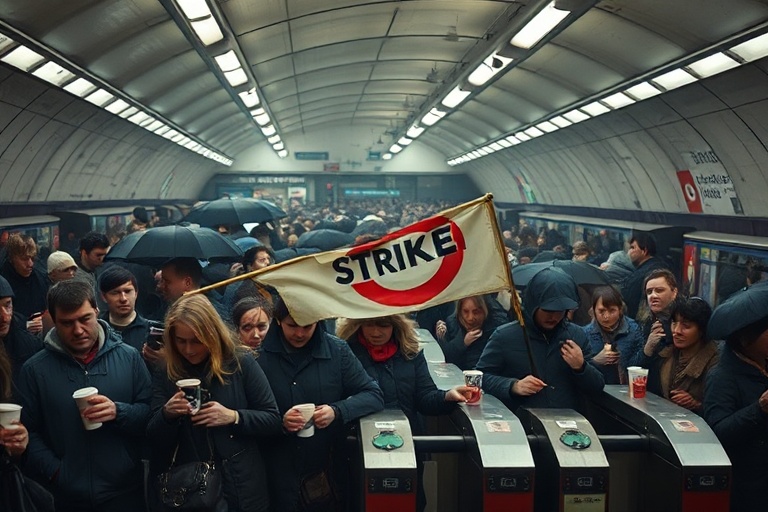
London Tube Strikes in May: What Commuters Need to Know
Transport for London (TfL) has announced a fresh wave of planned strikes across the London Underground network in May, threatening to paralyze the city’s public transport system once again. The industrial action, driven by ongoing disputes over pay, working conditions, and pension reforms, could affect hundreds of thousands of daily commuters who rely on the Tube to navigate the capital.
The latest round of strikes follows months of negotiations between TfL management and the unions representing tube workers. The disputes center on several key issues, including a proposed pay freeze that workers argue fails to match the rising cost of living. Additionally, concerns over job security and changes to pension arrangements have further fueled tensions. With inflation still elevated, the timing of the strikes could not be more critical, as workers and commuters alike face mounting financial pressures.
The Impact on Commuters and Businesses
The strikes, scheduled for specific dates in May, are expected to cause widespread disruption. Commuters will need to plan alternative routes or adjust their schedules to avoid the worst of the chaos. Historically, such disruptions have led to overcrowded buses and roads, as well as delays in deliveries and services across the city.
Local businesses, particularly those in central London, are likely to feel the pinch as foot traffic declines. Retailers, restaurants, and offices that depend on a steady stream of commuters may see reduced sales and productivity. The News section of Dave’s Locker has covered similar disruptions in the past, highlighting the broader economic ripple effects of transport strikes.
For businesses, the strikes present an opportunity to reassess their contingency plans. Some may opt to stagger working hours or encourage remote work where possible. Others might explore partnerships with ride-sharing services or bike rental schemes to mitigate the impact on their employees.
What Commuters Can Expect
Passengers should prepare for significant delays and cancellations on the affected Tube lines. TfL has advised commuters to check for real-time updates via the official TfL app or website before traveling. Buses and overground services are likely to be busier than usual, and journey times may increase substantially.
To help commuters navigate the disruption, TfL has outlined several alternatives:
- Walking or cycling for shorter distances
- Using contactless payment options to avoid queues at ticket machines
- Exploring less congested travel times, such as early mornings or late evenings
- Considering carpooling or ride-sharing services
For those who must travel during the strike, flexibility will be key. Employers may offer temporary remote work arrangements, while schools could adjust start and end times to accommodate parents. However, the lack of a reliable transport network will inevitably lead to some disruption, particularly in the early days of the strike.
Union Demands and TfL’s Response
The unions leading the strike action, including the RMT and TSSA, have framed the industrial action as a necessary step to protect workers’ rights. They argue that TfL’s proposals do not go far enough to address the cost-of-living crisis or the long-term stability of tube workers’ livelihoods.
In response, TfL has emphasized the financial constraints it faces, citing reduced government funding and the need to balance budgets. The organization has expressed regret over the disruption but maintains that the proposed changes are essential for the long-term sustainability of the network. TfL’s leadership has also pointed to recent investments in new trains and infrastructure as evidence of its commitment to improving services.
The deadlock between unions and management underscores the broader challenges facing public transport systems in major cities. As governments grapple with budget cuts and rising operational costs, the balance between worker welfare and service affordability remains precarious. The outcome of these strikes could set a precedent for future labor disputes across the UK’s transport sector.
Lessons from Past Strikes
London has a history of transport strikes, each leaving its mark on the city’s commuters and economy. The most recent major strike in 2022 lasted for several days and resulted in widespread delays, cancellations, and financial losses estimated in the millions. Businesses reported drops in revenue, while schools and hospitals faced operational challenges due to staff shortages.
One of the key takeaways from past strikes is the importance of communication. TfL has improved its real-time updates and alternative travel options over the years, but gaps remain. Commuters often find themselves caught off guard by last-minute changes, highlighting the need for clearer, more proactive messaging.
Another lesson is the resilience of Londoners. Despite the inconvenience, many commuters have adapted by finding alternative routes or adjusting their schedules. The city’s extensive cycling infrastructure, for example, has seen increased usage during previous strikes, though safety concerns remain a barrier for some.
For those interested in a deeper look at how strikes have shaped London’s transport policies, the Analysis section of Dave’s Locker offers in-depth coverage of past disputes and their long-term implications.
Looking Ahead: What’s Next for London’s Transport?
The ongoing dispute over the Tube strikes is just one chapter in a larger conversation about the future of public transport in London. As the city continues to grow, so too do the challenges of maintaining an efficient, affordable, and sustainable transport network. The outcome of the May strikes could influence not only the immediate conditions for tube workers but also the broader direction of transport policy in the UK.
One potential solution being discussed is greater investment in alternative transport modes, such as trams or electric buses, to reduce reliance on the Tube. However, such plans require significant funding and political will, neither of which are guaranteed in the current economic climate.
For now, Londoners are left to prepare for another round of disruption. Whether the strikes will lead to meaningful negotiations or further escalation remains unclear. What is certain is that the city’s transport system, like its workforce, is at a crossroads. The decisions made in the coming weeks could shape the future of London’s public transport for years to come.
A Call for Collaboration
Ultimately, the resolution of the Tube strikes will require collaboration between TfL, the unions, and the government. Workers deserve fair compensation and job security, while the public deserves a reliable and efficient transport system. Finding a middle ground that satisfies all parties will not be easy, but it is essential for the stability of London’s economy and the well-being of its residents.
As the strikes loom, both sides must prioritize dialogue over confrontation. The stakes are high, not just for the tube workers, but for every Londoner who depends on the Underground to get to work, school, or home. The coming weeks will test the resilience of the city and its transport system, but they also offer an opportunity to rethink how London moves forward.