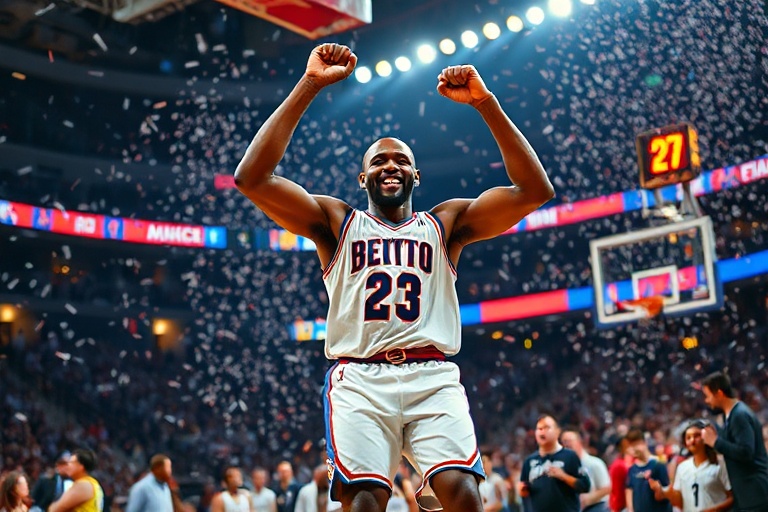
nba mvp
Understanding the NBA MVP Award: History, Criteria, and Recent Winners
The NBA Most Valuable Player (MVP) award stands as the pinnacle of individual accolades in professional basketball. Since its inception in 1955-56, the honor has recognized players who demonstrate exceptional skill, leadership, and impact on their teams. Unlike other awards that focus on specific aspects of the game, the MVP reflects overall excellence. Over the decades, the criteria have evolved, but the core principle remains: the player who most significantly elevates their team’s success.
The voting process involves a panel of sportswriters and broadcasters from the United States and Canada. Each voter selects five players in order of preference, with a point system determining the final ranking. In recent years, advanced metrics have played an increasingly prominent role in discussions, though traditionalists argue for the importance of intangibles like locker room presence and clutch performances.
The Evolution of MVP Criteria
The NBA MVP award has never been bound by rigid rules, but its interpretation has shifted with the league’s changing dynamics. In the 1980s and 1990s, dominance in scoring and rebounding often secured the hardware, as seen with players like Michael Jordan and Hakeem Olajuwon. The turn of the millennium introduced a greater emphasis on efficiency and all-around contributions, exemplified by Tim Duncan’s back-to-back MVPs in 2002 and 2003.
Today, advanced statistics such as Player Efficiency Rating (PER), Win Shares, and Box Plus/Minus (BPM) carry significant weight. However, the award retains a subjective element. For instance, in 2017, Russell Westbrook averaged a triple-double and won the MVP, despite the Oklahoma City Thunder finishing sixth in the Western Conference. His relentless production contrasted with the more efficient, team-success-driven campaigns of James Harden and Kawhi Leonard, sparking debates about the award’s direction.
Recent MVP Winners: A Decade of Dominance
Over the past ten years, the MVP has consistently gone to players who combine individual brilliance with team success. The list of winners reflects the league’s shift toward positionless basketball and versatile superstars:
- 2014-15: Stephen Curry (Golden State Warriors) – Revolutionized the game with his three-point shooting, leading the Warriors to a league-best 67 wins and setting the stage for the small-ball revolution.
- 2015-16: Stephen Curry (Golden State Warriors) – Became the first unanimous MVP in NBA history, averaging 30.1 points per game while shooting 45.4% from three.
- 2016-17: Russell Westbrook (Oklahoma City Thunder) – Posted historic triple-double averages (31.6 points, 10.7 rebounds, 10.4 assists) in a season where OKC missed the playoffs.
- 2017-18: James Harden (Houston Rockets) – Led the league in scoring (30.4 PPG) and assists (8.8 APG), spearheading Houston’s record-setting three-point barrage.
- 2018-19: Giannis Antetokounmpo (Milwaukee Bucks) – The “Greek Freak” delivered a 27.7/12.5/5.9 season, carrying Milwaukee to the best record in the NBA (60-22).
- 2019-20: Giannis Antetokounmpo (Milwaukee Bucks) – Repeated as MVP with 29.5 points, 13.6 rebounds, and 5.6 assists per game, cementing his status as the league’s most dominant two-way force.
- 2020-21: Nikola Jokić (Denver Nuggets) – The first center to win the award since Shaq in 2000, Jokić redefined the position with his passing and shooting, leading Denver to the Western Conference Finals.
- 2021-22: Nikola Jokić (Denver Nuggets) – Back-to-back MVP honors followed, as Jokić became the 13th player in NBA history to achieve the feat, posting 26.4 points, 10.8 rebounds, and 8.3 assists.
- 2022-23: Joel Embiid (Philadelphia 76ers) – The Cameroonian center claimed his first MVP after years of elite production, leading the Sixers to the top seed in the East.
- 2023-24: Nikola Jokić (Denver Nuggets) – Secured his third MVP in four years, further solidifying his place among the game’s all-time greats.
This decade underscores a trend: versatility is now as prized as scoring. Centers like Jokić and Embiid have redefined traditional positional roles, while guards like Curry and Harden have stretched the boundaries of efficiency and volume.
Controversies and Close Calls
Few awards in sports generate as much debate as the NBA MVP. Close races often hinge on narratives, team success, or statistical outliers. Some of the most contentious MVP debates include:
- 2005-06: Steve Nash (Phoenix Suns) over Shaq (Miami Heat). Nash’s assist numbers and Suns’ offensive system were revolutionary, but Shaq’s dominance in the paint and playoff run made the race tight.
- 2010-11: Derrick Rose (Chicago Bulls) became the youngest MVP in league history. His 25.0 PPG, 7.7 APG, and Bulls’ 62-win season made him a deserving winner, though some argued Kobe Bryant’s longevity and LeBron James’ all-around game deserved consideration.
- 2012-13: LeBron James (Miami Heat) edged out Chris Paul (Los Angeles Clippers) in a race that saw both players post historic seasons. LeBron’s efficiency, playmaking, and Finals run tipped the scales.
- 2019-20: Giannis’ MVP over Harden and LeBron sparked discussions about the balance between individual dominance and team impact, especially in a season shortened by the pandemic.
These debates highlight the award’s complexity. While statistics provide a foundation, the MVP often reflects the zeitgeist of the season—a player who embodies the league’s trends or overcomes adversity. For example, Derrick Rose’s 2011 MVP symbolized a resurgence for Chicago basketball, while Giannis’ back-to-back wins in Milwaukee underscored the rise of the “small-market superstar.”
The Future of the MVP Award
The NBA’s global expansion and the influx of young talent suggest the MVP will continue evolving. Players like Luka Dončić, Jayson Tatum, and Victor Wembanyama are poised to challenge for the award in the coming years. Their styles—blending traditional skills with modern analytics—mirror the league’s direction.
One potential shift could be a greater emphasis on defensive impact. While blocks and steals have historically been undervalued in MVP discussions, advanced metrics like Defensive Box Plus/Minus (DBPM) are gaining traction. For instance, Rudy Gobert’s three Defensive Player of the Year awards (2018-2021) hint at a future where defensive anchors might factor more prominently into MVP conversations.
Another factor is the rise of load management. As stars sit out games to preserve their health, voters may increasingly weigh per-game efficiency over cumulative totals. This could disadvantage high-volume scorers in favor of players who deliver elite performance in fewer minutes.
The NBA’s emphasis on pace and spacing will also shape MVP narratives. Players who excel in transition, shoot threes, and facilitate offense—like Jokić and Embiid—are already setting new benchmarks. As the league continues to prioritize spacing and versatility, the MVP may increasingly go to players who redefine positional norms.
What the MVP Means for Players and Teams
Winning the MVP is more than an individual achievement; it reshapes a player’s legacy and influences their team’s trajectory. For franchises, an MVP can justify roster-building decisions, attract free agents, and elevate market value. The Milwaukee Bucks’ decision to trade for Jrue Holiday in 2020, for example, was partly influenced by Giannis’ back-to-back MVPs, which signaled the team’s championship window.
For players, the award often accelerates their ascent into superstardom. Nikola Jokić’s MVPs have transformed him from a skilled big man into a global icon, while Joel Embiid’s 2023 win solidified his status as the face of the Philadelphia 76ers. The recognition can also influence contract negotiations, as MVP seasons often lead to supermax extensions.
However, the pressure of living up to the award can be immense. Players like Derrick Rose and Derrick Westbrook have faced heightened expectations and scrutiny after their MVP seasons, sometimes struggling with the weight of their newfound status. This underscores the dual-edged nature of the honor: it cements legacies but also raises the bar for future performance.
For fans, the MVP race adds an extra layer of intrigue to the regular season. It encourages deeper engagement with advanced stats and team narratives, fostering a more analytical approach to basketball. Whether it’s debates over efficiency versus volume or the impact of clutch performances, the MVP discussion enriches the sport’s discourse.
The NBA MVP award remains one of sports’ most compelling honors because it captures the essence of the game: excellence, leadership, and impact. As the league continues to evolve, so too will the criteria and narratives surrounding the award. One thing is certain, however—the MVP will always be a reflection of the season’s defining story, whether it’s a historic triple-double run, a position-defying center, or a small-market superstar defying the odds.
For more insights into the NBA’s evolving landscape, explore our News and Analysis sections. These categories dive deeper into the trends and stories shaping the league today.