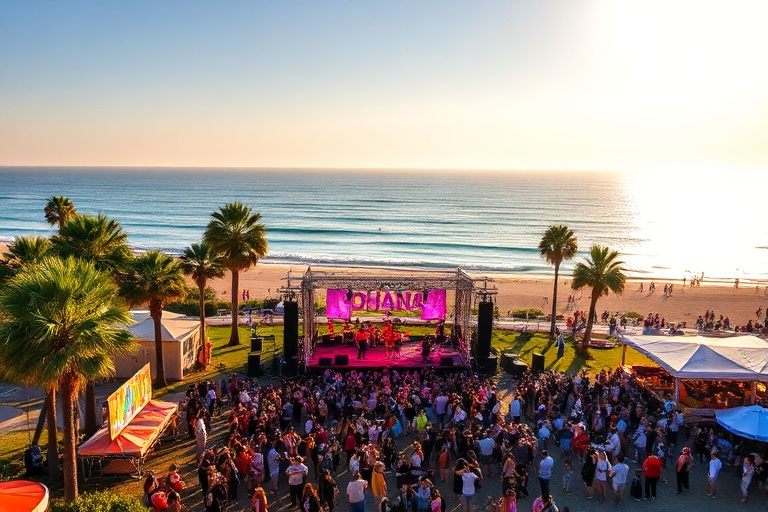
For festival-goers who prioritize community, sustainability, and genre-diverse lineups, Ohana Festival has carved out a distinct identity in Southern California’s music scene. Since its 2016 debut in Dana Point, the event has evolved from a surf-rock revival into a multi-day celebration blending reggae, hip-hop, electronic, and indie sounds under one oceanfront canvas. As organizers gear up for the 2026 edition, preliminary details suggest a festival that’s not just growing in scale—but deepening its commitment to inclusivity and environmental stewardship.
What began as a boutique gathering has matured into a cultural touchstone, drawing over 20,000 attendees annually while maintaining an ethos of accessibility. With lineup announcements still months away, speculation is already building around headliners, production enhancements, and how Ohana will respond to broader shifts in live music consumption. Here’s what we know—and what it could mean for the future of regional festivals.
The Evolution of Ohana: From Surf Roots to Global Sounds
Ohana Festival was born from a simple vision: to create a music experience that felt like family. The name itself, borrowed from the Hawaiian concept of ʻohana—meaning family in the sense of extended kinship—reflects the festival’s core values of connection and belonging. Early editions leaned heavily into reggae, jam bands, and roots music, anchored by performances on a sandy main stage just steps from the Pacific shoreline. Over time, the programming expanded to include hip-hop acts like Snoop Dogg and electronic artists like ODESZA, signaling a deliberate move toward genre fluidity.
This evolution mirrors larger trends in festival culture. Audiences increasingly reject siloed musical experiences in favor of events that curate surprise and discovery. Ohana’s 2026 lineup is expected to continue this trajectory, with industry sources hinting at a “global village” stage dedicated to international artists—a nod to the festival’s growing appeal beyond Southern California.
Such shifts aren’t without risk. Balancing authenticity with commercial appeal requires careful curation. Too broad a lineup risks diluting the festival’s identity; too narrow, and it may fail to attract new attendees. Ohana’s leadership appears aware of this tension, emphasizing community input in artist selection through town halls and fan surveys.
Sustainability as a Festival Standard
No modern festival can ignore the environmental cost of large-scale events. Ohana has positioned itself as a leader in sustainable practices, and 2026 is poised to raise the bar even further. Past initiatives have included zero-waste policies, solar-powered stages, and partnerships with local conservation groups. For the upcoming edition, organizers have teased a “circular economy” model, where waste materials are repurposed into festival infrastructure or donated to local artisans.
These efforts align with growing consumer demand for eco-conscious entertainment. A 2024 Nielsen report found that 73% of Gen Z consumers are willing to pay more for sustainable products and experiences. Festivals like Ohana are increasingly seen as testing grounds for green innovation, influencing broader industry standards. If successful, Ohana 2026 could set a new benchmark for regional festivals nationwide.
Beyond environmentalism, Ohana has also prioritized social sustainability. The festival’s “Ohana Cares” initiative provides free mental health resources, harm reduction services, and accessibility accommodations—efforts that have earned recognition from the Event Safety Alliance. Such programs reflect a recognition that festivals are not just entertainment, but temporary communities with real-world responsibilities.
What’s on the Horizon for 2026
While the full 2026 lineup remains under wraps, several trends and announcements offer clues about what attendees can expect:
- Immersive Experiences: Reports suggest Ohana will expand its use of augmented reality (AR) and interactive installations, blending digital and physical realms. Past festivals featured AR scavenger hunts; 2026 may introduce wearable tech that enhances fan engagement.
- Local Focus: In a move to strengthen regional ties, Ohana is expected to feature a “SoCal Spotlight” stage exclusively for emerging artists from California. This could provide a critical platform for local talent amid a crowded festival landscape.
- Post-Pandemic Innovations: Lessons from COVID-era festivals have reshaped Ohana’s contingency plans. Enhanced medical facilities, improved ventilation on enclosed stages, and flexible ticketing options are likely to remain permanent fixtures.
- Community Partnerships: Collaborations with local businesses and nonprofits could deepen Ohana’s impact. Past partnerships have included beach cleanups and surf therapy programs for veterans, with 2026 expected to expand these efforts.
Ticketing strategies will also be closely watched. After experimenting with tiered pricing in 2025, Ohana is expected to introduce a “pay-what-you-can” model for certain community-focused events, ensuring accessibility for low-income attendees. Such measures could redefine how regional festivals balance revenue with inclusivity.
The Broader Implications for Festival Culture
Ohana’s trajectory offers a case study in how festivals adapt—or stagnate—in a rapidly changing industry. Its emphasis on community and sustainability reflects broader cultural shifts, from the rise of “conscious capitalism” to the growing importance of mental health awareness. Festivals are no longer just about music; they are microcosms of societal values.
This evolution has implications for both organizers and attendees. For promoters, the challenge lies in maintaining authenticity while scaling responsibly. For fans, it raises questions about what they’re willing to support—beyond just the music. Ohana’s ability to navigate these complexities could determine whether it remains a regional favorite or emerges as a national model.
There’s also the question of competition. With new festivals launching annually and established ones reinventing themselves, Ohana must continually innovate to stay relevant. Its focus on inclusivity and sustainability may prove to be its greatest assets in an era where audiences increasingly vote with their wallets—and their values.
“Ohana Festival isn’t just about putting on a show. It’s about creating a space where people feel seen, heard, and connected—to each other and to the environment. That’s a rare thing in today’s world.”
Festival Co-Founder, speaking to The Orange County Register
A Look Ahead
As Ohana Festival 2026 takes shape, it stands at the intersection of tradition and transformation. Its roots in surf and reggae music remain foundational, but the festival’s future lies in its ability to adapt—to new audiences, new technologies, and new expectations. For fans, the anticipation is palpable. For the industry, Ohana’s choices may serve as a blueprint for what’s next.
One thing is certain: Ohana’s commitment to its core values—community, sustainability, and inclusivity—will be tested as the festival grows. Whether it can scale without losing its soul will determine its legacy in the years to come.
For now, the countdown continues. And as the waves crash against the shore in Dana Point, so too does the excitement build for another unforgettable Ohana experience.
For more on the evolution of music festivals and their cultural impact, explore our coverage at Dave’s Locker Music and Culture sections.