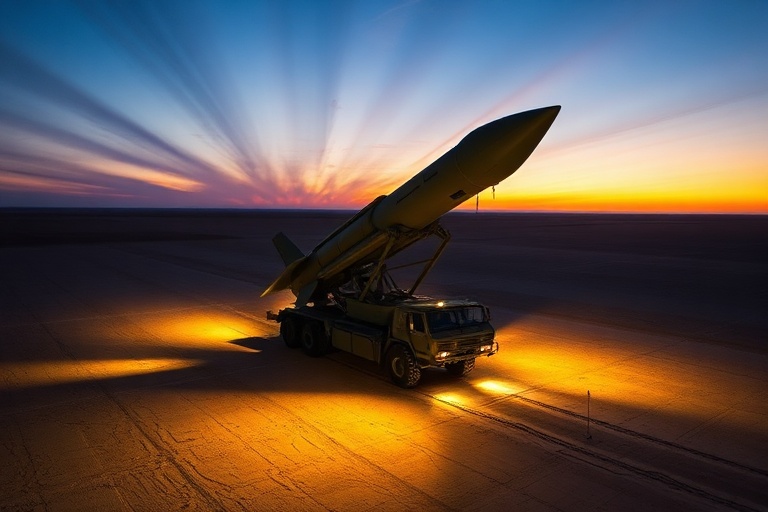
The RS-28 Sarmat, often referred to by its NATO reporting name “Satan 2,” represents one of the most advanced intercontinental ballistic missiles (ICBMs) in the world today. Developed by Russia’s Makeyev Rocket Design Bureau, this liquid-fueled monster is designed to replace the aging R-36M2 Voevoda missiles that have served as a cornerstone of Russia’s nuclear arsenal since the Cold War. With a reported range of up to 18,000 kilometers and the ability to carry multiple independently targetable warheads, the Sarmat is not just an upgrade—it’s a strategic overhaul.
A Technical Breakdown of the RS-28 Sarmat
The Sarmat’s design is a marvel of modern engineering, incorporating several features that set it apart from its predecessors and contemporary ICBMs. At 35.5 meters long and 3 meters in diameter, the missile is massive, weighing in at approximately 208.3 metric tons at launch. Its liquid-fuel propulsion system, while less efficient than solid-fuel alternatives, allows for greater payload flexibility and longer range. The missile’s payload capacity is particularly noteworthy, as it can carry up to 10 heavy warheads or 15 lighter ones, along with decoys and countermeasures to evade missile defense systems.
One of the Sarmat’s most controversial features is its ability to fly over the South Pole, a tactic that could potentially bypass missile defense systems like the U.S. Ground-Based Midcourse Defense (GMD) system, which is primarily designed to intercept missiles traveling over the North Pole. This polar trajectory capability has raised concerns among Western military analysts, as it complicates interception strategies and reduces reaction times for targeted nations.
Key Features of the RS-28 Sarmat
- Range: Up to 18,000 kilometers, capable of striking any target globally.
- Payload: Can carry 10 heavy warheads or 15 lighter warheads, plus decoys and countermeasures.
- Propulsion: Liquid-fueled, allowing for greater payload flexibility and longer range.
- Trajectory Options: Can fly over the South Pole, bypassing traditional missile defense systems.
- Accuracy: Reportedly capable of hitting within 250 meters of its target, making it highly effective for counterforce strikes.
- Deployment: Expected to enter service with Russia’s Strategic Missile Forces by 2024, with full operational capability by 2026.
Strategic Implications of the Sarmat
The introduction of the RS-28 Sarmat into Russia’s nuclear arsenal has significant implications for global security and the balance of power. For decades, the concept of mutually assured destruction (MAD) has served as a deterrent against large-scale nuclear conflict. However, the Sarmat’s advanced capabilities—particularly its range, payload flexibility, and trajectory options—could potentially disrupt this delicate equilibrium. By enabling Russia to strike targets from unexpected directions, the Sarmat reduces the effectiveness of missile defense systems and increases the unpredictability of Russia’s nuclear response.
This unpredictability is a double-edged sword. On one hand, it enhances Russia’s deterrent capability by making it harder for adversaries to anticipate and counter its nuclear strategy. On the other hand, it increases the risk of miscalculation or accidental escalation, particularly in times of heightened tension. The Sarmat’s ability to deliver a massive, overwhelming strike in a single launch could embolden Russian leadership to adopt more aggressive posturing in conflicts, knowing that their nuclear arsenal remains a formidable counterbalance.
Geopolitical Reactions and Responses
The unveiling of the Sarmat has elicited strong reactions from Russia’s geopolitical rivals, particularly the United States and NATO. The U.S. has long been concerned about Russia’s development of new nuclear delivery systems, and the Sarmat has only intensified these worries. In response, the U.S. has accelerated its own missile defense programs and explored hypersonic weapons as potential counters to Russia’s advancing arsenal. However, the sheer scale and sophistication of the Sarmat make it a particularly challenging target for interception.
NATO has also taken note of the Sarmat’s deployment, with several member states expressing concerns about the missile’s implications for European security. The missile’s range means that it could potentially target not only the U.S. but also European capitals, raising questions about the adequacy of NATO’s nuclear deterrent strategy. In response, NATO has emphasized the importance of its own nuclear sharing agreements and the modernization of its tactical nuclear weapons to maintain a credible deterrent.
China, too, has watched the development of the Sarmat with interest. While Russia and China are not formal military allies, their growing strategic cooperation has led to increased dialogue about shared security concerns. The Sarmat’s deployment could prompt China to accelerate its own nuclear modernization efforts, further complicating the global nuclear landscape.
Broader Implications for Global Security
The RS-28 Sarmat is more than just a new weapon—it is a symbol of the evolving nature of nuclear deterrence in the 21st century. Its deployment reflects a broader trend of nuclear modernization among the world’s major powers, as nations seek to enhance the reliability, flexibility, and survivability of their arsenals. This trend is driven by several factors, including advances in missile defense technology, the proliferation of precision-guided conventional weapons, and the growing importance of space and cyber capabilities in modern warfare.
However, the Sarmat also highlights the risks inherent in this modernization race. As nations develop more advanced nuclear delivery systems, the threshold for nuclear conflict could become lower, increasing the likelihood of accidental or unauthorized launches. The sheer destructive power of these weapons also underscores the need for robust arms control agreements and diplomatic efforts to prevent a new arms race.
Another critical implication of the Sarmat’s deployment is the potential for a new era of nuclear brinkmanship. With both Russia and the U.S. investing heavily in next-generation nuclear capabilities, the risk of a miscalculation or a deliberate escalation in a crisis scenario could rise. This is particularly concerning given the current geopolitical climate, which is marked by heightened tensions between major powers and a breakdown in arms control dialogues.
For arms control advocates, the Sarmat serves as a stark reminder of the fragility of the global non-proliferation regime. The New START treaty, which has been a cornerstone of U.S.-Russian arms control efforts, is set to expire in 2026, and negotiations for its extension or replacement have stalled. The introduction of the Sarmat into Russia’s arsenal could further complicate these negotiations, as the U.S. seeks to address the missile’s destabilizing potential.
Conclusion
The RS-28 Sarmat represents a significant leap forward in Russia’s nuclear capabilities, with far-reaching implications for global security. Its advanced features, including its range, payload flexibility, and trajectory options, challenge existing missile defense systems and complicate strategic calculations for Russia’s adversaries. While the Sarmat enhances Russia’s deterrent capability, it also raises the stakes in an already tense geopolitical environment, increasing the risk of miscalculation and escalation.
As the world’s major powers continue to modernize their nuclear arsenals, the deployment of the Sarmat underscores the urgent need for renewed diplomatic efforts to prevent a new arms race. Arms control agreements must evolve to address the challenges posed by next-generation nuclear weapons, and dialogue between nuclear-armed states must be prioritized to reduce the risk of conflict. In an era where technological advancements are outpacing diplomatic solutions, the RS-28 Sarmat serves as a potent reminder of the stakes involved in global nuclear security.
For those interested in further analysis of Russia’s military capabilities and their implications, explore our Analysis and Politics sections.