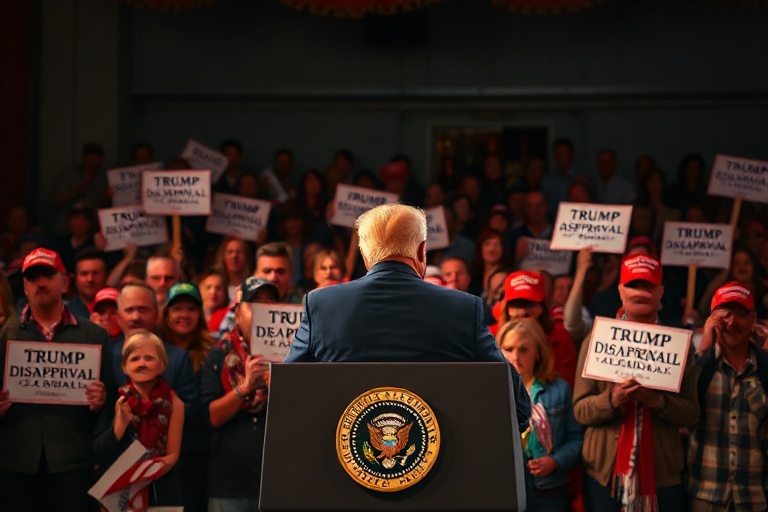
The approval ratings for former President Donald Trump remain a topic of intense scrutiny and debate. Polls released in recent months show a complex picture of public opinion, with fluctuations that reflect shifting political dynamics and evolving national priorities. Understanding these trends requires examining the data closely while considering the broader context of American politics.
Approval ratings are more than just numbers; they provide a snapshot of public confidence in a political figure’s performance. For Trump, these metrics have consistently hovered in a narrow range, influenced by factors such as policy decisions, media coverage, and partisan loyalty. Recent surveys indicate that his approval rating among the general electorate has stabilized around 42-45%, a figure that aligns closely with the base of his support but fails to expand beyond it.
Key Factors Influencing Trump’s Approval Ratings
Several factors contribute to the stability—and occasional volatility—of Trump’s approval numbers. These include:
- Partisan Divide: Trump’s approval ratings remain sharply polarized along party lines. Polls consistently show that over 90% of Republicans approve of his performance, while approval among Democrats remains in the single digits. Independents, a critical swing group, tend to lean slightly negative, with approval hovering around 35-40%.
- Policy Impact: Key policy decisions, such as economic initiatives or social issues, can cause temporary shifts in approval. For example, his handling of the economy often receives higher marks from supporters, while critics point to controversies surrounding immigration and foreign policy as drags on his ratings.
- Media Narratives: The tone of media coverage plays a significant role in shaping public perception. Positive stories about economic growth or diplomatic achievements tend to boost approval among undecided voters, while negative headlines about investigations or controversies can erode support.
- Cultural and Social Factors: Trump’s unfiltered communication style and his role in shaping cultural debates continue to energize his base while alienating others. Issues such as free speech, political correctness, and national identity remain rallying points for his supporters and points of contention for his critics.
Comparing Trump’s Ratings to Historical Benchmarks
To contextualize Trump’s approval ratings, it’s helpful to compare them to those of past presidents at similar points in their political careers. Trump’s average approval rating has remained relatively stable since leaving office, a trend that diverges from the typical post-presidency decline seen with predecessors like Barack Obama or George W. Bush.
One reason for this stability is Trump’s continued dominance of the Republican Party. Unlike former presidents who step back from the political spotlight, Trump remains an active and influential figure, frequently endorsing candidates and shaping party platforms. This sustained visibility helps maintain his approval among loyalists, even as his national numbers remain constrained.
Another factor is the polarized nature of contemporary politics. In an era where partisan identities are increasingly tied to cultural and social issues, presidents and former presidents often retain strong support within their own party while facing persistent opposition from the other side. Trump’s ratings reflect this dynamic, with his approval among Republicans remaining high even as broader public opinion remains divided.
Broader Implications for Trump and the Republican Party
The implications of Trump’s approval ratings extend beyond his personal legacy. They offer insights into the future direction of the Republican Party and the broader political landscape. For the GOP, Trump’s enduring influence suggests that his brand of politics—characterized by populism, nationalism, and a willingness to challenge establishment norms—will continue to shape party strategy and messaging.
This presents both opportunities and challenges for the party. On one hand, Trump’s base provides a reliable voting bloc that can energize turnout in key elections. On the other hand, the party’s reliance on Trump’s approval may limit its ability to appeal to swing voters or expand its coalition. The challenge for Republicans will be balancing the demands of the Trump base with the need to attract broader support in a closely divided electorate.
For Trump himself, his approval ratings underscore the strengths and limitations of his political brand. While he remains a dominant force within the party, his inability to expand his appeal beyond his core supporters suggests that his path to a national comeback may be fraught with challenges. Whether he runs for office again or continues to shape the party from the sidelines, his influence will likely remain a defining feature of American politics for years to come.
What Comes Next?
The trajectory of Trump’s approval ratings will depend on a variety of factors, including his own actions, the performance of the current administration, and the evolving priorities of the American public. One thing is clear: Trump’s political future will be closely tied to his ability to maintain the loyalty of his base while navigating the complexities of a rapidly changing political landscape.
For observers and analysts, the key question is whether Trump’s approval ratings will remain stable or begin to shift in response to new developments. Will his base continue to rally around him, or will broader public opinion begin to influence the dynamics of the Republican Party? These questions will shape not only Trump’s legacy but also the future of American politics.
As the political landscape continues to evolve, one thing remains certain: Trump’s approval ratings will remain a topic of intense interest and debate. Whether you view him as a transformative leader or a divisive figure, his influence on American politics is undeniable—and his approval ratings are a critical barometer of that influence.
For more analysis on political trends and their broader implications, visit our News and Politics sections.