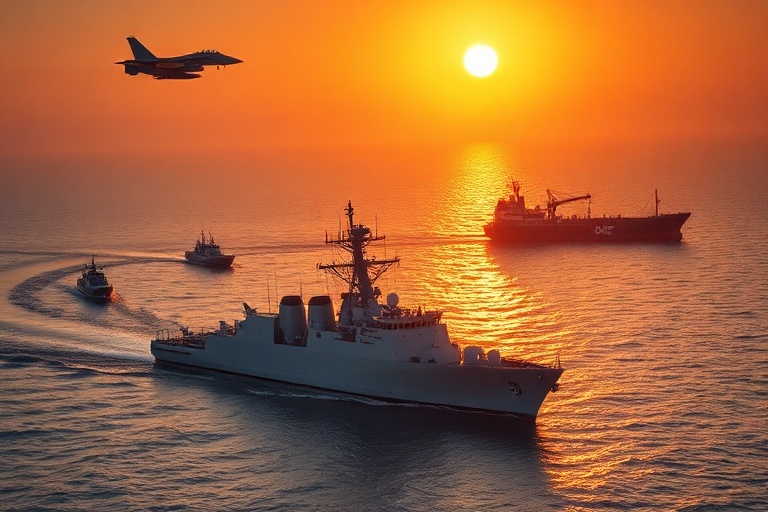
The United Kingdom’s recent naval deployment to the Strait of Hormuz underscores a strategic response to escalating regional tensions. This move follows a series of maritime incidents and geopolitical shifts that have heightened concerns about the security of one of the world’s most critical oil transit routes. The deployment is not merely a defensive maneuver but a calculated signal of Britain’s commitment to maintaining stability in a volatile corridor.
With global energy markets closely watching, the UK’s presence in the region carries implications far beyond immediate security concerns. The Strait of Hormuz, through which roughly 20% of the world’s oil passes, remains a flashpoint where geopolitical rivalries play out in real time. Understanding this deployment requires examining both its tactical objectives and its broader diplomatic context.
The Strategic Importance of the Strait of Hormuz
The Strait of Hormuz is more than a geographical narrows between Oman and Iran—it is the linchpin of global energy security. Approximately 17 million barrels of oil transit this waterway daily, making disruptions here capable of sending shockwaves through international markets. The UK’s decision to reinforce its naval presence here reflects a recognition of this reality.
Historically, the strait has been a focal point for tensions between Iran and Western powers, particularly the United States and its allies. Iran has periodically threatened to close the strait in response to sanctions or perceived provocations, a move that would have catastrophic economic consequences. The UK’s deployment is a direct counter to such threats, signaling a willingness to project power and deter aggression.
This is not the first time the UK has stationed ships in the region. Past deployments, such as the 2019 mission involving HMS Montrose and HMS Duncan, were framed as defensive measures in response to attacks on commercial shipping, including the seizure of the Stena Impero by Iranian forces. The current deployment builds on this legacy, adapting to new threats while maintaining continuity in Britain’s regional strategy.
Motivations Behind the Latest Deployment
Several factors have converged to prompt the UK’s latest naval commitment. First, the resurgence of Houthi rebel activity in Yemen has increased the risk of attacks on commercial vessels transiting the Red Sea and, by extension, the Strait of Hormuz. The Houthis, backed by Iran, have targeted ships they associate with Israeli or Western interests, raising concerns about spillover effects.
Second, the ongoing war in Gaza has further strained relations between Iran and Western nations. Iran’s support for militant groups and its nuclear program continue to draw international scrutiny, prompting allies like the UK to reinforce their military posture. This deployment serves as a deterrent against Iranian aggression while reassuring partners in the Gulf Cooperation Council (GCC).
Third, the UK’s post-Brexit foreign policy has emphasized a more independent yet pragmatic approach to global security. By deploying assets like the RFA Lyme Bay and HMS Lancaster, Britain demonstrates its ability to act autonomously while coordinating with allies such as the U.S. and Australia under the AUKUS framework.
The deployment also aligns with broader NATO objectives, particularly in countering hybrid threats and maritime security challenges. The UK’s Royal Navy has long been a key contributor to NATO’s standing maritime groups, and this mission reinforces that role.
Key Objectives of the Mission
- Deterrence: Preventing Iranian or proxy forces from disrupting shipping lanes through a visible show of force.
- Protection of British Interests: Safeguarding commercial vessels flagged or owned by UK companies operating in the region.
- Support for Allies: Providing reassurance to Gulf states and international partners who rely on stable maritime routes.
- Intelligence Gathering: Monitoring Iranian naval activities and potential threats to inform future policy decisions.
Broader Implications for Global Security
The UK’s deployment is a microcosm of the broader challenges facing international maritime security. The Strait of Hormuz is not just a British concern—it is a global one. Disruptions here could trigger energy price spikes, supply chain disruptions, and geopolitical realignments. The UK’s actions, therefore, have ripple effects across multiple domains.
For Europe, which remains heavily dependent on Gulf oil, the deployment is a strategic necessity. The continent’s energy crisis, exacerbated by the war in Ukraine, has made the security of alternative supply routes a top priority. By maintaining a naval presence in the Strait, the UK helps ensure that Europe’s energy lifelines remain unbroken.
In the Middle East, the deployment is likely to be met with a mix of relief and caution. Gulf states such as Saudi Arabia and the UAE, which share concerns about Iran’s regional ambitions, may view the UK’s presence as a stabilizing force. However, Iran is unlikely to welcome the move, potentially escalating its own naval activities or proxy operations in response.
The deployment also highlights the evolving nature of naval warfare. Modern threats include not just traditional state actors but also asymmetric challenges like drone attacks, cyber intrusions, and sabotage. The UK’s mission must account for these complexities, blending conventional deterrence with adaptive strategies.
The Road Ahead: Diplomacy and Deterrence
While the UK’s naval deployment is a clear demonstration of hard power, its long-term success will depend on diplomacy. The region’s challenges cannot be solved by military means alone. The UK must balance its deterrent posture with diplomatic engagement to prevent escalation.
One potential avenue is renewed dialogue with Iran, possibly through backchannel negotiations or multilateral forums. The Joint Comprehensive Plan of Action (JCPOA), though flawed, remains a framework for engagement. Reviving some form of diplomatic process could reduce tensions and create space for de-escalation.
Another consideration is the role of regional partners. The UK’s deployment could serve as a catalyst for greater cooperation among Gulf states, fostering collective security mechanisms. Joint patrols, intelligence-sharing, and coordinated responses to threats would strengthen the region’s resilience.
Ultimately, the UK’s Strait of Hormuz deployment is a calculated gamble—one that seeks to deter aggression while avoiding entanglement in broader conflicts. Its success will hinge on the ability to navigate the fine line between strength and restraint, power and diplomacy.
As the situation evolves, the international community will be watching closely. The stakes are high, and the margin for error is slim. But in a region where miscalculation can lead to catastrophe, measured action may be the best path forward.
For those interested in the intersection of military strategy and geopolitics, this deployment offers a case study in modern naval diplomacy. It is a reminder that in the Strait of Hormuz, power is not just projected—it is carefully calibrated.
Further Reading: Explore more on global security and maritime issues at Dave’s Locker News and Analysis.