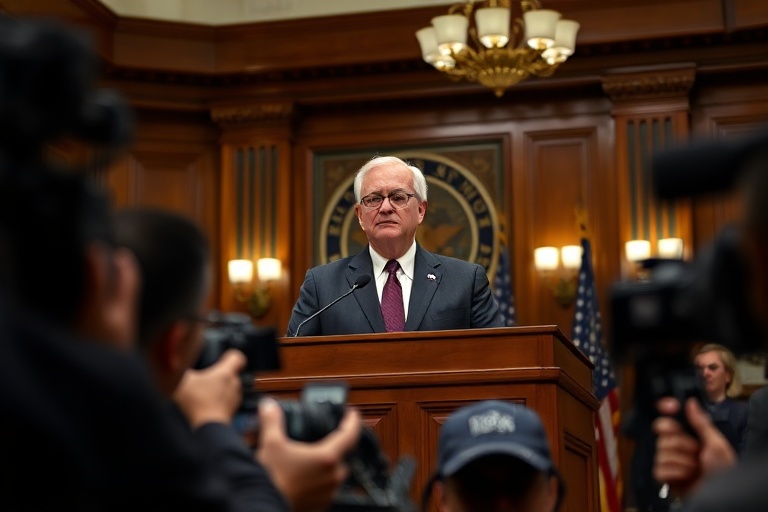
The position of Deputy Prime Minister holds significant weight in many parliamentary democracies, serving as a critical link between the head of government and the broader political landscape. While not always constitutionally mandated, this role often carries substantial influence, shaping policy decisions and government direction. Understanding its function requires examining historical precedents, contemporary applications, and the evolving nature of executive leadership.
The Historical Roots of the Deputy Prime Minister Role
The concept of a Deputy Prime Minister emerged in the early 20th century as parliamentary systems sought to formalize succession and delegation within executive branches. The United Kingdom pioneered this position in 1942 when Clement Attlee became the first Deputy Prime Minister under Winston Churchill’s wartime government. This appointment reflected a practical response to wartime governance needs, where clear lines of authority and backup leadership were essential.
Australia followed suit in 1951 under Prime Minister Robert Menzies, establishing the position as a permanent feature of its political architecture. The role has since been adopted by other Commonwealth nations and beyond, though its structure and powers vary significantly by country. In some systems, the Deputy Prime Minister holds ministerial portfolios; in others, they serve primarily as an advisor and successor-in-waiting. This flexibility has allowed the role to adapt to different political environments.
Key Responsibilities and Powers
The Deputy Prime Minister’s duties are rarely codified in law, leading to considerable variation across nations. However, several core responsibilities typically define the position:
- Succession Planning: Serving as the designated successor to the Prime Minister in case of resignation, incapacity, or death, ensuring continuity of leadership.
- Cabinet Leadership: Often chairing cabinet meetings in the Prime Minister’s absence and providing strategic guidance on critical policy matters.
- Policy Coordination: Acting as a liaison between different government departments, particularly in areas of cross-agency importance such as national security or economic planning.
- Parliamentary Representation: Serving as a senior government spokesperson, defending policies and communicating decisions to the legislature and public.
- Electoral Strategy: Playing a key role in election campaigns, particularly in marginal constituencies or regions where the Deputy’s influence can sway voter sentiment.
In some countries, such as India, the Deputy Prime Minister carries additional symbolic weight as a senior statesman. For example, Sardar Vallabhbhai Patel served in this role from 1947 to 1950, solidifying his legacy as the “Iron Man of India” for his role in integrating princely states into the newly independent nation. This demonstrates how the position can transcend mere administrative function, becoming a platform for national unification.
The Political Dynamics of the Role
One of the most intriguing aspects of the Deputy Prime Minister position is its inherently political nature. Unlike a vice president in a presidential system, who often exists in a separate branch of government, the Deputy Prime Minister operates within the ruling party or coalition. This places them in a delicate balancing act between loyalty to the Prime Minister and their own political ambitions.
Conflicts can arise when the Deputy PM’s popularity or policy positions diverge from those of the Prime Minister. In the UK, for instance, Deputy Prime Minister John Prescott’s outspoken advocacy for the working class sometimes clashed with Tony Blair’s centrist agenda during the New Labour years. Such tensions underscore the role’s potential to either strengthen or destabilize a government.
Historically, the Deputy Prime Minister role has also served as a political reward for long-serving party members or as a way to integrate rival factions. In Canada, for example, the position has been used to bring regional leaders into the federal government, ensuring broader representation. This strategic placement helps maintain party unity and reduces the likelihood of internal rebellions.
When the Deputy Prime Minister Becomes Prime Minister
The transition from Deputy to Prime Minister is not guaranteed but has occurred in several notable cases. In the UK, Margaret Thatcher succeeded James Callaghan after serving as his Deputy PM in the 1970s. Similarly, in Australia, Paul Keating became Prime Minister after serving as Deputy to Bob Hawke. These transitions highlight how the role can serve as a proving ground for future leadership.
However, not all deputies ascend to the top job smoothly. In some cases, tensions between the Prime Minister and Deputy can lead to early departures. For example, in New Zealand, Winston Peters resigned from his Deputy PM role under Jenny Shipley in 1998 amid policy disagreements, ultimately returning to the position years later. This fluidity reflects the role’s dependence on personal relationships and political circumstances.
The Broader Implications for Governance
The existence of a Deputy Prime Minister raises important questions about power distribution within governments. On one hand, the role can enhance efficiency by providing a clear line of succession and reducing uncertainty during leadership transitions. On the other, it risks creating a parallel center of power that might undermine the Prime Minister’s authority.
In coalition governments, the Deputy PM often represents a junior partner, ensuring that their party’s interests are represented at the highest levels. This can stabilize fragile alliances but may also dilute the Prime Minister’s control over decision-making. For instance, in Germany, the Vice Chancellor (a role analogous to Deputy PM in some respects) serves as a bridge between coalition partners, though their influence is often limited by the Chancellor’s dominance.
Another consideration is the public perception of the role. When the Deputy PM is seen as overly ambitious or disruptive, it can erode public trust in the government. Conversely, a well-regarded Deputy can bolster the Prime Minister’s credibility, particularly in times of crisis. The COVID-19 pandemic, for example, saw several Deputy Prime Ministers take on high-profile roles in managing national responses, demonstrating the position’s capacity to shape public perception.
Ultimately, the Deputy Prime Minister’s effectiveness depends on a combination of personal charisma, political acumen, and the willingness of the Prime Minister to share power. While not every system requires this role, its presence reflects a broader trend toward specialization and delegation in modern governance.
Conclusion: A Role in Flux
The Deputy Prime Minister remains one of the most adaptable and politically charged positions in parliamentary systems. Its evolution reflects broader changes in how governments manage leadership, succession, and policy coordination. Whether as a steadying force during crises or a potential rival to the Prime Minister, the Deputy PM’s influence is undeniable.
As governments continue to navigate complex challenges—from economic instability to geopolitical tensions—the need for clear, reliable leadership pipelines will only grow. The Deputy Prime Minister, whether formally defined or informally empowered, will likely remain a cornerstone of stable governance in many nations. For political observers and citizens alike, watching this role unfold offers valuable insights into the inner workings of executive power.
For further reading on political roles and their evolution, explore Politics and Analysis on Dave’s Locker.