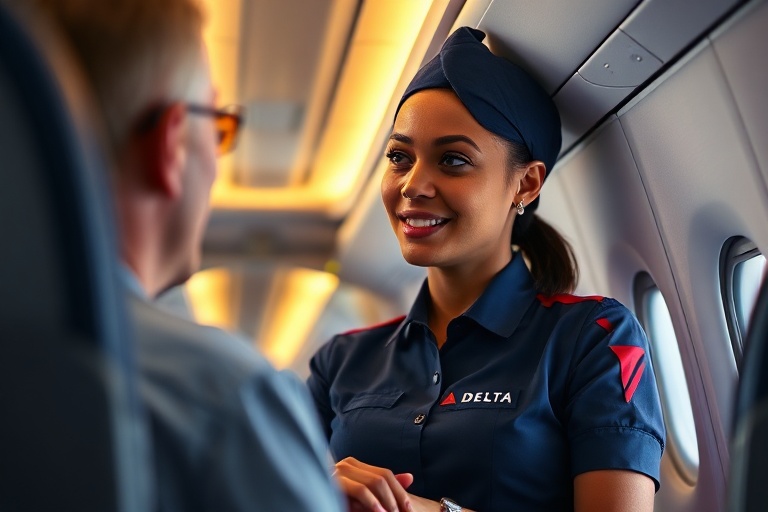
Inside the Role: What Delta Flight Attendants Really Do
Delta Air Lines employs over 20,000 flight attendants, making it one of the largest cabin crew teams in the aviation industry. These professionals are responsible for far more than serving beverages and demonstrating safety procedures. Their work begins long before the aircraft doors close, involving rigorous pre-flight briefings, safety checks, and passenger management.
Flight attendants at Delta undergo extensive training at the airline’s dedicated facility in Atlanta, Georgia. The program lasts about eight weeks and covers emergency procedures, first aid, and customer service excellence. Trainees learn how to handle medical emergencies, manage turbulence, and coordinate evacuations if necessary. Beyond technical skills, they are drilled in conflict resolution and cultural sensitivity to accommodate passengers from diverse backgrounds.
Once in the air, flight attendants divide responsibilities to ensure smooth operations. One crew member typically serves as the purser, overseeing the cabin and communicating with the cockpit. Others focus on service delivery, refilling supplies, and maintaining cleanliness. Delta’s flight attendants also play a key role in enforcing federal aviation regulations, such as seatbelt compliance and electronic device usage during critical flight phases.
The Training Process: From Novice to Professional
Delta’s flight attendant training program is renowned for its intensity and realism. Candidates start with classroom instruction on aircraft systems, including door operation and oxygen mask deployment. They practice emergency scenarios in a full-motion cabin simulator, where instructors simulate smoke, fire, and rapid decompression. Physical fitness is emphasized, as attendants must be able to lift heavy carts, open emergency exits, and assist passengers in evacuations.
Communication skills are equally vital. Trainees participate in role-playing exercises where they address unruly passengers or calm nervous flyers. Delta places a strong emphasis on empathy, training attendants to recognize signs of distress—whether due to anxiety, illness, or language barriers. Language proficiency is a plus; many Delta flight attendants speak multiple languages, particularly useful on international routes.
The training culminates in written and practical exams. Those who pass earn their wings and are assigned to a base, such as Atlanta, New York, or Los Angeles. Seniority determines scheduling preferences and route assignments, with new hires often starting on less desirable shifts or shorter flights. Over time, they can bid for international routes or leadership positions within the cabin crew.
Life in the Skies: The Challenges and Rewards
Working as a Delta flight attendant offers unparalleled travel opportunities, but it also comes with unique challenges. Crew members spend days, sometimes weeks, away from home, often sleeping in layover hotels or on the aircraft during long-haul flights. Jet lag and irregular schedules can take a toll on health and relationships. Yet, many attendants value the flexibility and the chance to explore new cities during layovers.
Customer interactions define the role. While most passengers are courteous, flight attendants regularly deal with complaints, medical emergencies, and occasional confrontations. Delta’s policy emphasizes de-escalation and professionalism, but attendants must also know when to involve security or the flight deck. The airline provides mental health resources, recognizing the emotional demands of the job.
Despite the challenges, many flight attendants find deep fulfillment in their work. The camaraderie among crew members is strong, with teams forming tight bonds over shared experiences. Attendants often describe moments of connection with passengers—helping a nervous first-time flyer, reuniting families, or even saving a life with prompt medical intervention—as the most rewarding parts of the job.
Diversity and Inclusion: Delta’s Commitment to Representation
Delta has made strides in diversifying its flight attendant workforce to better reflect its global customer base. The airline actively recruits from historically Black colleges and universities (HBCUs) and partners with organizations like the Organization of Black Aerospace Professionals (OBAP). Its diversity initiatives extend to gender and LGBTQ+ representation, with employee resource groups providing support and advocacy.
In 2023, Delta reported that over 60% of its flight attendants were women, and the airline has set goals to increase representation among racial and ethnic minorities. Flight attendants like Jessica Chen, a former Delta attendant who now advocates for aviation diversity, highlight the importance of visible role models in the industry. Chen notes, “When passengers see someone who looks like them in uniform, it changes their perception of flying.”
Delta also supports accessibility by training attendants in assisting passengers with disabilities. This includes learning to operate onboard wheelchairs, communicating with hearing-impaired travelers, and ensuring service animals are accommodated per federal guidelines. The airline’s commitment to inclusion extends to its hiring practices, with bias training integrated into the recruitment process.
Behind the Scenes: The Unsung Heroes of Aviation
Flight attendants are often the public face of Delta, but their contributions extend far beyond the cabin. They are the first responders in medical emergencies, the mediators in disputes, and the problem-solvers when flights are delayed or rerouted. Their ability to multitask under pressure keeps millions of passengers safe each year.
Delta’s flight attendants have played crucial roles in past crises, such as the 2016 Brussels bombings, where crew members helped evacuate stranded passengers, and the 2020 COVID-19 pandemic, when they adapted to new health protocols while maintaining compassionate service. Their adaptability during these times underscored their importance not just to Delta, but to the broader aviation ecosystem.
As the airline industry evolves, so does the role of flight attendants. The rise of automation and self-service kiosks has shifted some responsibilities, but human touch remains irreplaceable. Passengers increasingly seek personalized service, especially on long-haul flights, and attendants are stepping up with tailored meal options, language assistance, and cultural sensitivity training.
For those considering a career as a Delta flight attendant, the path is demanding but rewarding. It requires resilience, a service-oriented mindset, and a passion for travel. Those who thrive in the role often describe it as a calling rather than just a job. As one longtime attendant put it, “Every flight is a new story. You never know what kind of impact you’ll make.”
How to Become a Delta Flight Attendant: A Step-by-Step Guide
Delta’s hiring process is competitive, with thousands of applicants vying for a few hundred positions annually. The first step is to submit an online application on Delta’s careers portal, highlighting customer service experience and language skills. Candidates who pass the initial screening are invited to a virtual information session, followed by an in-person interview and assessment day.
The assessment includes group activities, role-playing scenarios, and a written exam on Delta’s policies and aviation basics. Successful candidates receive a conditional job offer and are enrolled in the training program. Financial support may be available for relocation, though attendants are responsible for their own lodging during training and initial postings.
Once hired, attendants must maintain certifications in CPR, first aid, and emergency procedures. Delta offers ongoing training and leadership development programs to help crew members advance. For those interested in long-term careers, opportunities exist in training, inflight management, or corporate aviation roles.
Prospective applicants should prepare for the physical and emotional demands of the job. The Travel section of Dave’s Locker offers additional resources on aviation careers and industry trends. Researching the role thoroughly and speaking with current or former Delta flight attendants can provide valuable insights into what to expect.
Delta’s flight attendants are the backbone of the airline’s reputation for safety and hospitality. Their dedication ensures that millions of passengers arrive at their destinations smoothly, whether for business, leisure, or life-changing events. While the job is not without its challenges, the rewards—travel, camaraderie, and the chance to make a difference—continue to attract passionate individuals to the skies.